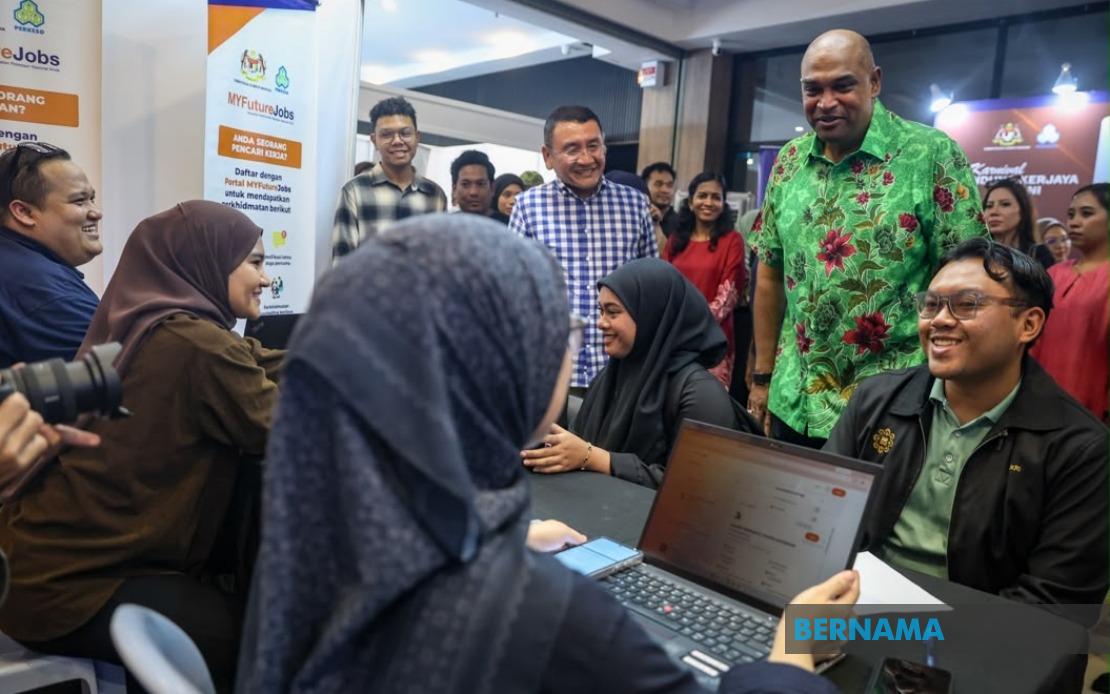
The Malaysian government is moving forward with legislative approval for the Traveller Scheme, a social security initiative specifically designed for the hundreds of thousands of Malaysians who work across the border in Singapore. Human Resources Minister Datuk Seri R. Ramanan announced that the proposal paper will be tabled in Parliament beginning tomorrow, marking a significant milestone in a policy that addresses one of Southeast Asia's largest cross-border workforce populations.
The timing is significant for regional labour markets. With approximately 480,000 Malaysians commuting daily between Johor and Singapore, the scheme represents a critical policy response to demographic and economic realities that define the region's most integrated labour corridor. These workers contribute substantially to both economies but have historically operated in a social protection gap, lacking comprehensive coverage under either nation's systems despite their economic contribution.
The Ministry of Human Resources and the Social Security Organisation (Perkeso) have been collaborating to finalise the administrative framework necessary for implementation. Ramanan indicated that the approval process is progressing smoothly, with completion anticipated by August. This timeline suggests confidence that parliamentary consideration will not encounter significant obstacles, allowing the government to move toward operational launch in the months following legislative approval.
Under the proposed framework, the Traveller Scheme will expand protection coverage through Act 789, commonly known as the Self-Employment Social Security Scheme administered by Perkeso. This mechanism allows eligible cross-border workers to make regular contributions in exchange for access to eight distinct benefit categories. The approach represents pragmatic policy design, adapting existing institutional infrastructure rather than creating parallel bureaucratic structures, which should facilitate smoother implementation and administration.
The scheme addresses a persistent vulnerability in the region's labour market architecture. Cross-border workers, whilst economically productive, have traditionally faced challenges accessing comprehensive social insurance that covers both occupational risks and basic income security. The expansion of Perkeso's coverage represents recognition that national social security systems must evolve to accommodate modern labour mobility patterns, particularly in economically integrated border regions.
Parliamentary engagement will be crucial to the scheme's success. Ramanan outlined plans for dedicated sessions with Members of Parliament to explain the programme's benefits and operational mechanics. Such engagement serves multiple purposes: ensuring legislative understanding of the scheme's provisions, building political support for implementation, and potentially facilitating feedback that could refine operational details before formal launch. This consultative approach reflects best practice in developing cross-border policy.
The announcement occurred during the LINDUNG Kerjaya MADANI Carnival in Johor Bahru, an employment-focused event that underscored the government's broader commitment to labour market development. The carnival brought together 20 employers offering more than 2,000 job vacancies, including skilled positions commanding competitive salaries up to RM16,000 monthly. This context demonstrates that cross-border labour policy exists within a broader framework of employment security and skills development initiatives.
For Malaysian workers, the scheme provides concrete protections previously unavailable at scale. Access to eight benefit categories through a structured contribution system creates a safety net addressing income disruption, occupational injury, and other contingencies that cross-border workers face. The voluntary contribution mechanism respects worker autonomy whilst incentivising participation through tangible benefit access, distinguishing it from purely mandatory schemes that can discourage formal participation.
Regionally, the scheme signals Malaysia's willingness to innovate in cross-border labour governance at a time when Southeast Asian integration intensifies worker mobility across multiple borders. Whilst Singapore remains the primary focus given geographical proximity and labour flows, the institutional framework established through this scheme could potentially serve as a template for addressing similar cross-border protection gaps elsewhere in the region, particularly as ASEAN deepens economic integration.
Implementation challenges remain present despite optimistic timelines. Coordination with Singapore authorities, though not explicitly mentioned, will likely be necessary to ensure the scheme operates smoothly in practice. Workers must understand contribution requirements and benefit structures, necessitating effective communication campaigns. Administrative capacity at Perkeso requires strengthening to handle the anticipated volume of cross-border contributor accounts and benefit claims. These operational realities will test implementation quality during the critical launch phase.
The scheme also reflects evolving Malaysian policy toward labour mobility. Rather than restricting cross-border employment, the government is pursuing protective mechanisms that acknowledge these workers' reality whilst enhancing their security. This pragmatic approach recognises that cross-border commuting will continue regardless of policy, making protection expansion superior to restriction attempts that often prove ineffective and counterproductive.
For Malaysian businesses in Johor, the scheme carries indirect implications. As cross-border workers gain enhanced security, the policy potentially stabilises labour supply relationships and may influence wage expectations. However, the scheme focuses on workers commuting to Singapore rather than foreign workers in Malaysia, so impacts on Johor employers remain indirect, primarily affecting labour market stability and worker retention indirectly.
The parliamentary tabling represents a critical juncture in policy development. Successful legislative approval will enable the government to proceed toward August implementation, bringing roughly 480,000 workers into formal social protection coverage. Should approval encounter unexpected obstacles, however, the timeline would extend, delaying security enhancements for this vulnerable worker population. Parliamentary debate may also introduce amendments that refine the scheme's operational parameters, either enhancing its effectiveness or potentially complicating implementation depending on the nature of proposed changes.

%22%2F%3E%3C%2Fpattern%3E%3C%2Fdefs%3E%3Crect%20width%3D%22100%25%22%20height%3D%22100%25%22%20fill%3D%22url(%23ph2h5apg)%22%2F%3E%3Crect%20width%3D%22100%25%22%20height%3D%22100%25%22%20fill%3D%22url(%23ph2h5app)%22%2F%3E%3Ctext%20x%3D%2250%25%22%20y%3D%2250%25%22%20text-anchor%3D%22middle%22%20dominant-baseline%3D%22central%22%20fill%3D%22rgba(255%2C255%2C255%2C0.95)%22%20font-family%3D%22Georgia%2C%20'Times%20New%20Roman'%2C%20serif%22%20font-weight%3D%22700%22%20font-size%3D%22320%22%20letter-spacing%3D%22-0.02em%22%3EMUDA%3C%2Ftext%3E%3C%2Fsvg%3E)