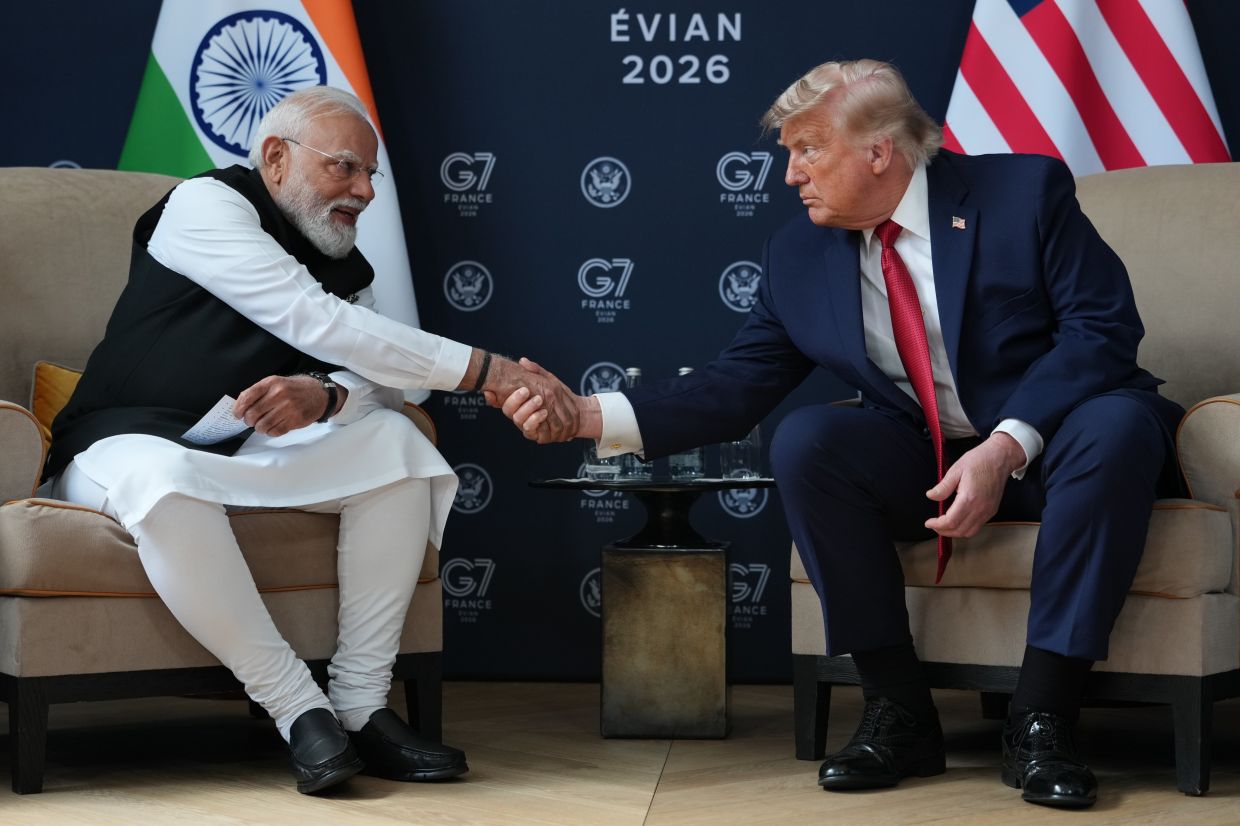
President Trump demonstrated a striking absence of remorse when discussing the deaths of three Indian nationals killed during a United States military strike on a commercial vessel, characterising the incident as an unfortunate but inevitable aspect of seafaring during a bilateral meeting with Prime Minister Narendra Modi. Rather than offering condolences, Trump framed the tragedy within a broader context of maritime risks, suggesting that such casualties have "been happening throughout time" whilst emphasising that both nations continue to "work together" on the matter. His measured but emotionally detached response starkly contrasted with the gravity of the incident and the outrage it triggered across India.
The deaths occurred when American forces launched missiles at the Palau-flagged MT Settebello in the Strait of Hormuz last week, an action that US Central Command justified as enforcement of a blockade targeting Iranian ports. The strike was part of a broader campaign by Washington to intercept what it characterised as illicit transport of Iranian oil through maritime channels. Beyond the Settebello, American forces also attacked two additional commercial vessels crewed by Indian nationals, cementing a pattern of military action against shipping traffic that the United States deemed to be violating its regional blockade policy.
India's official response through Foreign Minister S. Jaishankar conveyed what was characterised as a "strong protest" during direct communication with American counterparts. However, the State Department's readout of that conversation revealed the underlying tension between the two governments, with American officials emphasising that violations of the US blockade and what they termed "illicit transport of Iranian oil" would not be tolerated. This framing suggested that the United States remained unrepentant about the military action and intended to maintain its enforcement posture, a stance that would further complicate diplomatic relations.
The incident triggered an unprecedented wave of public anger within India, manifesting in acts of symbolic protest that demonstrated the depth of popular resentment. Videos circulated on social media showing auto rickshaw drivers in Delhi removing and destroying promotional posters bearing Trump's image, which had been distributed by the US embassy as part of a "Happy Birthday America" public relations campaign. Such grassroots demonstrations indicated that Trump's name had become a lightning rod for nationalist sentiment and frustration with perceived American disregard for Indian lives.
Political opposition figures seized on the incident to challenge the Modi government's diplomatic posture. Rahul Gandhi, a leading opposition voice, criticised the prime minister for what he characterised as excessive deference to American interests, posting on social media that "a free country would never tolerate such language" whilst describing Modi as a "compromised" leader who behaves like "an obedient servant" complying with American orders. This rhetoric reflected a deeper concern within India's political landscape about whether the government was sufficiently assertive in defending national interests against external pressure, a sensitivity that carries significant domestic political weight.
Despite the tensions surrounding the maritime incident, Trump insisted that bilateral relations remain exceptionally strong, claiming that he and Modi "cannot be closer" and that such closeness extends to their respective nations. He reiterated a commitment to mutual support, stating that although no formal defence contract exists between the countries, the United States would come to India's aid if it faced attack. This affirmation of solidarity appeared designed to salvage the relationship and redirect attention toward the broader strategic partnership underpinning US-India engagement.
The bilateral meeting marked their first formal engagement in 16 months, arriving at a critical juncture in trade negotiations that represent a significant shift in US-India economic relations. Trump and Modi had previously met in Washington in February 2025, where discussions commenced on a comprehensive bilateral trade agreement, positioning India among the first nations to pursue formal trade negotiations with the new American administration. These talks carry particular importance given India's strategic positioning in Asia and its potential role in American efforts to counterbalance regional rivals.
Progress on the interim trade deal remains incomplete, with discussions continuing between American trade officials and Indian counterparts as negotiators attempt to resolve outstanding differences. Trump characterised Modi as a "tough trader" whilst simultaneously praising him as a "great guy," suggesting an appreciation for aggressive negotiating tactics even as substantive disagreements persist over commercial terms. The dual nature of this assessment—acknowledging toughness whilst maintaining warm personal relations—reflects the complex dynamic between the two leaders as they navigate both strategic partnership and commercial competition.
Secretary of State Marco Rubio visited India shortly after Trump's initial meeting with Modi, reinforcing the American characterisation of India as one of Washington's "most important strategic partners" in the region. Rubio's engagement with Indian officials served to emphasise continuity in the strategic relationship despite the maritime incident, underscoring that the US administration views India through a broader geopolitical lens centred on regional balance and counteracting Chinese influence. The high-level diplomatic attention signals American commitment to deepening institutional ties beyond the Trump-Modi personal relationship.
Trump indicated intentions to visit India in the future, though he provided no specific timeline or confirmed dates. His statement that the visit would occur "sometime in the future" suggested genuine openness to deepening personal engagement with Modi, despite the current tensions. Such a visit would carry symbolic weight within India, potentially serving as a gesture toward reconciliation and renewed emphasis on the positive aspects of the bilateral relationship rather than dwelling on the maritime tragedy.
When pressed on India's participation in the Quad—the informal security grouping comprising the United States, India, Japan, and Australia—Trump deflected the question and declined to elaborate substantially on this dimension of regional diplomacy. This reticence may reflect the complexities of balancing multiple regional relationships or simply Trump's preference for emphasising direct bilateral connections rather than multilateral frameworks. The absence of detailed Quad discussion nonetheless noted an area where deeper coordination remains underdeveloped despite the strategic importance of maintaining a united front against regional challenges.
The apparent disconnect between Trump's casual dismissal of the three sailors' deaths and the gravity of the incident for Indian public opinion exemplifies the challenging dynamics confronting both governments as they attempt to advance strategic cooperation amid popular anger. For Malaysian observers and Southeast Asian policymakers more broadly, the episode underscores how great power relationships can compartmentalise serious incidents—military actions resulting in foreign casualties—within larger frameworks of strategic cooperation and economic negotiation. This capacity to separate security incidents from broader diplomatic engagement suggests that such tensions, whilst inflammatory domestically, may not fundamentally derail high-level cooperation between major powers pursuing shared strategic objectives.
Moving forward, the test of US-India relations will involve whether ongoing trade negotiations can progress successfully despite the lingering anger within India over the maritime deaths. The incident has exposed limits to the relationship's resilience and raised questions about whether shared strategic interests can truly overcome deep public resentment and political concerns about asymmetrical power dynamics. For the region, India's approach to balancing its relationship with Washington—whether through accommodation or strategic diversification—will have cascading implications for broader Asian geopolitics and the configuration of regional alignments.
%22%2F%3E%3C%2Fpattern%3E%3C%2Fdefs%3E%3Crect%20width%3D%22100%25%22%20height%3D%22100%25%22%20fill%3D%22url(%23ph6xupg)%22%2F%3E%3Crect%20width%3D%22100%25%22%20height%3D%22100%25%22%20fill%3D%22url(%23ph6xupp)%22%2F%3E%3Ctext%20x%3D%2250%25%22%20y%3D%2250%25%22%20text-anchor%3D%22middle%22%20dominant-baseline%3D%22central%22%20fill%3D%22rgba(255%2C255%2C255%2C0.95)%22%20font-family%3D%22Georgia%2C%20'Times%20New%20Roman'%2C%20serif%22%20font-weight%3D%22700%22%20font-size%3D%22170%22%20letter-spacing%3D%22-0.02em%22%3EMalaysia%3C%2Ftext%3E%3C%2Fsvg%3E)
%22%2F%3E%3C%2Fpattern%3E%3C%2Fdefs%3E%3Crect%20width%3D%22100%25%22%20height%3D%22100%25%22%20fill%3D%22url(%23ph6450g)%22%2F%3E%3Crect%20width%3D%22100%25%22%20height%3D%22100%25%22%20fill%3D%22url(%23ph6450p)%22%2F%3E%3Ctext%20x%3D%2250%25%22%20y%3D%2250%25%22%20text-anchor%3D%22middle%22%20dominant-baseline%3D%22central%22%20fill%3D%22rgba(255%2C255%2C255%2C0.95)%22%20font-family%3D%22Georgia%2C%20'Times%20New%20Roman'%2C%20serif%22%20font-weight%3D%22700%22%20font-size%3D%22136%22%20letter-spacing%3D%22-0.02em%22%3EGovernment%3C%2Ftext%3E%3C%2Fsvg%3E)
%22%2F%3E%3C%2Fpattern%3E%3C%2Fdefs%3E%3Crect%20width%3D%22100%25%22%20height%3D%22100%25%22%20fill%3D%22url(%23ph2ojpsg)%22%2F%3E%3Crect%20width%3D%22100%25%22%20height%3D%22100%25%22%20fill%3D%22url(%23ph2ojpsp)%22%2F%3E%3Ctext%20x%3D%2250%25%22%20y%3D%2250%25%22%20text-anchor%3D%22middle%22%20dominant-baseline%3D%22central%22%20fill%3D%22rgba(255%2C255%2C255%2C0.95)%22%20font-family%3D%22Georgia%2C%20'Times%20New%20Roman'%2C%20serif%22%20font-weight%3D%22700%22%20font-size%3D%22194%22%20letter-spacing%3D%22-0.02em%22%3EBercham%3C%2Ftext%3E%3C%2Fsvg%3E)