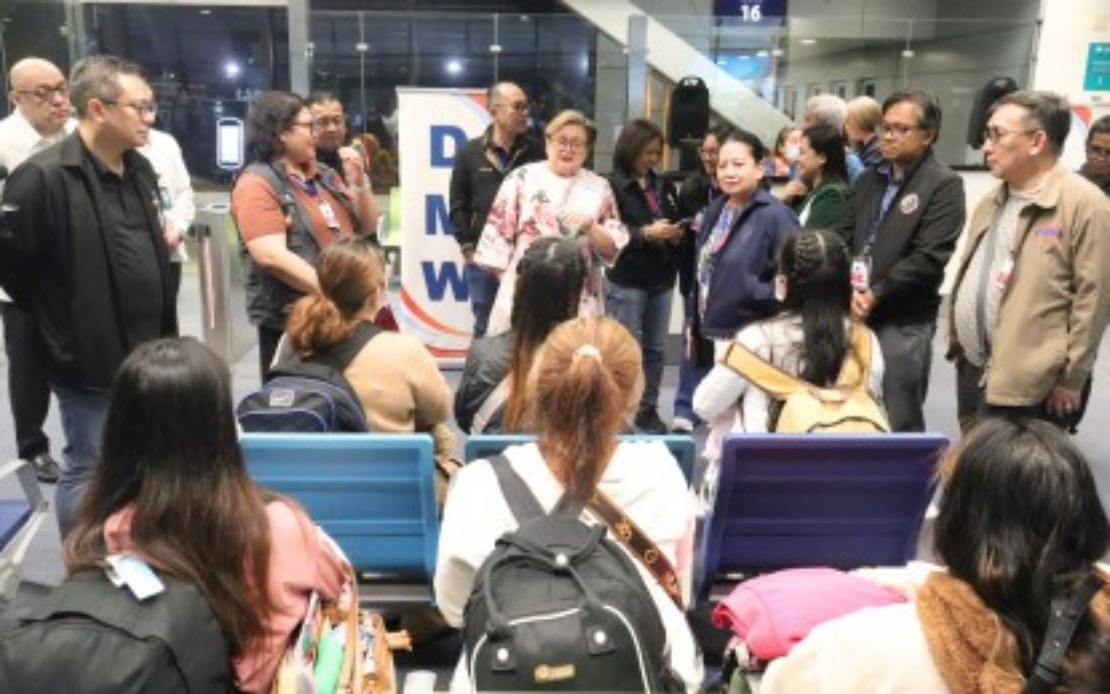
Twenty-four Filipino citizens held in Russian custody for roughly nine months touched down at Ninoy Aquino International Airport on Sunday in the early hours, marking the successful conclusion of high-level diplomatic negotiations. The detainees' homecoming came directly after President Ferdinand R. Marcos Jr. raised their predicament during face-to-face talks with Russian President Vladimir Putin at the ASEAN-Russia Commemorative Summit in Kazan earlier in the week. The repatriation represents a tangible diplomatic victory for the Philippine government in securing the welfare of its overseas nationals caught in challenging circumstances abroad.
The returning Filipinos arrived in two separate contingents via Bangkok, Thailand, touching down at Terminal 1 of the capital's main international airport. Philippine Airlines Flight PR737 transported six passengers, landing shortly after midnight, while the remaining eighteen individuals disembarked from PAL Flight PR733 during the early morning hours. The staggered arrival arrangement reflected the coordination required to manage the logistics of bringing the group back across Southeast Asia and home to the archipelago.
The repatriation operation received direct oversight from senior government officials, underscoring the gravity with which authorities approached the matter. Foreign Affairs Secretary Maria Theresa Lazaro and Migrant Workers Secretary Hans Cacdac personally received the returnees at the airport, sending a symbolic message about the government's commitment to supporting overseas Filipinos in distress. This high-level reception demonstrated that the issue had transcended routine consular affairs and become a matter of presidential concern.
The Department of Foreign Affairs coordinated the complex repatriation with Russian authorities, working in tandem with the Department of Migrant Workers and the Overseas Workers Welfare Administration to ensure a smooth transition home. Such multi-agency cooperation reflects the sophisticated diplomatic machinery required when Philippine nationals face detention abroad, particularly in jurisdictions with different legal frameworks and where communication challenges can complicate matters significantly.
The detainees had been confined in Irkutsk, a city located in southeastern Siberia, for approximately nine months without facing formal criminal charges. This extended period of custody without clear legal justification had raised serious concerns within Philippine government circles about the circumstances surrounding their detention. Initial investigations suggested the individuals may have become ensnared in illegal recruitment schemes that deceived them about their true destination and employment conditions.
Diplomats investigating the case indicated that immigration-related violations likely triggered the detentions, though the specifics of how these violations arose remained murky. The apparent involvement of unlicensed recruiters added another layer of complexity, suggesting the Filipinos were victims of employment fraud rather than deliberate wrongdoers. This understanding appears to have influenced both the Philippine government's diplomatic approach and Russia's willingness to resolve the situation.
President Marcos extended gratitude to Putin and the Russian government for cooperating in resolving the impasse, highlighting how personal leadership at the highest levels can unlock solutions to problems that might otherwise languish in bureaucratic channels. The bilateral meeting in Kazan provided a suitable platform for such discussions, as multilateral forums often create informal opportunities for leaders to address bilateral concerns outside the formal agenda.
The implications of this case resonate throughout Southeast Asia's migrant worker communities. The Philippines hosts millions of overseas workers sending remittances home, making the welfare and security of these nationals a domestic priority. Incidents involving illegal recruitment schemes endanger not only individual families but also the reputation and sustainability of labour migration programs that depend on trust and transparency.
For Malaysian readers, the case serves as a cautionary reminder about the risks faced by regional migrant workers globally. Malaysia itself hosts significant numbers of Filipino domestic workers and labourers, creating interconnected interests in ensuring that recruitment practices and worker protections meet international standards. The incident underscores why bilateral cooperation and high-level diplomatic engagement remain essential tools for addressing transnational labour issues.
The Philippine government announced that the returning detainees would receive comprehensive reintegration support and assistance as they rebuild their lives following their ordeal. Authorities simultaneously indicated that investigations into the recruitment networks and travel arrangements would continue, suggesting efforts to pursue those who facilitated the scheme. Such follow-up work proves essential for disrupting trafficking and exploitation networks that prey on desperate workers seeking legitimate employment opportunities.
The successful repatriation demonstrates that sustained diplomatic pressure, backed by presidential attention, can yield concrete results even in complex international situations. However, the broader challenge of protecting migrant workers from deceptive recruitment practices requires systemic solutions including stronger vetting of recruitment agencies, clearer worker awareness campaigns, and enhanced cooperation between labour-sending and labour-receiving countries to combat fraud networks.
This episode will likely feature in broader discussions about Philippine-Russia relations and how the two nations can cooperate on issues affecting their respective nationals. Although geopolitical differences exist between Manila and Moscow, the shared interest in protecting vulnerable citizens abroad provides common ground for ongoing diplomatic engagement.
%22%2F%3E%3C%2Fpattern%3E%3C%2Fdefs%3E%3Crect%20width%3D%22100%25%22%20height%3D%22100%25%22%20fill%3D%22url(%23ph2h5apg)%22%2F%3E%3Crect%20width%3D%22100%25%22%20height%3D%22100%25%22%20fill%3D%22url(%23ph2h5app)%22%2F%3E%3Ctext%20x%3D%2250%25%22%20y%3D%2250%25%22%20text-anchor%3D%22middle%22%20dominant-baseline%3D%22central%22%20fill%3D%22rgba(255%2C255%2C255%2C0.95)%22%20font-family%3D%22Georgia%2C%20'Times%20New%20Roman'%2C%20serif%22%20font-weight%3D%22700%22%20font-size%3D%22320%22%20letter-spacing%3D%22-0.02em%22%3EMUDA%3C%2Ftext%3E%3C%2Fsvg%3E)