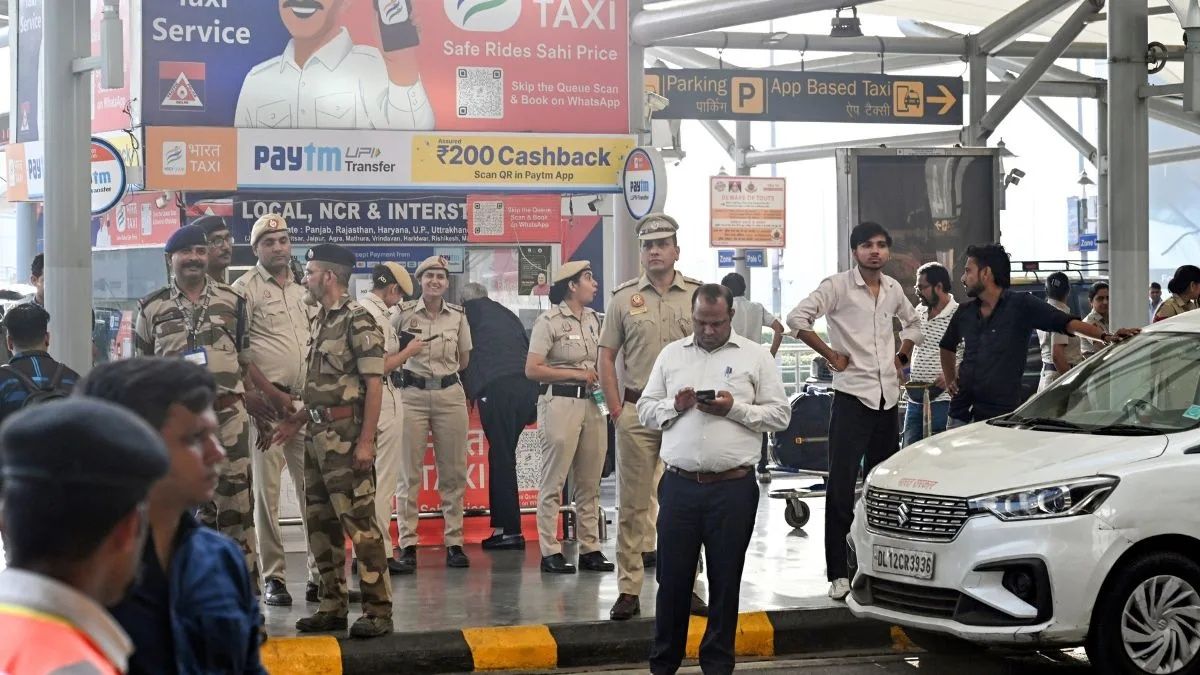
India has successfully apprehended two men suspected of operating a terror financing network on behalf of the banned Khalistan Zindabad Force following their deportation from Malaysia. The coordinated operation between Punjab Police, central security agencies, and the Royal Malaysia Police resulted in the arrest of Gurvinder Singh from Ambala and Manjit Singh from Patiala, who were taken into custody upon arrival at Delhi's Indira Gandhi International Airport. The deportation represents a significant development in India's efforts to dismantle international support structures for designated terror organisations, marking another instance of regional law enforcement cooperation in combating cross-border militant networks.
According to Punjab Director General of Police Gaurav Yadav, the operation was driven by intelligence gathered during investigations into terror activities targeting critical infrastructure in the state. The two arrested individuals are believed to have orchestrated financial flows and coordinated operational support for KZF-affiliated cells from their base in Malaysia, serving as crucial intermediaries between overseas handlers and operatives within Punjab. This arrest underscores the sophistication of modern terror financing networks that exploit geographical distance and financial opacity to evade detection, a challenge that extends across South Asia and Southeast Asia as militant groups increasingly utilise international banking systems and cryptocurrency channels.
The investigation that led to the men's identification originated from two significant security incidents in Punjab this year. On January 23, authorities uncovered a terror module responsible for an improvised explosive device blast near Sirhind in Fatehgarh Sahib district, followed by another attempted explosion near Shambhu in Patiala district on April 27. These incidents triggered a comprehensive probe that revealed an attempt to target sections of the Dedicated Freight Corridor, indicating the breadth of the alleged conspiracy. Security forces arrested multiple individuals and recovered an extensive arsenal including an RPG launcher, sophisticated pistols, hand grenades, RDX explosives, and additional ammunition, suggesting the operation had progressed beyond the planning stage.
Financial investigations proved instrumental in unravelling the international network. As authorities traced the funds used to support the identified module, they discovered a pattern of money transfers through foreign channels, establishing a financial trail that led directly to Malaysia. The ability to track these transactions represented a breakthrough, as terror financing increasingly relies on informal channels and informal value transfer systems that circumvent conventional banking oversight. In this case, investigators were able to establish concrete evidence linking Gurvinder Singh and Manjit Singh to the movement of funds destined for KZF operatives, demonstrating that despite the complexity of international financial systems, coordinated law enforcement efforts can successfully identify illicit flows.
The role of overseas handlers and financiers in sustaining militant activities has become increasingly apparent to security analysts monitoring terror networks in Punjab and beyond. According to DGP Yadav, the investigation exposed an elaborate support structure comprising individuals positioned abroad who facilitate operations through financial assistance and coordination. These networks typically comprise retired military personnel, diaspora members sympathetic to separatist causes, and professional money managers who operate with minimal direct contact with field operatives, insulating themselves from legal liability while maintaining operational relevance. The Malaysia-based cell appears to have functioned as a critical node in this architecture, processing and distributing resources while maintaining strategic distance from the actual violence.
The deportation of the two suspects involved formal bilateral coordination between India and Malaysia, reflecting the maturation of security cooperation mechanisms in the region. The Royal Malaysia Police's willingness to take action against individuals allegedly facilitating terror financing from Malaysian territory demonstrates the regional consensus against harbouring such networks. For Malaysia, which has experienced its own encounters with regional militant movements and maintains substantial expatriate communities from South Asia, such cooperation serves dual purposes: maintaining internal security and upholding international obligations under terrorism-related conventions. This collaboration also reflects broader patterns of intelligence sharing and law enforcement coordination within ASEAN frameworks.
Upon reaching India, the arrested men were produced before a Patiala court, which remanded them to police custody for extended interrogation. The questioning phase remains critical, as investigators seek to extract information about the broader network structure, including the identities of handlers abroad, financial sources, recipient operatives, and the scope of planned activities. Established interrogation protocols in terror cases typically focus on reconstructing the complete operational timeline, identifying communication methods and intermediaries, and mapping the full extent of the funding pipeline. The information obtained during custody could potentially trigger cascading arrests and investigations across multiple jurisdictions if the network extends into other states or countries.
The investigation's emphasis on identifying additional associates reflects law enforcement's understanding that the two arrested individuals likely represent only the visible tip of a larger clandestine structure. Terror organisations typically employ compartmentalised operational cells where individual members possess limited knowledge of the complete network, thereby protecting the organisation from comprehensive exposure through any single arrest. Investigators must therefore painstakingly reconstruct the broader picture through cross-referencing communication records, financial transactions, travel histories, and corroborating testimony from previously arrested operatives. This process often extends across months or years, requiring persistent coordination between multiple agencies and sustained intelligence gathering.
The case carries implications for Malaysia and the broader Southeast Asian region regarding the movement and financing of transnational militant networks. The use of Malaysian territory as a staging ground for terror financing operations—whether intentional or exploited—highlights the vulnerability of financial systems to abuse by organised groups with transnational reach. Malaysian authorities, already attuned to security challenges posed by regional militant movements, face ongoing pressure to monitor financial flows and prevent their territory from serving as a sanctuary for individuals supporting terror activities elsewhere. The incident may prompt enhanced scrutiny of financial transactions originating from or passing through Malaysian banking channels, potentially affecting legitimate remittance flows and business transactions alongside illicit financing.
Punjab Police have indicated that investigations continue to trace the entire operational chain spanning operatives, financiers, and facilitators implicated in the conspiracy. The scope of ongoing inquiries suggests investigators believe the identified cell represented a coordinated effort involving multiple specialised roles across different countries. Disrupting terror support networks requires persistent engagement across extended timeframes, combining technical surveillance capabilities, human intelligence, financial forensics, and international cooperation. The successful deportation and arrest of the two suspects represents a tactical victory, yet law enforcement officials acknowledge that dismantling the broader infrastructure requires identifying and neutralising remaining nodes within the network.


