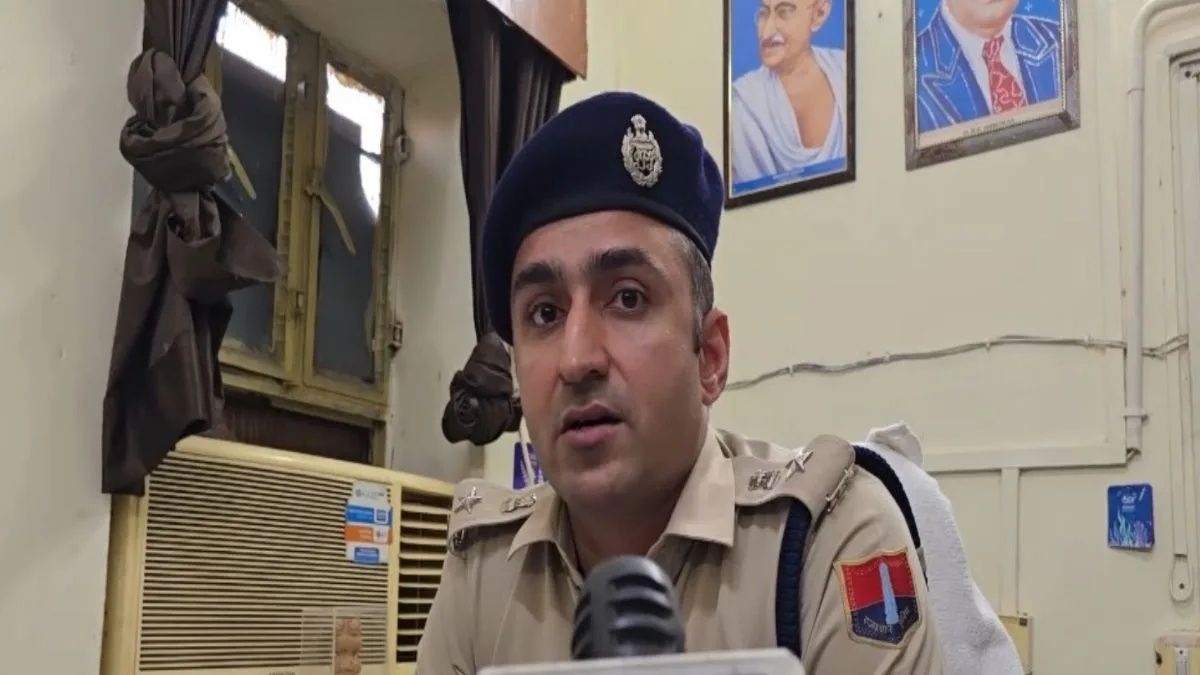
Police in Rajasthan's Dholpur district launched a murder investigation on Friday after two young women were allegedly thrown into a river by family members in what authorities believe may be an honour killing. The deaths, which occurred on the night of June 11 near Sagarpada Bridge, have prompted investigators to name the women's father and several relatives as suspects as they examine the circumstances surrounding the incident.
Super intendent of Police Vikas Sangwan confirmed that officers received information alleging that Bharat Lodha, a resident of Pharakpur village and father of four, had killed two of his daughters. Upon receiving these allegations, police teams immediately proceeded to the location and commenced preliminary investigations into the matter. The initial inquiry suggested family involvement in the deaths, leading investigators to pursue the theory that this was an honour killing motivated by the family's disapproval of the victims' romantic choices.
According to Sangwan, preliminary findings indicate that the targeted killing was rooted in a family dispute over the women's romantic relationships. The family reportedly opposed these relationships and took extreme measures to prevent them, raising serious concerns about the persistence of honour-based violence in certain communities. This tragic incident underscores the ongoing challenges authorities face in protecting vulnerable women from family-perpetrated crimes in parts of India where traditional notions of family honour continue to influence violent decision-making.
Police believe the two women were forced from Sagarpada Bridge into the river below, though investigators stressed that the exact sequence of events remains under verification. The alleged crime took place during the evening hours of June 11, with authorities placing the timeframe between 9 and 10 p.m., though this timeline is still being confirmed through witness statements and physical evidence. The preliminary nature of these details reflects the ongoing complexity of the investigation.
Detectives are now working to reconstruct the movements leading up to the alleged tragedy. A critical line of inquiry involves determining how the victims were transported to the bridge location, who accompanied them, and what mode of vehicle was used. These details will be essential in establishing which family members were directly involved in the act and whether others facilitated the crime through transportation, surveillance, or other support. Sangwan indicated that multiple parties may have been involved in different capacities.
The investigation has also expanded to examine the broader context surrounding the victims' romantic relationships and the family's documented objections to them. Investigators are seeking to establish whether there were prior threats, warnings, or attempts to force the women to abandon their relationships. Understanding the escalation pattern of family pressure and control will help authorities determine whether this killing was a premeditated decision or emerged from a heated confrontation that turned fatal.
Honour killings remain a persistent problem across parts of India, where deep-rooted patriarchal customs and rigid caste or community structures sometimes compel family members to commit violence against relatives perceived to have brought shame or dishonour. While such crimes are illegal and widely condemned, they continue to occur in rural and semi-urban areas where traditional authority structures and informal justice systems sometimes supersede state law. The Rajasthan case reflects broader systemic challenges in protecting women from family-based violence.
For Malaysian readers, this case illustrates the persistent challenges of gender-based violence rooted in traditional family structures that exist across South Asia. While Malaysia has made significant progress in women's protection through legal frameworks and enforcement, incidents such as this in neighbouring regions serve as reminders of the importance of sustained vigilance against patriarchal violence. The case also highlights how cross-border information exchange and cooperation on serious crimes remains relevant for regional security and justice.
The Dholpur police have assured the public that comprehensive legal action will follow once the investigation concludes. Authorities are continuing to collect forensic evidence from the Sagarpada Bridge site and questioning individuals with knowledge of the incident. The police department is working systematically to verify all aspects of the case before proceeding with formal charges, emphasizing that additional investigation is underway and full details will emerge as the case progresses through the justice system.
%22%2F%3E%3C%2Fpattern%3E%3C%2Fdefs%3E%3Crect%20width%3D%22100%25%22%20height%3D%22100%25%22%20fill%3D%22url(%23ph6xupg)%22%2F%3E%3Crect%20width%3D%22100%25%22%20height%3D%22100%25%22%20fill%3D%22url(%23ph6xupp)%22%2F%3E%3Ctext%20x%3D%2250%25%22%20y%3D%2250%25%22%20text-anchor%3D%22middle%22%20dominant-baseline%3D%22central%22%20fill%3D%22rgba(255%2C255%2C255%2C0.95)%22%20font-family%3D%22Georgia%2C%20'Times%20New%20Roman'%2C%20serif%22%20font-weight%3D%22700%22%20font-size%3D%22170%22%20letter-spacing%3D%22-0.02em%22%3EMalaysia%3C%2Ftext%3E%3C%2Fsvg%3E)
%22%2F%3E%3C%2Fpattern%3E%3C%2Fdefs%3E%3Crect%20width%3D%22100%25%22%20height%3D%22100%25%22%20fill%3D%22url(%23ph6450g)%22%2F%3E%3Crect%20width%3D%22100%25%22%20height%3D%22100%25%22%20fill%3D%22url(%23ph6450p)%22%2F%3E%3Ctext%20x%3D%2250%25%22%20y%3D%2250%25%22%20text-anchor%3D%22middle%22%20dominant-baseline%3D%22central%22%20fill%3D%22rgba(255%2C255%2C255%2C0.95)%22%20font-family%3D%22Georgia%2C%20'Times%20New%20Roman'%2C%20serif%22%20font-weight%3D%22700%22%20font-size%3D%22136%22%20letter-spacing%3D%22-0.02em%22%3EGovernment%3C%2Ftext%3E%3C%2Fsvg%3E)
%22%2F%3E%3C%2Fpattern%3E%3C%2Fdefs%3E%3Crect%20width%3D%22100%25%22%20height%3D%22100%25%22%20fill%3D%22url(%23ph2ojpsg)%22%2F%3E%3Crect%20width%3D%22100%25%22%20height%3D%22100%25%22%20fill%3D%22url(%23ph2ojpsp)%22%2F%3E%3Ctext%20x%3D%2250%25%22%20y%3D%2250%25%22%20text-anchor%3D%22middle%22%20dominant-baseline%3D%22central%22%20fill%3D%22rgba(255%2C255%2C255%2C0.95)%22%20font-family%3D%22Georgia%2C%20'Times%20New%20Roman'%2C%20serif%22%20font-weight%3D%22700%22%20font-size%3D%22194%22%20letter-spacing%3D%22-0.02em%22%3EBercham%3C%2Ftext%3E%3C%2Fsvg%3E)