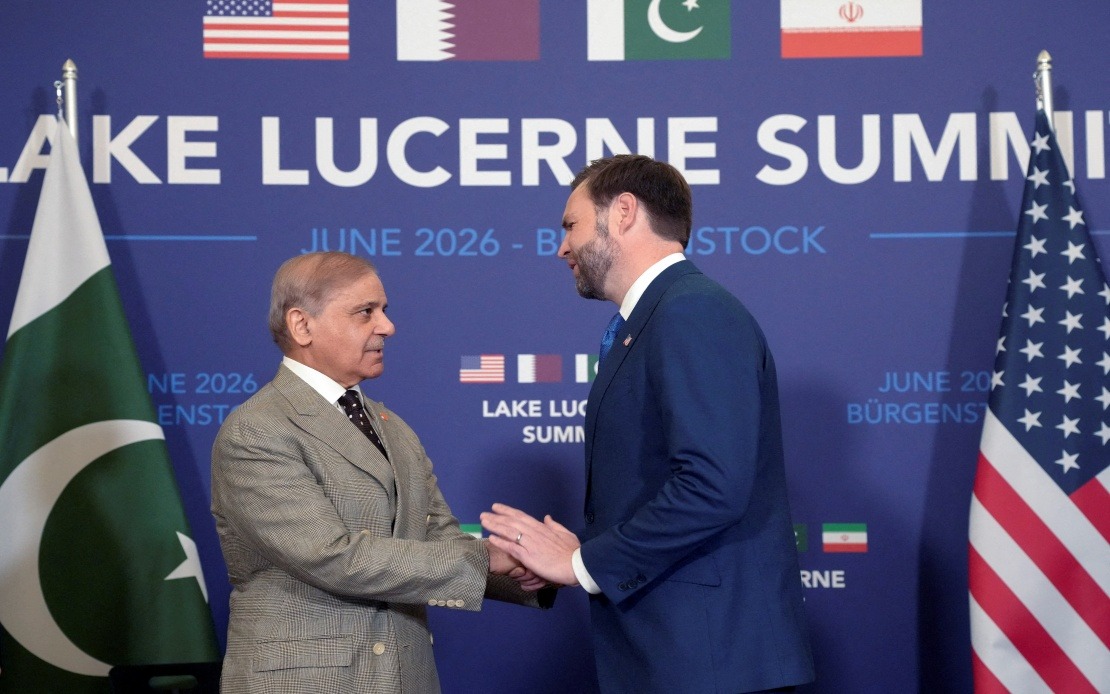
A high-level delegation from the United States met with Pakistani leadership at a Swiss mountain resort on Sunday as part of broader diplomatic efforts to resolve the Iranian nuclear question and consolidate a recently agreed ceasefire. Vice President JD Vance, alongside special envoys Steve Witkoff and Jared Kushner, greeted Pakistan's Prime Minister Shehbaz Sharif and Pakistan Army Chief Field Marshal Asim Munir at the Burgenstock resort, with discussions commencing immediately thereafter. The gathering represents a significant diplomatic moment for regional stakeholders, particularly given Pakistan's historical role as a bridge between Western powers and Iran.
The Burgenstock meeting forms part of a larger international negotiation framework established following a ceasefire agreement signed between Iran and the United States. That memorandum, initialled remotely in the early hours of June 18, formally concluded the military hostilities that erupted on February 28. The accord establishes concrete timelines for the removal of the American naval blockade from Iranian waters and commits Tehran to restoring maritime commerce through the strategically vital Strait of Hormuz. These provisions address the practical dimensions of conflict resolution, moving beyond symbolic gestures to operational commitments with immediate economic implications for global shipping and energy markets.
Technical-level negotiators from Iran, the United States, and the two principal mediating nations—Pakistan and Qatar—were scheduled to convene at the same location for behind-closed-doors discussions. This configuration of parties reflects the delicate balancing act required in multilateral diplomacy, where countries with competing interests and historical grievances must collaborate towards a common objective. Pakistan's presence as a mediator is particularly noteworthy given its geographic proximity to Iran, its influence within Islamic circles, and its strategic relationship with Washington. For Malaysian observers, this underscores how regional powers leverage their unique positions to shape outcomes affecting global stability.
The nuclear dimension remains the most contentious element of these negotiations. Iran has formally committed within the memorandum to refrain from pursuing nuclear weapons development, yet the specific mechanisms for verification and the parameters of what constitutes compliance remain unresolved. A separate comprehensive agreement addressing Iran's broader nuclear programme has been designated for negotiation within a sixty-day window. This phased approach suggests negotiators recognise the complexity of disentangling security concerns, technical specifications, and political objectives that have accumulated over decades of international disputes regarding Iranian nuclear activities.
For Tehran, the anticipated reciprocal benefit involves the systematic dismantling of economic sanctions imposed by Washington and its allies. These restrictions have severely constrained Iran's oil exports, financial transactions, and access to international markets—consequences that have reverberated throughout regional economies and global energy pricing. The potential lifting of these measures would fundamentally reshape Iran's economic position and its capacity to engage in regional commerce, with implications extending to neighbouring countries including potential suppliers and trading partners across the Middle East and beyond.
The involvement of special envoys Witkoff and Kushner signals the prioritisation of these talks within American foreign policy circles. Both individuals have maintained prominent roles in recent administrations and bring experience in middle-distance diplomacy. Their presence alongside Vice President Vance indicates that discussions extend beyond technical specialists to encompass broader strategic considerations and political commitments. This hierarchical composition suggests the parties view the Burgenstock gathering as consequential enough to warrant senior-level attention.
For Southeast Asian nations like Malaysia, these developments carry indirect but significant consequences. Any destabilisation in the Middle East affects regional security, energy prices, and maritime safety in shared waters. Conversely, successful resolution of Iran-US tensions could enhance regional stability and reduce the risk of wider conflagration. Malaysia's interest in maintaining open shipping lanes and predictable geopolitical conditions makes these negotiations relevant to national interests extending beyond the immediate parties involved.
Pakistan's dual role as mediator and direct participant reflects its strategic anxieties and opportunities. The country maintains substantial economic and security relationships with both Washington and Tehran, yet these relationships frequently pull in opposing directions. By facilitating these discussions, Pakistan positions itself as an indispensable partner for American regional objectives whilst maintaining its significant trade and cultural ties with Iran. This balancing act has defined Pakistani foreign policy throughout the Iran-US tension cycle, and Burgenstock represents another chapter in that ongoing negotiation.
The timing of these meetings, occurring simultaneously with technical negotiations, suggests a coordinated diplomatic strategy wherein political commitments from senior leadership can facilitate progress on detailed technical issues. By having high-level officials present, negotiators can seek guidance on contentious matters and convey political will to colleagues sitting across the table. This parallel-track approach often accelerates resolution when mutual benefits become apparent to decision-makers with authority to commit their governments.
The sixty-day window for nuclear programme negotiations will test whether the momentum generated at Burgenstock translates into substantive agreements. The coming weeks will reveal whether technical teams can bridge remaining gaps regarding uranium enrichment levels, inspection protocols, sanctions relief sequencing, and verification mechanisms. Success requires genuine compromise rather than mere tactical positioning, a distinction that has historically eluded Iran-US negotiations.
%22%2F%3E%3C%2Fpattern%3E%3C%2Fdefs%3E%3Crect%20width%3D%22100%25%22%20height%3D%22100%25%22%20fill%3D%22url(%23ph2h5apg)%22%2F%3E%3Crect%20width%3D%22100%25%22%20height%3D%22100%25%22%20fill%3D%22url(%23ph2h5app)%22%2F%3E%3Ctext%20x%3D%2250%25%22%20y%3D%2250%25%22%20text-anchor%3D%22middle%22%20dominant-baseline%3D%22central%22%20fill%3D%22rgba(255%2C255%2C255%2C0.95)%22%20font-family%3D%22Georgia%2C%20'Times%20New%20Roman'%2C%20serif%22%20font-weight%3D%22700%22%20font-size%3D%22320%22%20letter-spacing%3D%22-0.02em%22%3EMUDA%3C%2Ftext%3E%3C%2Fsvg%3E)