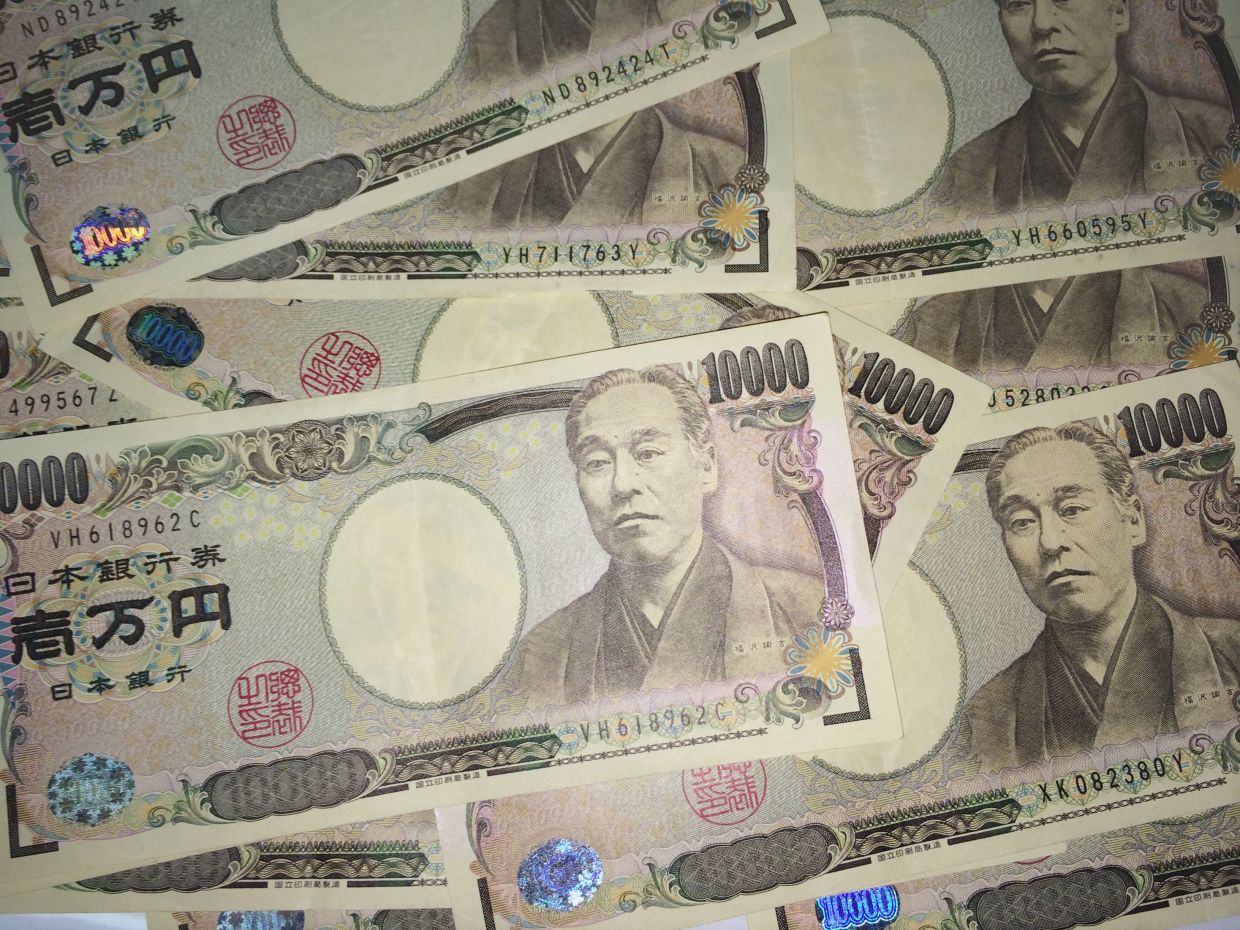
Japan's currency has deteriorated to levels unseen in four decades, trading near 161.205 yen per US dollar on Friday as investors shrug off both official monetary policy tightening and direct government defence of the currency. The sustained weakness underscores how mounting concerns over fiscal spending plans by Prime Minister Sanae Takaichi have overwhelmed traditional policy levers that typically support the yen during periods of turbulence, raising questions about the effectiveness of further intervention and the broader resilience of Japan's economic outlook.
The yen edged marginally higher on Friday, rebounding slightly from Thursday's two-year lows, though trading remained subdued due to public holidays across the United States and large portions of Asia. This thin liquidity environment meant that even modest currency movements garnered outsized attention from market participants increasingly worried about whether Japanese authorities possess sufficient tools to arrest the currency's decline. The failure of the yen to gain meaningful traction despite what should ordinarily be supportive developments—including early-week news of a US-Iran peace accord that stabilised global risk sentiment—illustrates how idiosyncratic concerns specific to Japan now dominate currency pricing.
What distinguishes the current yen weakness from previous episodes of depreciation is the apparent exhaustion of conventional defences. The Bank of Japan last week lifted its benchmark rate to a 31-year high, a significant step forward in normalising monetary policy after years of ultra-loose settings. Separately, the Ministry of Finance deployed substantial dollar-selling interventions in April and May, drawing down foreign reserves to defend the currency at weaker levels. Yet these measures have produced minimal lasting impact, suggesting that structural imbalances—rather than temporary misalignments—now drive yen weakness. Analysts at IG estimate that defending the 161.95 level through interventions comparable to those deployed in spring would consume roughly 11.7 trillion yen, representing approximately 11-12% of Japan's total reserves deployed within a compressed timeframe with negligible results.
The paradox facing Japanese policymakers reflects deeper contradictions within the economy's current trajectory. Japan's annual core inflation remained stubbornly below the Bank of Japan's 2% target for the fourth consecutive month in May, according to official data released Friday, as government fuel subsidies continue offsetting upward cost pressures from geopolitical turbulence affecting energy markets. This inflation shortfall complicates the case for further rate increases, yet it also prevents the currency from attracting yield-seeking foreign capital that might otherwise provide organic support. Economists at Capital Economics project that government price caps on fuel will eventually lose their dampening effect, with inflation potentially reaching approximately 3.5% by early 2027 as utility charges and broader goods prices adjust to higher energy input costs.
Minutes released Friday from the Bank of Japan's April monetary policy meeting revealed that several board members advocated for more aggressive rate-hiking schedules, specifically if the Middle East conflict persists and risks pushing underlying inflation beyond the central bank's comfort zone. Deputy Governor Ryozo Himino reinforced this hawkish inclination on Friday, signalling the institution's determination to continue raising rates while monitoring the danger of inflation overshooting its 2% anchor. This forward guidance suggests the central bank recognises that its current policy stance remains accommodative despite the recent rate increase, and that further normalisation may be necessary—yet such tightening could paradoxically weaken the yen further if investors fear growth implications outweigh support from higher yields.
The broader currency landscape remained largely directionless on Friday as most major exchange rates registered minimal changes. The US dollar index, which tracks the American currency's performance against a basket of six peers, remained anchored near 100.81 after posting a one-year high the previous day, reflecting a measured equilibrium between competing economic narratives affecting developed economies. The pound sterling exhibited flat trading near $1.3205, steadied by the Bank of England's decision to maintain interest rates at 3.75% on Thursday—a holding pattern that reflects official reluctance to tighten monetary policy further amid uncertainty surrounding persistent inflation dynamics within the British economy. Political intrigue surrounding a Manchester by-election involving prominent Labour figures added minor colour to sterling trading, though currency markets have largely tuned out such domestic political developments.
Regional currencies told a similarly muted story, with the Australian dollar retreating marginally by 0.1% to $0.7011 while the New Zealand dollar maintained stable footing at $0.5756. These modest movements suggest that Asian currency markets remain relatively balanced despite the turbulence affecting the yen, indicating that contagion from Japan's depreciation remains limited. However, the persistence of yen weakness at levels not witnessed since the 1980s carries important implications for regional trade dynamics and competitiveness, as Japanese exporters benefit from currency depreciation while regional competitors face stiffer pricing pressures.
Cryptocurrency markets absorbed the broader sentiment of cautious equilibrium without conviction, with Bitcoin slipping 0.2% to $62,868.18 and ether remaining essentially flat at $1,708.98. These muted movements in digital assets suggest that risk appetite remains tepid despite earlier resolution of US-Iran tensions that briefly improved global risk sentiment. The failure of risk appetite to build momentum indicates that investors continue assessing whether geopolitical stabilisation proves durable or merely represents a temporary respite in an unstable period.
For Malaysian investors and businesses, the yen's continued weakness carries mixed implications. Malaysian exporters gain competitiveness advantage against Japanese rivals in third-country markets, while companies importing Japanese machinery or technology components face mounting currency headwinds that inflate acquisition costs. More significantly, the yen's depreciation signals deeper questions about Japan's economic resilience that could affect regional supply chains and the health of Japanese foreign direct investment flows into Southeast Asia. As the Bank of Japan navigates the difficult task of raising rates against modest inflation readings while the government pursues expansionary spending, the currency market's scepticism appears justified—suggesting that stability in the yen may require more profound economic adjustments than officials currently acknowledge.