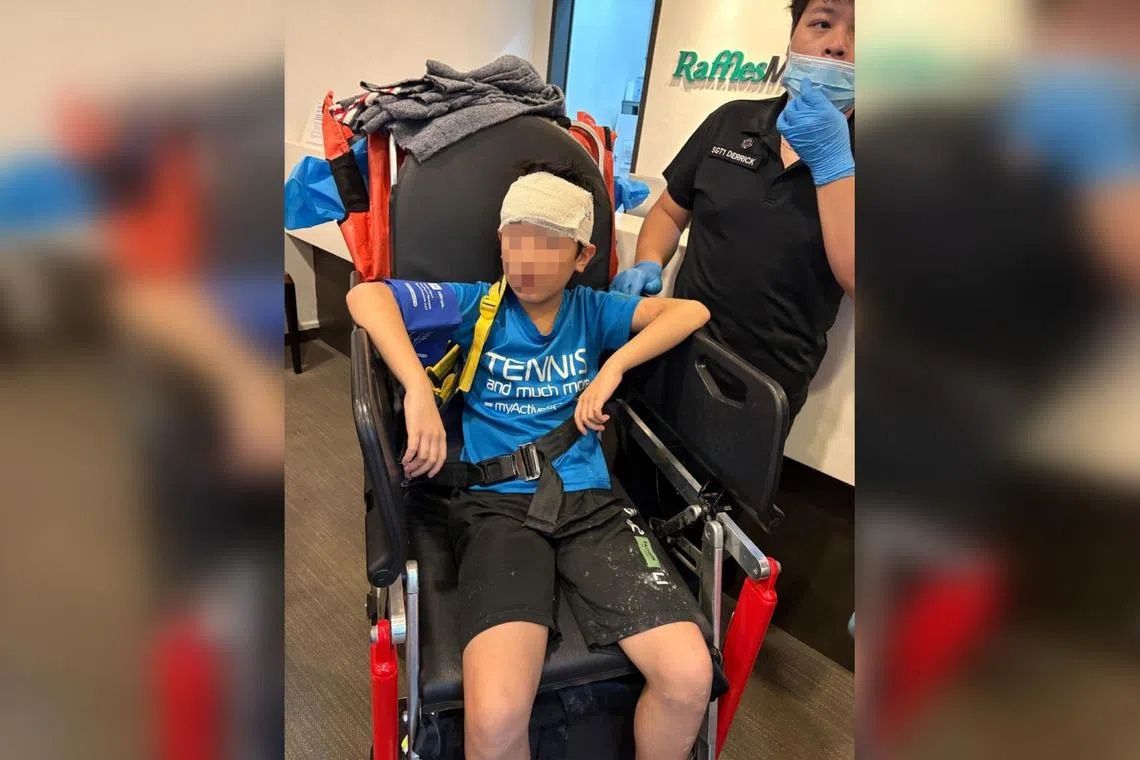
A young child was admitted to hospital after a structural failure at a popular food outlet triggered an emergency response in Singapore's Sengkang district on Saturday morning. The incident at Food Junction, located within Rivervale Mall, prompted the Singapore Civil Defence Force to deploy paramedics to the scene at approximately 10.30am on June 20. The child received medical assessment and treatment at KK Women's and Children's Hospital before being discharged to recover at home.
The collapse involved a signboard that came away from its mounting at the foodcourt entrance, with social media footage capturing the extent of the structural failure. Videos circulating on TikTok showed debris scattered across the Food Junction entrance, with portions of the ceiling still partially intact above the affected area. Bystanders maintained a cautious distance from the wreckage as emergency personnel worked to secure the immediate vicinity and assess whether additional safety hazards existed elsewhere in the establishment.
Food Junction's management confirmed awareness of the incident and outlined their immediate response protocol. A company spokeswoman explained that staff mobilised swiftly upon learning of the accident, coordinating closely with mall authorities and emergency service personnel to deliver prompt assistance to the injured customer. The outlet emphasised its commitment to passenger welfare, noting that comprehensive medical evaluation was prioritised following the initial emergency response.
Following the incident, Food Junction undertook a full-scale review and investigation to establish what mechanical or structural factors contributed to the signboard's detachment. The company indicated that this examination informed their subsequent safety reinforcement initiatives, which were implemented in conjunction with relevant regulatory bodies and compliance standards. These preventative measures suggest the outlet is taking the failure seriously and attempting to address any systemic vulnerabilities that may have permitted the collapse.
The mall resumed normal operations at the Food Junction outlet following completion of initial safety protocols and investigative procedures. This rapid restoration of service indicates that authorities determined the broader structural integrity of the foodcourt remained sound, and that the signboard collapse appeared to be an isolated incident rather than symptomatic of wider maintenance failures. The Food Junction management issued a formal apology for the accident, acknowledging the distress and concern it generated among customers and the wider community.
The affected outlet occupies ground-floor premises within Rivervale Mall, making it a high-traffic location frequented by families and shoppers throughout the day. This positioning raises particular concerns about pedestrian safety, given the potential for signage failures to impact multiple customers simultaneously during peak hours. The timing of the incident—occurring mid-morning on a Saturday—meant the foodcourt was likely moderately busy, increasing the statistical likelihood of injuries.
Singapore's Building and Construction Authority was contacted for further investigation and oversight, reflecting the regulatory framework governing commercial premises safety standards in the jurisdiction. The authority's involvement suggests formal documentation of the incident and potentially mandatory inspections of similar structures throughout retail facilities, particularly those displaying mounted signage above customer thoroughfares. Such regulatory engagement ensures that the incident contributes to broader improvements in premises management across the hospitality sector.
This incident underscores persistent challenges facing retail establishments in maintaining aging infrastructure and ensuring regular compliance with safety protocols. Even in a developed economy with stringent building codes, unexpected structural failures can occur, particularly in high-traffic commercial environments where wear patterns may be unpredictable. Mall managers and food outlet operators face continuous pressure to balance operational efficiency with rigorous maintenance schedules that could prevent such occurrences.
For Malaysian readers and regional investors monitoring Singapore's retail sector, the incident illustrates the importance of comprehensive insurance coverage and incident response frameworks for hospitality businesses. The rapid mobilisation of emergency services and coordinated response between private operators and public authorities demonstrates procedural competence, yet also highlights that such incidents remain possible regardless of regulatory environment. Operators across Southeast Asia should view this as a reminder to audit their own premises regularly, particularly mounted signage and overhead structures that could pose risks to customers below.

%22%2F%3E%3C%2Fpattern%3E%3C%2Fdefs%3E%3Crect%20width%3D%22100%25%22%20height%3D%22100%25%22%20fill%3D%22url(%23ph2h5apg)%22%2F%3E%3Crect%20width%3D%22100%25%22%20height%3D%22100%25%22%20fill%3D%22url(%23ph2h5app)%22%2F%3E%3Ctext%20x%3D%2250%25%22%20y%3D%2250%25%22%20text-anchor%3D%22middle%22%20dominant-baseline%3D%22central%22%20fill%3D%22rgba(255%2C255%2C255%2C0.95)%22%20font-family%3D%22Georgia%2C%20'Times%20New%20Roman'%2C%20serif%22%20font-weight%3D%22700%22%20font-size%3D%22320%22%20letter-spacing%3D%22-0.02em%22%3EMUDA%3C%2Ftext%3E%3C%2Fsvg%3E)