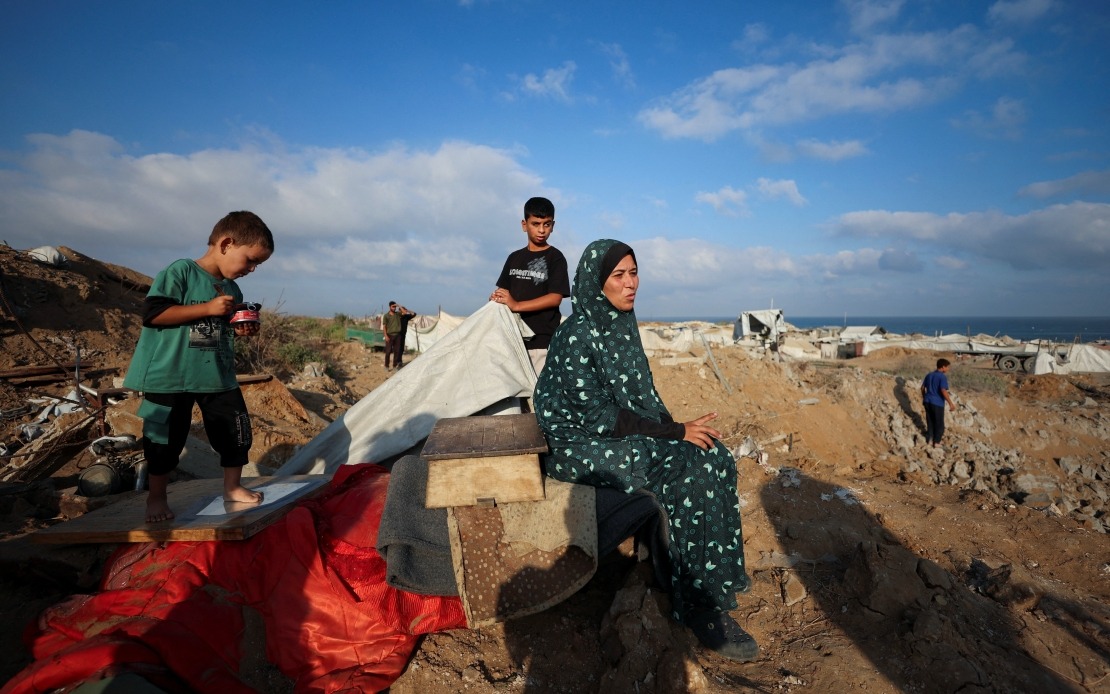
The humanitarian situation in Gaza remains dire despite temporary improvements from aid efforts, with new analysis projecting that roughly one-third of the territory's population will endure critical food shortages extending well into 2026. According to the latest Integrated Food Security Phase Classification assessment released this week, the number facing acute hunger has climbed to 1.4 million people—a significant jump from the 1.2 million documented in the April-to-June window. This deterioration underscores how fragile recent gains truly are, and carries profound implications for regional stability and humanitarian obligations that extend far beyond Gaza's immediate borders.
The scale of the projected crisis becomes clearer when examining the severity breakdown. Nearly two-thirds of Gaza's entire population—approximately 67 per cent—are expected to inhabit crisis conditions or worse, representing the deepest tier of food insecurity short of famine. Within this broader cohort, some 212,000 individuals face emergency-level circumstances, the most severe classification, with all five of Gaza's governorates already classified as being in crisis. These figures suggest a humanitarian emergency of extraordinary proportions, one affecting not isolated pockets but the overwhelming majority of the territory's 2.3 million residents.
The analysis credits a modest improvement observed between mid-April and June to the October 2025 ceasefire agreement and subsequent expansion of humanitarian operations. Food assistance reached approximately 1.49 million people in May alone, demonstrating what expanded access can accomplish. Yet this progress reveals as much about vulnerability as it does about capability. The mere fact that reaching half the population with food aid constitutes an improvement underlines the systemic collapse underpinning Gaza's economy and food systems.
Nevertheless, humanitarian workers and analysts stress that improvements achieved thus far remain precarious and reversible. Ration sizes continue falling short of nutritional requirements, with aid organisations distributing quantities insufficient to meet basic caloric and micronutrient needs. More critically, the traditional safety net of employment has vanished almost entirely—83 per cent of households report having absolutely no income source whatsoever. This means the vast majority of Gaza's families exist in complete dependence on international handouts, with no domestic economic activity to supplement or replace external assistance.
Funding constraints and operational uncertainties facing international organisations have already begun undermining these fragile gains. Humanitarian assistance flows have declined notably since February, creating a dangerous momentum toward renewed deterioration. Without immediate reversal of this funding shortfall, the projections become even grimmer. The analysis calculates that without sustained food assistance, approximately 1.9 million people—roughly 90 per cent of Gaza's entire population—would face severe acute food insecurity through December 2026. This represents the difference between a managed, though inadequate, humanitarian response and a potential breakdown of food security affecting essentially everyone in the territory.
The nutritional implications extend beyond immediate hunger to affect the most vulnerable segments. The analysis projects that 74,200 children under five years old will require treatment for acute malnutrition by April 2027, with 11,432 of these cases classified as severe. Severe acute malnutrition in early childhood carries lifelong developmental, cognitive, and health consequences, potentially affecting an entire generation's capacity to contribute to eventual reconstruction efforts. Simultaneously, 24,600 pregnant and breastfeeding women require urgent nutritional intervention, as malnutrition during pregnancy and lactation creates cascading health risks for both mothers and infants.
For Malaysian and Southeast Asian observers, Gaza's trajectory offers sobering lessons about the speed with which functioning societies can collapse into dependency and how external political decisions fundamentally shape humanitarian outcomes. The ceasefire achieved in October 2025 demonstrated that negotiated settlements can create operational space for aid delivery. Yet the analysis reveals that ceasefire alone proves insufficient without sustained international funding, political commitment to humanitarian access, and genuine cessation of hostilities. The region's experience with conflicts in Myanmar, southern Thailand, and the Philippines demonstrates that humanitarian crises rarely resolve themselves—they either improve through deliberate, sustained investment or deteriorate through neglect.
The IPC's recommendations centre on three interconnected requirements: maintaining unobstructed humanitarian access, scaling up nutrition programmes specifically targeting the most vulnerable, and achieving a permanent end to violence. Each element depends on the others. Humanitarian access requires security and stability; nutrition programmes need sustainable funding; permanent ceasefire requires political will from multiple stakeholders. The analysis underscores that humanitarian assistance, however vital, functions merely as a temporary measure addressing symptoms rather than causes. Without addressing the underlying economic collapse and security instability that created Gaza's food crisis, dependency will only deepen and expand.
The trajectory outlined in this analysis carries implications extending beyond Gaza itself. It demonstrates how quickly and completely a society's food security apparatus can unravel under conflict, and how difficult rebuilding becomes once systems have deteriorated to such an extent. For the international community, including nations like Malaysia that have consistently advocated for humanitarian principles and Palestinian rights, the figures serve as an urgent call for increased commitment rather than mere expressions of concern. The window for preventing full-scale food catastrophe remains open but is visibly narrowing.

