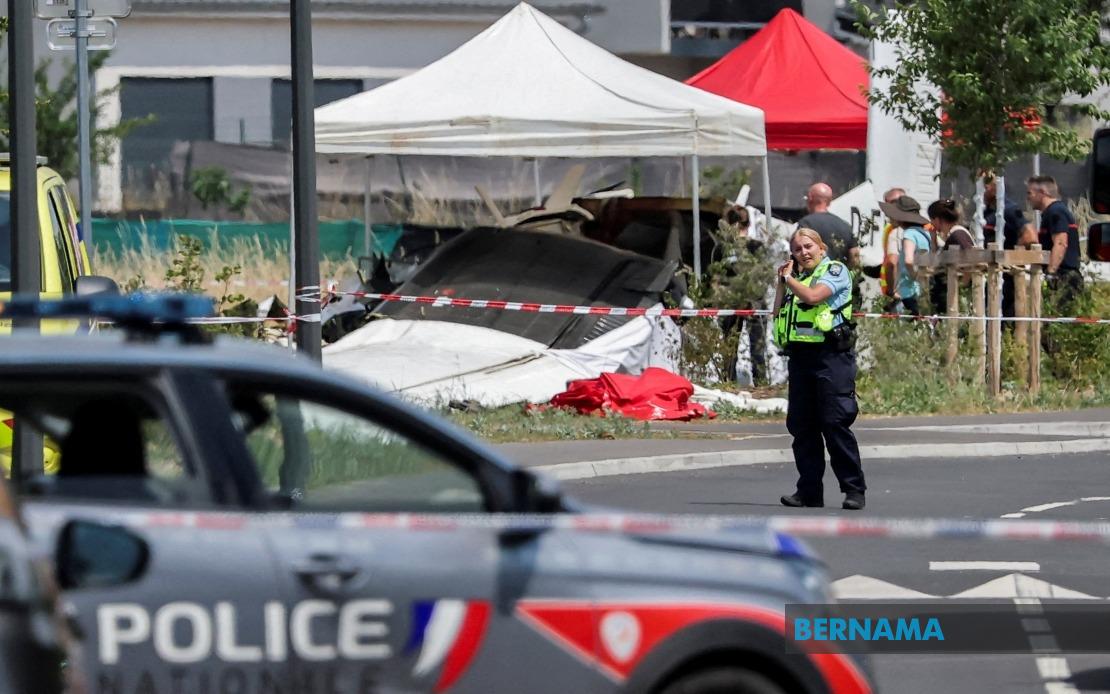
A devastating aviation disaster unfolded in eastern France on Sunday when a civilian aircraft plummeted to earth moments after departing Nancy-Essey Airport, claiming the lives of all 11 people on board. The plane came down in the town of Tomblaine, located within the Meurthe-et-Moselle department, triggering an immediate response from regional emergency services and authorities who rushed to secure the crash site.
The aircraft was operating a skydiving excursion when disaster struck, carrying two separate groups of parachutists totalling ten people alongside a pilot. Investigation into the composition of the passenger manifest revealed that the victims included independent nurses who were participating in what has been described as an initiation gathering, intermixed with professional skydiving instructors. Thierry Pechey, who oversees the Meurthe-et-Moselle branch of the Order of Independent Nurses, provided this assessment to BFMTV, clarifying the nature of the flight's purpose and the professional backgrounds of those involved.
The immediate aftermath saw coordinated efforts from governmental bodies to manage the crisis. Interior Minister Laurent Nunez made arrangements to visit the crash location during the day to assess the situation firsthand and coordinate response mechanisms. This high-level administrative engagement underscores the significance of the incident within the broader French emergency management framework and the gravity officials attached to the disaster.
Responsible for territorial administration in the region, Meurthe-et-Moselle Prefect Yves Seguy activated the departmental operational centre, establishing a command structure to oversee multiple emergency services operating at the scene. This activation allowed for real-time coordination between different response agencies, ensuring that rescue efforts, investigation procedures, and public safety measures proceeded in an organised manner. The prefect's intervention represented standard protocol for incidents of this magnitude within the French administrative system.
Local law enforcement took steps to protect the integrity of the crash site by requesting that members of the public refrain from approaching the vicinity of Rue Salvador Allende in Tomblaine. These restrictions were implemented to preserve evidence crucial for subsequent investigations while providing emergency responders and forensic teams with unimpeded access to conduct their operations. The containment of the immediate area represents a standard measure adopted in aviation disasters to facilitate thorough examination of wreckage and circumstances surrounding the crash.
For Malaysian readers and observers across Southeast Asia, this incident carries broader relevance regarding aviation safety standards and regulatory frameworks governing commercial air operations throughout Europe. The involvement of recreational skydiving operations highlights the complexity of liability and safety protocols when civilian aircraft engage in activities beyond standard passenger transportation. Such crashes, though rare in developed aviation markets, prompt discussions about equipment maintenance cycles, pilot qualification requirements, and passenger briefing procedures.
The composition of the passenger manifest—mixing professional instructors with civilians undertaking initiation activities—raises questions about how aviation authorities balance recreational opportunity with safety imperatives. Within the context of Southeast Asian aviation development, where recreational aviation activities remain less prevalent than in Western Europe, this incident provides instructive lessons about risk management when aircraft operate beyond their standard envelope. Regulators in Malaysia and neighbouring countries may draw insights from French investigative findings regarding how best to oversee recreational aviation operations.
The fact that all occupants perished suggests either catastrophic structural failure immediately upon takeoff or a rapid loss of control followed by impact at high speed. Early reporting does not yet indicate mechanical malfunction, weather interference, or pilot error as contributing factors, leaving investigators with the full spectrum of possibilities to examine. The French air accident investigation authority will likely conduct a thorough examination of the wreckage, flight data records if available, and maintenance histories to establish causation.
For regional aviation operators and regulators, this tragedy underscores the persistent necessity for rigorous maintenance standards, comprehensive pilot training programs, and adherence to weight-and-balance calculations regardless of aircraft size or perceived simplicity of operations. The incident serves as a sobering reminder that recreational aviation, while generally safe when properly managed, remains inherently complex and demands the same degree of professional diligence as scheduled commercial operations. As investigations progress and details emerge, the findings will likely inform discussions within aviation regulatory bodies across Europe and internationally regarding best practices in recreational aircraft operations.
The immediate human toll—eleven lives lost including nurses pursuing professional development and experienced skydiving instructors—represents a profound tragedy for families, colleagues, and communities connected to those aboard. The loss highlights the risks undertaken by participants in recreational aviation activities and the responsibilities borne by operators to maintain standards that minimise danger. Regional authorities and the broader French aviation community will now focus on establishing comprehensive explanations for this catastrophic event, with findings potentially reshaping how similar operations are conducted across the continent.

