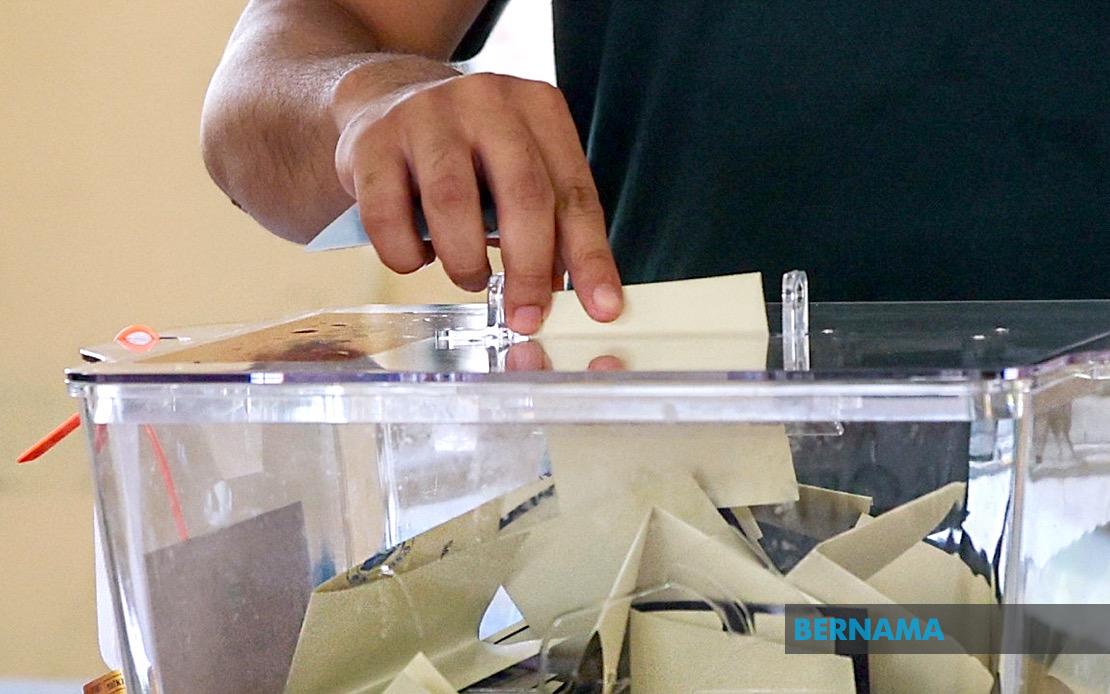
The frustration of democratic participation turned to bitter disappointment for Rahmat Shukor, a 57-year-old self-employed businessman, when he arrived at his designated polling centre in Johor Bahru precisely one minute after voting concluded during the 16th Johor state election. After steering his vehicle for 120 kilometres from his mother's home in Sri Medan, Batu Pahat, with the explicit intention to cast his ballot at SJK (C) Foon Yew 4, Rahmat found himself on the wrong side of an immovable deadline—a sobering reminder of how geography and circumstance can conspire against even the most determined voters.
The journey that should have been straightforward became a protracted ordeal when unusually severe traffic congestion gripped the highway system connecting Batu Pahat to Johor Bahru. Beginning from the Simpang Renggam Rest and Recreation Area, the congestion extended through Sedenak and onto the Skudai road, creating the kind of gridlock that transforms what might ordinarily be a three-hour drive into an exhausting marathon of brake lights and stillness. Rahmat maintained continuous forward momentum without rest stops, determined to reach the polling centre before the 6pm cutoff, yet the vagaries of traffic flow proved beyond his control or prediction.
In his frustrated account to the media outside the polling centre, Rahmat detailed his efforts to circumvent the obstruction by attempting multiple alternative routes in hopes of bypassing the congestion along the main arterial roads. These tactical decisions, born from experience and desperation, ultimately proved insufficient against the scale of the traffic problem. He carried documentation and photographs evidencing his predicament—tangible proof that he had been ensnared in circumstances beyond his agency, yet such evidence became merely poignant testimony to a lost opportunity rather than a legal remedy.
The timing of Rahmat's overnight stay in Sri Medan proved particularly consequential. He had originally scheduled a return to Johor Bahru the previous evening but elected to remain at his late mother's residence, exhausted from his work in plantation operations and contract labour. This decision to rest rather than push forward that evening—entirely reasonable given his fatigue—inadvertently positioned him to experience the unforgiving finality of an electoral deadline. While this choice may have seemed pragmatic at the time, it collapsed his margin for error to near zero.
Rahmat's domestic situation compounded his singular disappointment. His wife and other family members had returned to Johor Bahru earlier on the Friday before election day and had successfully exercised their voting rights without incident. The fact that he alone among his household missed the opportunity for political participation added a layer of isolation to his setback, transforming what could have been a collective family civic exercise into a solitary act of disenfranchisement. He became the exception to his family's otherwise complete democratic engagement.
Despite the genuine sting of the moment and the considerable investment of time and effort that yielded nothing, Rahmat publicly adopted a posture of acceptance. He articulated no demands for special provision or exception-making, nor did he suggest the electoral authorities bore responsibility for his arrival. Instead, he expressed hope that the democratic machinery would function properly and that the election process would unfold without controversy—a magnanimous stance that perhaps reflects either philosophical maturity or resignation to the inexorability of statutory rules.
The incident underscores an often-overlooked vulnerability within electoral systems: the tension between accessibility and procedural rigidity. While voting regulations necessarily establish definitive closing times to ensure administrative order and prevent endless voting extensions, such absolutism can disadvantage voters operating under geographical constraints, particularly those from peripheral areas attempting to participate in state elections held in regional centres. For Malaysians in dispersed communities, the logistics of reaching polling centres in larger urban areas within a constrained timeframe can itself constitute a formidable barrier to franchise exercise.
Johor's 16th state election encompassed 1,076 polling centres distributed across the state, all operating under the same temporal framework. The statewide closure at 6pm applied uniformly, indifferent to traffic patterns, distance variables, or individual circumstance. This uniformity serves important administrative purposes, yet it inevitably catches some voters—particularly those travelling significant distances—within its unforgiving edges.
Rahmat's experience becomes particularly resonant when considered against broader patterns of electoral participation in Malaysia. The drive from Batu Pahat to Johor Bahru represents the kind of inter-district journey that many Malaysians undertake during election periods, motivated by registration in their constituencies of origin rather than current residence. For transient workers, business proprietors with operations across multiple locations, and family members returning to vote in home constituencies, the physical logistics of voting can rival the decision-making aspects of democratic participation in complexity and cost.
The incident also highlights practical questions about how electoral administration might accommodate voters facing genuine obstruction without creating loopholes that invite abuse. Rahmat possessed documentary evidence of his predicament in the form of traffic photographs, yet the electoral framework contains no mechanism for considering such exceptional circumstances. Whether electoral systems should develop such provisions—perhaps allowing voting extension during documented traffic emergencies—remains a policy question that extends beyond Rahmat's individual misfortune.
Moving forward, Rahmat's experience may serve as a catalytic anecdote prompting discussion about voter accessibility, particularly regarding geographically dispersed voters participating in state-level elections. The Malaysian electoral apparatus has historically emphasised accessibility through ubiquitous polling centre distribution, yet geographical accessibility differs fundamentally from temporal accessibility, especially when voters must cross significant distances under constrained timeframes.

