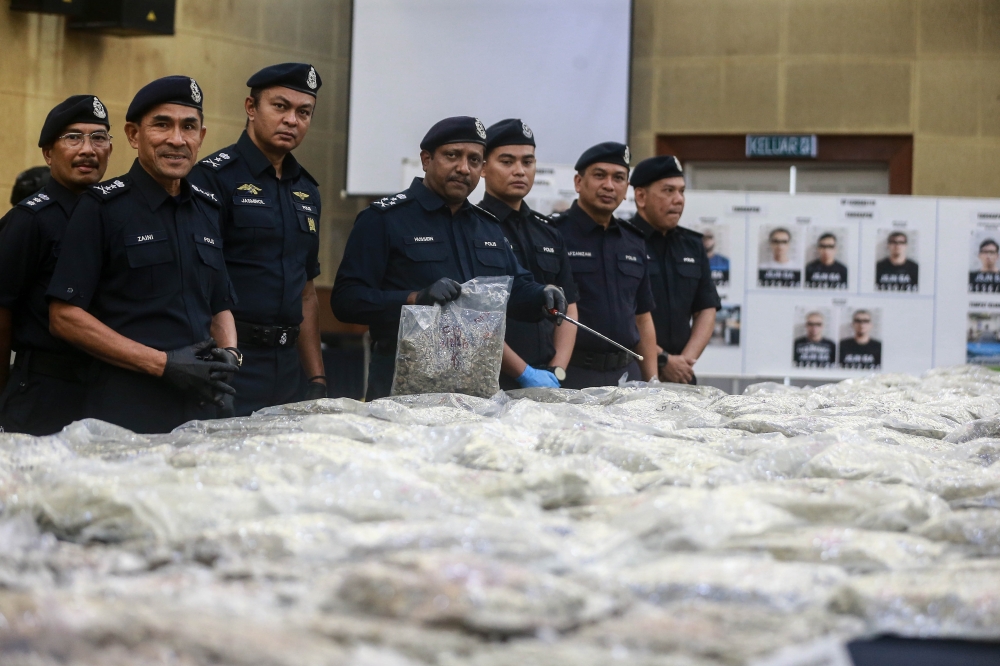
Malaysian authorities have uncovered a troubling pattern of drug trafficking involving nationals operating through Kuala Lumpur International Airport, with police confirming that 14 citizens have been detained abroad since the start of the year for their alleged participation in smuggling networks. The disclosures underscore the scale of the challenge facing enforcement agencies in combating sophisticated transnational drug operations that exploit Malaysia's status as a major transportation hub in Southeast Asia.
The arrests represent a significant enforcement success in tracing the regional reach of smuggling conspiracies that originate or transit through KLIA, one of the busiest aviation gateways in the region. Rather than treating individual cases in isolation, investigators have begun mapping connections between domestic recruitment networks and the international distribution mechanisms that move illicit substances across borders. This intelligence-led approach suggests that the 14 detentions are likely the visible tip of a much larger organisational structure still under investigation by both Malaysian and foreign law enforcement partners.
The involvement of Malaysian nationals in overseas drug smuggling reflects broader shifts in how criminal syndicates now organise their operations. Rather than concentrating activities in a single jurisdiction, international trafficking rings deliberately distribute different functions—procurement, transportation, storage, and distribution—across multiple countries. This compartmentalisation strategy makes it substantially harder for any single nation's authorities to dismantle entire networks, as breaking one link does not immediately expose the broader conspiracy. Malaysian citizens, whether deliberately recruited or opportunistically approached, feature increasingly in these distributed models.
KLIA's prominence in these cases is not coincidental. As the primary international aviation hub for Malaysia and a crucial node in Southeast Asian air traffic, the airport handles millions of passengers annually and processes vast quantities of cargo. The sheer volume creates concealment opportunities for determined smugglers willing to employ creative concealment methods or corrupt officials. Moreover, the airport's connectivity to major narcotics consumption markets globally—including in Europe, North America, and East Asia—makes it an attractive staging point for syndicates attempting to reach high-value markets where drugs command premium prices.
Malaysian law enforcement has intensified focus on recruitment networks that identify and approach potential smugglers, often targeting individuals with financial vulnerabilities or those seeking quick returns. The modus operandi typically involves intermediaries offering substantial sums to mules willing to carry concealed substances through airport security and onto international flights. Once suspects reach destination countries, they become the responsibility of foreign law enforcement, creating a coordination challenge that has prompted Malaysian police to develop closer information-sharing arrangements with overseas counterparts.
The 14 documented arrests since January indicate that detection mechanisms at both KLIA and destination airports are functioning with reasonable effectiveness, though the cases that reach international arrest represent only a fraction of actual smuggling attempts. For every person apprehended, intelligence analysts typically estimate that multiple others successfully complete their journeys. This reality reinforces the need for enhanced passenger profiling, baggage screening, and canine detection systems at Malaysia's main airport, investments that carry significant fiscal implications for the aviation authority and government budgets already stretched across competing security priorities.
The implications for Malaysia extend beyond criminal justice considerations into diplomatic and trade dimensions. Countries experiencing significant drug inflows originating from or transiting through Malaysian territory often raise concerns through bilateral channels and multilateral forums. Perceptions of inadequate enforcement can influence international cooperation on extradition, mutual legal assistance, and even aviation and trade relationships. Conversely, demonstrable success in disrupting smuggling networks enhances Malaysia's credibility as a responsible regional partner committed to combating transnational crime.
For ordinary Malaysian travellers, the enforcement challenges at KLIA carry practical consequences. Enhanced security measures introduced to disrupt smuggling operations can lengthen processing times and create inconvenience for legitimate passengers. Airport operators and airlines must balance security imperatives against service efficiency in an increasingly competitive regional aviation market where passenger experience influences route choices and airline loyalty. The hidden costs of drug smuggling thus extend well beyond enforcement budgets into the broader travel ecosystem.
The overseas arrests also highlight disparities in sentencing and detention conditions across different jurisdictions. Malaysians convicted of drug offences abroad may face substantially harsher penalties than they would receive under domestic law, including in countries where drug trafficking attracts capital punishment. These divergent outcomes sometimes attract political attention within Malaysia, with family members and civil society advocates raising questions about consular assistance, legal representation, and whether adequate warnings about overseas legal risks are provided to vulnerable populations targeted by smugglers.
Police investigation into these cases will likely yield intelligence about organisational structures, recruitment methods, financial flows, and corruption vectors that enable smuggling operations. Analysing patterns across the 14 arrests may reveal common intermediaries, facilitators, or specific corruption points within airport operations that require institutional attention. This intelligence can inform targeting of larger criminal enterprises rather than solely pursuing individual mules, though capacity constraints often force enforcement agencies to focus on the most visible and accessible components of criminal networks.
The challenge ahead for Malaysian authorities involves scaling up detection and disruption capabilities while maintaining operational awareness of how smuggling tactics evolve in response to enforcement pressure. Syndicates adapt routes, methods, and personnel continuously, necessitating equally adaptive and intelligence-led responses. Regional cooperation through forums like ASEAN and engagement with major destination countries remains essential, as no single nation can effectively address drug trafficking without coordinated international action.

