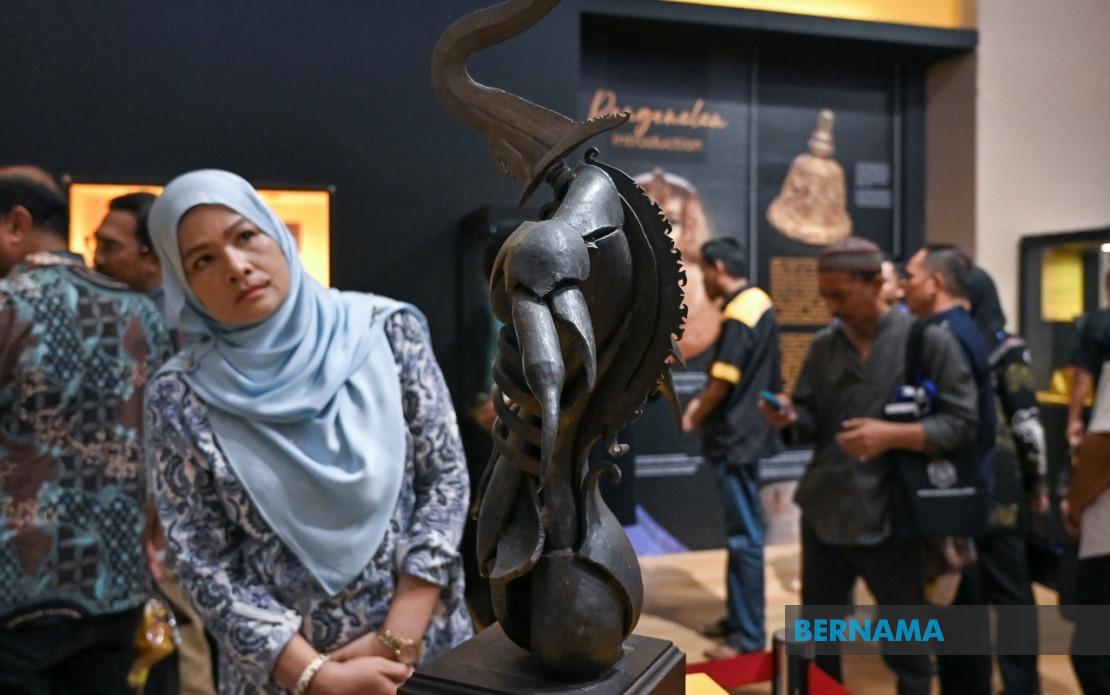
The Perak Museum in Taiping has opened an ambitious new exhibition bringing together 140 carefully selected metal artefacts that illuminate the intersection of craftsmanship, spirituality and artistic expression in Malay heritage. Titled 'Magic and Metal: Spirit, Power and Art', the showcase runs through December 31 and represents the first comprehensive gathering of the museum's early metal-based collections on public display, organising them around three thematic pillars that frame how Malay societies have historically understood and utilised metal as a medium infused with symbolic resonance.
Museum director Mohd Nasrulamiazam Mohd Nasir explained that the exhibition's central innovation lies in how it contextualises metal beyond mere functional or decorative purposes, instead positioning it as a vehicle through which spiritual beliefs, political authority and aesthetic refinement were simultaneously expressed. By structuring the display around spirit, power and art, curators invite visitors to consider how a single object—whether weapon, ornament or ritual implement—could operate simultaneously across multiple registers of meaning within traditional Malay society. This interpretive framework proves particularly valuable for contemporary audiences seeking to understand how material culture embodied worldviews and social hierarchies in pre-modern and early modern Southeast Asia.
The exhibition draws not solely from the Perak Museum's own reserves but represents collaborative curatorial work. Notable private collections have been integrated into the display, including sculpture works from Raja Syahriman Raja Aziddin, silver ornaments sourced through Yayasan Al-Amin, and a significant weaponry collection assembled by Nor Azahar Ibrahim. This strategic partnership approach reflects evolving museum practice in Malaysia, where institutional narratives increasingly incorporate perspectives and holdings from scholars, cultural custodians and private collectors, thereby enriching and complicating official heritage narratives.
Among the exhibition's most notable pieces is a nineteenth-century Malay traditional weapon featuring an intricately carved snail-shell hilt that once belonged to Sultan Abdullah Muhammad Shah II, the 26th Sultan of Perak. The inclusion of such royal regalia serves multiple functions within the exhibition's logic: it documents historical craftsmanship excellence, illustrates the intersection of martial prowess and aesthetic refinement, and demonstrates how metalwork functioned as a marker of elevated social status. Alongside this piece sits an eighteenth-century suit of Bugis warrior armour, positioning Malay metalwork within the broader Southeast Asian context while acknowledging the region's pre-Islamic and trans-regional artistic traditions.
The display also features a silver spoon and fork set once belonging to Raja Laut Ibni Sultan Muhammad Shah, the second son of Selangor's third Sultan, exemplifying how metal working traditions extended beyond weapons and armour into the domestic and ceremonial spaces where elite families conducted their daily lives and performed their status. Such objects reveal the sophistication of Malay metalworking techniques applied across diverse functional categories and demonstrate the aesthetic cultivation expected of royal and noble households.
Director-general of the Department of Museums Malaysia, Datuk Kamarul Baharin A. Kasim, formally inaugurated the exhibition, signalling federal institutional support for what represents a broader strategic initiative to reposition museums as active knowledge centres rather than passive repositories. The Department of Museums Malaysia has articulated a vision of museums as engines of research, heritage preservation and public education—roles that extend their traditional archival functions into contemporary domains of cultural interpretation and community engagement. The Taiping exhibition exemplifies this mandate by providing interpretive frameworks that help diverse audiences decode the meanings embedded in historical objects.
Visitor projections suggest the exhibition aims to attract approximately 100,000 people over its six-month run, with nearly 20,000 visitors already recorded during its initial weeks. These figures indicate substantial public interest in material culture exhibitions, particularly when presented through thematically coherent narratives that connect objects to larger cultural histories. For Malaysian museums competing for attention in an era of digital entertainment and online content consumption, such visitor numbers validate investment in substantial, intellectually ambitious physical exhibitions.
The exhibition arrives at a particularly significant moment in Malaysian heritage discourse. Growing regional interest in Southeast Asian material culture, increased scholarly attention to pre-Islamic and early Islamic Southeast Asian metalwork, and rising public curiosity about indigenous artistic traditions have collectively created favourable conditions for exhibitions that celebrate Malay craftsmanship without orientalism or romanticism. By presenting these objects within frameworks emphasising aesthetic achievement, spiritual significance and cultural continuity, the Perak Museum contributes to reassessments of Malay artistic traditions that move beyond colonial-era categorisations.
For visitors from across Southeast Asia and beyond, the exhibition offers valuable insights into Malay cultural practices and worldviews that extended throughout the region historically. The prominence of weaponry, ornamental metalwork and ritual objects reveals hierarchies of value within traditional societies, while the technical sophistication evident in individual pieces demonstrates the specialised knowledge and skill that metalworking traditions required. Understanding these traditions proves increasingly important as Southeast Asian nations work to reclaim and celebrate cultural inheritances often obscured by colonial histories and modernisation narratives.
The exhibition's extended run through the final day of the year provides ample opportunity for educational institutions, cultural researchers and general publics to engage with these materials. Museums increasingly serve as sites where communities negotiate relationships with their pasts and articulate cultural identities for contemporary contexts. By showcasing metal heritage treasures alongside interpretive guidance emphasising their spiritual, political and artistic dimensions, the Perak Museum contributes to ongoing conversations about how Southeast Asian societies created meaning, expressed authority and achieved aesthetic excellence through metalwork.

