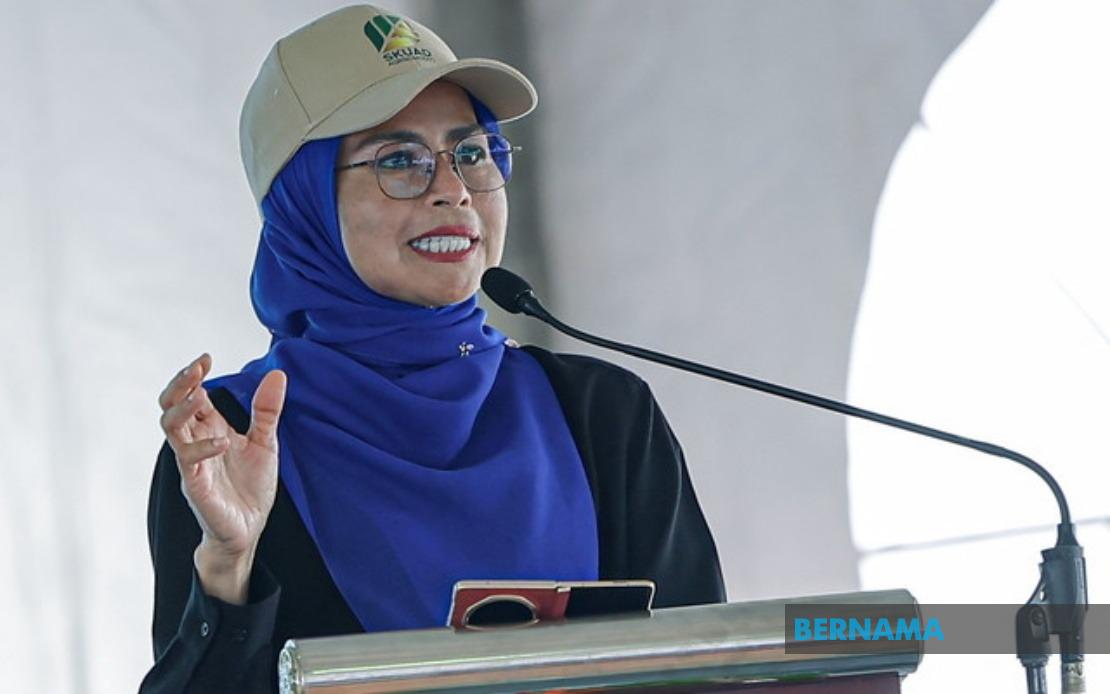
More than 144,000 smallholders have received approval for assistance under Malaysia's agricultural support framework, signalling the government's commitment to broadening participation in the country's commodity sector. The milestone was highlighted during the Salam Agrikomoditi MADANI programme at Dataran Melang in Kuala Pilah on July 25, where Plantation and Commodities Minister Datuk Seri Dr Noraini Ahmad underscored the scale of the initiative whilst acknowledging a persistent challenge: many eligible farmers remain unaware of available schemes or uncertain about how to apply.
The disconnect between programme availability and farmer knowledge represents a significant barrier to rural development. Noraini stressed that despite the substantial approval figure, substantial numbers of potential beneficiaries have either not yet completed registration or lack familiarity with the application mechanics. This gap speaks to a broader issue affecting agricultural extension across Southeast Asia—the difficulty of translating government support into concrete farmer participation, particularly among smallholders operating in remote areas with limited digital access or formal market integration.
Addressing this gap directly, Noraini called on attendees to view the Salam Agrikomoditi roadshow as more than a showcase event. She explicitly encouraged farmers to engage with ministry officers, ask questions about eligibility criteria, and identify specific assistance channels suited to their circumstances. Her remarks reflected recognition that passive information dissemination has proven insufficient; farmers need face-to-face interaction with government representatives to build confidence in application processes and understand which support mechanisms best suit their operations and income goals.
The Salam Agrikomoditi programme itself represents a strategic pivot toward community-centred service delivery. Rather than requiring smallholders to navigate government offices in urban centres, the initiative brings ministry officials and agency representatives directly to rural areas, embedding information services within local contexts. This decentralised approach encompasses multiple support pillars: financial assistance schemes, technical advisory services, vocational training pathways, employment opportunities, and entrepreneurship development. By clustering these services at a single event, the government aims to reduce transaction costs for farmers seeking comprehensive support.
Deputy Prime Minister Datuk Seri Dr Ahmad Zahid Hamidi, who officiated the Kuala Pilah event, positioned the programme as instrumental to localised economic development. His framing highlighted potential benefits not only for individual smallholders but for the broader commodity ecosystem within Kuala Pilah and Negeri Sembilan. This perspective reflects growing recognition within Malaysian policymaking that agricultural prosperity requires systemic support—improving production capacity among individual farmers while simultaneously strengthening supply chain coordination, market access, and sector infrastructure.
Noraini outlined the ministry's intention to expand the Salam Agrikomoditi programme across the country, transforming it from a localised initiative into a nationwide engagement strategy. This rollout addresses a fundamental principle of inclusive agricultural development: that government outreach must meet farmers where they are, both geographically and informally. By establishing regular roadshows in different districts, the ministry aims to normalise farmer-government interaction and create recurring opportunities for smallholders to update their knowledge of evolving support mechanisms.
The minister articulated a secondary benefit of grassroots engagement: direct access to farmer voices. By hosting local events, ministry officials can gather unmediated feedback about actual farmer challenges, identify knowledge gaps, and understand which assistance types address genuine operational constraints. This intelligence-gathering function transforms community outreach from a one-directional information channel into a two-directional feedback mechanism, potentially improving the design and targeting of future government interventions.
For Malaysian smallholders, the implications are substantial but conditional. The approval of 144,894 farmers signals government willingness to commit resources to agricultural support at scale. However, accessing this support requires farmers to overcome informational barriers, navigate application procedures, and identify programmes matching their specific needs. The Salam Agrikomoditi roadshows represent a structural attempt to lower these barriers, but their effectiveness depends on sustained implementation, adequate resourcing of ministry staff at local events, and genuine flexibility in how assistance can be tailored to diverse farm operations.
Regionally, Malaysia's approach offers lessons for other Southeast Asian governments grappling with similar challenges: how to connect smallholder farmers with government support systems in contexts where digital literacy remains patchy and rural infrastructure is uneven. The emphasis on decentralised service delivery and farmer engagement echoes best practices emerging across the region, suggesting a convergence toward community-centred agricultural development models.
Ahmad Zahid's commitment to supporting Kuala Pilah's transformation into a leading agricultural district reflects broader political emphasis on rural development ahead of electoral cycles. However, beyond electoral considerations, the substance of the pledge—sustained government support for commodity sector growth—carries genuine significance for rural communities dependent on agricultural income. The success of the Salam Agrikomoditi programme will ultimately depend on follow-through: whether approved smallholders actually receive promised assistance, whether technical support translates into improved farm productivity, and whether market linkages evolve alongside production support.
The 144,894 approval figure masks considerable variation across smallholders in terms of farm size, commodity type, technical capacity, and market access. Disaggregating this aggregate statistic would reveal whether approvals have been equitably distributed across different agricultural zones and farmer demographics. The ministry's nationwide expansion offers opportunity to address any imbalances, but only if selection and approval processes explicitly monitor equity outcomes rather than focusing solely on aggregate numbers.

