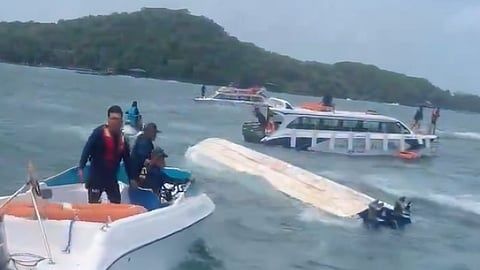
A tragic maritime accident off southern Vietnam's coast has claimed the lives of 15 Indian tourists after their chartered speedboat overturned near one of the country's most celebrated island destinations. The vessel, which was ferrying Indian holidaymakers returning from an excursion, went down approximately 400 metres from Hon May Rut Ngoai Island, situated in the waters adjacent to Phu Quoc, Vietnam's largest and most commercially developed island resort.
The ill-fated vessel had been transporting a total of 32 Indian visitors alongside four Vietnamese crew members when it capsized. Initial accounts from witnesses present at the scene indicated that nearby commercial and private boats immediately responded to the emergency, with crew members launching rescue efforts and beginning to pull survivors from the water. The rescue operation proved extraordinarily challenging, as numerous passengers remained trapped within the submerged or partially submerged vessel, complicating extraction efforts and slowing the overall rescue timeline.
Vietnam's official emergency response infrastructure subsequently mobilized, with border guard units, naval personnel, coast guard assets, and other specialized rescue organizations arriving at the disaster site. Despite these coordinated efforts, the challenging conditions and the number of individuals trapped within the vessel's hull ultimately limited the rescue operation's effectiveness. By the time comprehensive recovery operations concluded, 21 people had been successfully extracted and revived, though all 15 fatalities had been recovered from the water.
The survivors sustained injuries ranging from minor to serious, and all were transported to nearby medical facilities for emergency treatment and assessment. Vietnamese health authorities have not yet released detailed information regarding the severity of injuries sustained by rescued passengers or their current condition. The incident represents one of the most serious tourist-related maritime disasters in the region in recent years and raises immediate questions about safety protocols governing tourist operations in Vietnamese waters.
Phu Quoc, situated within the Gulf of Thailand, has emerged as one of Southeast Asia's most rapidly developing tourism hubs, transforming from a relatively quiet island community into a major international beach destination over the past decade. The island's proximity to other regional attractions, combined with its reputation for pristine white-sand beaches and crystal-clear waters, has made it an essential stopover for both regional travellers and international tourists. Approximately 10 kilometres south of Phu Quoc lies Hon May Rut Island, another popular excursion destination that draws day-trippers seeking snorkelling, swimming, and coastal scenery.
The Phu Quoc tourism industry annually welcomes millions of visitors from across Asia, Europe, and beyond, generating substantial foreign exchange revenue for Vietnam. Indian tourists represent a significant and growing portion of international arrivals to Vietnamese destinations, with tour operators regularly organizing group excursions combining cultural experiences, beach relaxation, and island-hopping itineraries. The speedboat capsizing incident will likely raise serious concerns among travel agencies and tour operators regarding safety standards for maritime activities throughout the region.
Authorities have launched a comprehensive investigation to determine the precise circumstances leading to the vessel's capsize. Preliminary inquiries will examine multiple potential contributing factors, including weather conditions at the time of the incident, the vessel's mechanical condition and maintenance history, crew experience and certification levels, passenger weight distribution and loading procedures, and adherence to Vietnamese maritime safety regulations. The investigation's findings will be critical not only for understanding this specific tragedy but also for informing future safety improvements across Vietnam's tourist marine transportation sector.
The incident underscores persistent safety challenges affecting maritime tourism throughout Southeast Asia, where rapid growth in coastal tourism has sometimes outpaced the development of comprehensive regulatory frameworks and enforcement mechanisms. Many privately operated speedboat and ferry services operate in a regulatory environment characterized by inconsistent standards, variable enforcement, and limited oversight. Tour operators and vessel owners frequently prioritize operational speed and profitability over comprehensive safety measures, maintenance protocols, and passenger capacity limitations.
For Malaysian readers and regional stakeholders, this tragedy carries particular significance given that Malaysian tourists frequently utilize similar speedboat services and island-hopping excursions throughout the region. The incident serves as a stark reminder of the importance of verifying operator credentials, checking vessel maintenance records, and insisting on comprehensive safety briefings before embarking on maritime activities. Malaysian tourism authorities may wish to conduct reviews of safety standards governing marine tourist operations both domestically and among recommended regional destinations.
The Vietnamese government faces mounting pressure to strengthen maritime safety regulations and enforcement mechanisms governing tourist operations. Such measures could include mandatory safety equipment inspections, standardized crew training and certification requirements, strict passenger capacity limitations based on vessel specifications, regular independent safety audits, and substantial penalties for non-compliance. However, implementing comprehensive regulatory improvements will require sustained commitment and adequate funding, as Vietnam continues balancing tourism industry growth with emerging safety imperatives.
The Indian government has been notified of the incident and is coordinating with Vietnamese authorities regarding victim identification, repatriation procedures, and investigation participation. The tragedy will likely prompt Indian tour operators to reassess safety protocols governing Vietnam excursions and may result in revised recommendations to prospective travellers regarding maritime activities. Regional tourism boards throughout Southeast Asia will undoubtedly monitor the investigation's conclusions and recommendations closely, as findings may influence safety standards across the broader tourism industry.
The speedboat capsizing represents a sobering reminder of tourism's inherent risks and the critical importance of prioritizing passenger safety over commercial considerations. As maritime tourism continues expanding throughout Southeast Asia, stakeholders must collectively commit to establishing and maintaining rigorous safety standards that protect the millions of annual visitors while preserving the region's tourism competitiveness and reputation.

