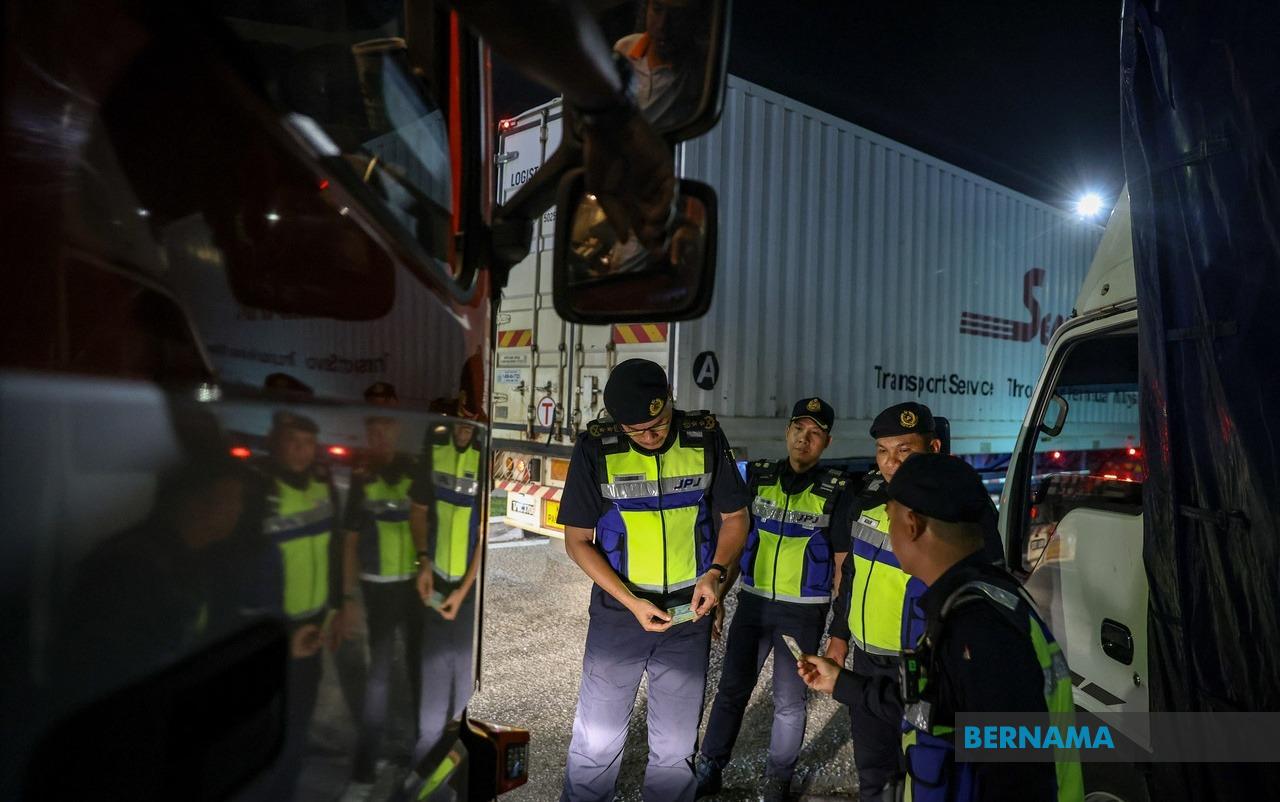
Authorities in Johor have intensified scrutiny of professional drivers on the road, with a significant integrated enforcement exercise yielding 16 positive drug test results among commercial vehicle and public transport operators during the first ten days of July. The operation, conducted across multiple strategic locations throughout the state, represents a concerted effort by several government agencies to address substance abuse among a sector critical to the nation's logistics and public mobility networks.
The Johor Road Transport Department coordinated the operation in partnership with the Royal Malaysia Police, the National Anti-Drug Agency, and PLUS Malaysia Berhad, the highway concessionaire. Testing stations were positioned at highway rest and service areas, the JPJ Enforcement Station in Pagoh, and bus terminals to maximize coverage and catch drivers at various points in their journeys. This multi-agency approach reflects growing recognition that road safety requires integrated solutions spanning enforcement, health, and public transport oversight.
Among 164 drivers screened through urine testing, substance use was distributed across multiple drug categories. Methamphetamine emerged as the most prevalent problem, with ten drivers testing positive for the stimulant in its various forms including crystal methamphetamine, commonly known locally as ice. Ganja and morphine accounted for the remaining positive cases, with two and one driver respectively found to have consumed these substances. The concentration of methamphetamine positives among professional drivers underscores a particular vulnerability within this workforce, where the drug's stimulant properties might appeal to those managing long-haul schedules or overnight routes.
The consequences for identified drivers are substantial and permanent in nature. JPJ director Zulkarnain Yasin confirmed that the department will exercise its authority under Section 56(4) of the Road Transport Act 1987 to suspend or revoke vocational licenses held by drug-positive drivers. This administrative consequence effectively ends careers in professional transportation for affected individuals, creating a significant deterrent beyond criminal penalties that may also apply. For Malaysia's transport industry, which faces persistent driver shortages in some regions, such permanent licensing revocations represent a loss of trained personnel and capacity.
The operation also revealed a broader landscape of regulatory violations extending far beyond substance abuse. The enforcement action identified 707 instances of drivers operating without valid driving licenses—a concerning figure that speaks to either deliberate evasion or administrative negligence. Vehicle tax and insurance compliance issues were equally prominent, with 626 vehicles operating with expired road tax and 574 lacking current insurance coverage. These administrative violations create liability cascades affecting not only individual drivers but transport operators and insurers caught in claim disputes.
Commercial vehicle-specific violations added another layer to the enforcement findings. One hundred and twenty-eight drivers were operating Goods Vehicles without proper Goods Vehicle Licenses, while 113 vehicles were significantly overloaded beyond permissible limits. The combination of overloading and inadequate licensing suggests potential organized non-compliance within certain segments of the haulage industry, where cost-cutting measures may compromise both road safety and regulatory adherence. Malaysia's road fatality statistics consistently reflect heavy vehicle involvement in serious accidents, making these findings particularly relevant to the national road safety agenda.
Technical infractions further illustrated systemic maintenance and modification issues across the surveyed fleet. Thirty-nine vehicles showed evidence of unauthorized modifications, while thirty demonstrated tire specifications below safety standards. The broader category of technical violations exceeded nine hundred cases, indicating widespread degradation of vehicle standards across the commercial transport sector. These mechanical deficiencies compound the risks already elevated by driver impairment and overloading, creating multiplicative hazards on Malaysian highways where traffic density and road conditions vary dramatically.
The operation's timing and scope reflect heightened enforcement activity during the first half of 2024, as authorities attempt to address persistent road safety challenges through sustained, coordinated interventions. For Malaysian road users sharing highways with commercial vehicles, such operations provide incremental safety improvements by removing impaired drivers and identifying mechanically compromised vehicles. However, the raw numbers—16 drug positives from 164 tests—suggest that substance abuse among professional drivers may represent only the visible portion of a larger compliance problem.
From a regional perspective, Malaysia's approach through the JPJ, police, and anti-drug agency coordination offers a model for Southeast Asian nations grappling with similar transport safety challenges. The integration of specialized agencies demonstrates that road safety transcends traditional traffic enforcement and requires convergence of public health, law enforcement, and regulatory expertise. Johor's geographic significance as a major transport corridor linking Malaysia to Singapore compounds the importance of maintaining high safety standards on its roads.
The administrative mechanisms available to JPJ—particularly the license revocation authority—provide enforcement teeth that purely financial penalties might lack. For professional drivers whose livelihoods depend on valid credentials, the threat of permanent disqualification creates stronger behavioral incentives than routine fines. Yet the operation also exposes limitations in existing compliance infrastructure, where such violations accumulate to the point that thousands of vehicles can operate substandard while law enforcement identifies them only during concentrated enforcement sweeps.
Future road safety improvements in Johor will likely depend on whether these periodic operations evolve into sustained compliance monitoring. The integration demonstrated here—involving highway operators, police, transport regulators, and anti-drug authorities—requires institutional coordination that remains challenging to maintain consistently. For transport operators and drivers, the message is clear: regulatory scrutiny extends beyond traditional traffic enforcement to encompass driver fitness, vehicle standards, and operational compliance across multiple dimensions simultaneously.

