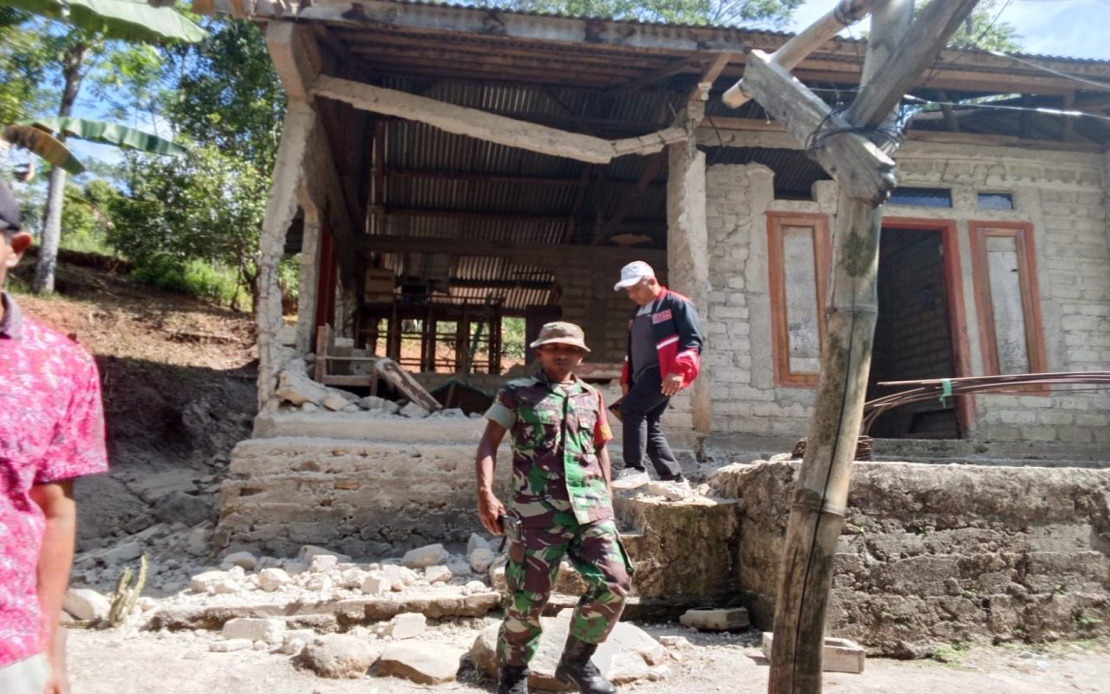
Sixteen Malaysian tourists have been accounted for and declared safe following a powerful 7.7-magnitude earthquake that struck Flores Island in Indonesia's East Nusa Tenggara province early Saturday morning. The Malaysian Embassy in Jakarta swiftly established contact with the group, who were in areas impacted by the seismic event that occurred at 4.58 am local time northeast of Mbay in Nagekeo Regency, according to an official media advisory from the Foreign Ministry.
The rapid confirmation of the tourists' wellbeing represents a successful deployment of Malaysia's consular response mechanisms in the face of natural disasters affecting its citizens abroad. The Foreign Ministry's statement emphasised that there have been no reports of Malaysian nationals sustaining injuries or requiring emergency assistance as a result of the earthquake. This swift communication underscores the importance of maintaining robust diplomatic channels and coordination capabilities across Southeast Asia, a region frequently affected by seismic activity due to its position along the Pacific Ring of Fire.
The earthquake, which struck in the early morning hours when many people would have been sleeping or indoors, occurred in a region of Indonesia known for significant geological activity. Flores Island, part of the Lesser Sunda Islands, sits at the intersection of multiple tectonic plates, making it one of Indonesia's most seismically active areas. The 7.7-magnitude classification represents a substantial seismic event capable of causing considerable structural damage and posing serious risks to populations in affected zones. The fact that Malaysian tourists were in the vicinity highlights the continued appeal of Indonesia as a travel destination for Malaysians, despite the inherent natural hazards present in certain regions.
The Malaysian Embassy in Jakarta has been actively coordinating with local Indonesian authorities to obtain comprehensive information about conditions in the affected areas and to track any additional Malaysian citizens who may have been present. This collaborative approach demonstrates the existing diplomatic relationships between Malaysia and Indonesia, which facilitate rapid information-sharing and emergency response coordination during crisis situations. Such cooperation is essential in Southeast Asia, where shared borders and significant bilateral tourism flows create interdependencies in crisis management.
The Foreign Ministry has issued comprehensive guidance to Malaysian residents and travellers in the affected regions, urging heightened vigilance and strict adherence to safety directives issued by Indonesian local authorities. This advisory reflects standard consular practice following natural disasters, ensuring that Malaysians understand the potential ongoing risks, including aftershocks that frequently follow major earthquakes. The emphasis on personal safety prioritisation acknowledges that seismic events can create secondary hazards such as landslides, infrastructure failures, and disrupted supply chains.
A critical element of Malaysia's consular assistance infrastructure involves the e-Konsular portal, through which Malaysian citizens can register their whereabouts and maintain updated contact information. The Foreign Ministry has actively encouraged usage of this platform, recognising that pre-registered contact details significantly accelerate the ability to locate and assist citizens during emergencies. This digital approach represents modern consular practice and demonstrates Malaysia's investment in technology-enabled citizen protection systems. The portal's availability serves as a preventive measure, enabling proactive rather than reactive consular responses.
For Malaysians requiring immediate assistance following the earthquake, the Malaysian Embassy in Jakarta has activated its dedicated emergency helpline accessible at +6281380813036, with email support available through [email protected]. These communication channels remain operational to address urgent consular matters, ranging from medical emergencies to relocation assistance. The provision of multiple contact methods acknowledges varying communication reliability during disaster scenarios and ensures accessibility for citizens facing diverse emergency situations.
The incident highlights the persistent vulnerability of travellers to natural disasters in Indonesia, a nation sitting astride one of the world's most active seismic zones. While earthquakes in this magnitude are not uncommon in the region, their occurrence necessitates rapid institutional responses from source countries to account for and protect their nationals. For Malaysian tourism operators and travellers, the episode reinforces the importance of travel insurance, awareness of local hazard information, and registration with embassies prior to departure to high-risk regions.
The Foreign Ministry has committed to continuous monitoring of the situation and has pledged to release additional updates should developments emerge affecting Malaysian citizens. This commitment to ongoing communication reflects recognition that earthquake aftermaths often involve evolving circumstances, including damage assessments, displacement of populations, and disrupted transportation networks that can affect traveller movements and safety. The ministry's vigilant posture ensures that Malaysian diplomatic representation remains responsive to emerging needs.
Beyond the immediate incident, this earthquake underscores broader regional considerations for Southeast Asia. The interconnected nature of tourism, trade, and population movements across the region means that natural disasters in one country carry implications for neighbouring states. Malaysia, as a significant source of tourists to Indonesia and a fellow Southeast Asian member state, has vested interests in rapid disaster response and recovery in its neighbour. The successful coordination demonstrated in this instance reflects the maturation of disaster response mechanisms across ASEAN, though continued investment in early warning systems, evacuation procedures, and cross-border coordination remains essential for protecting the region's increasingly mobile populations.

