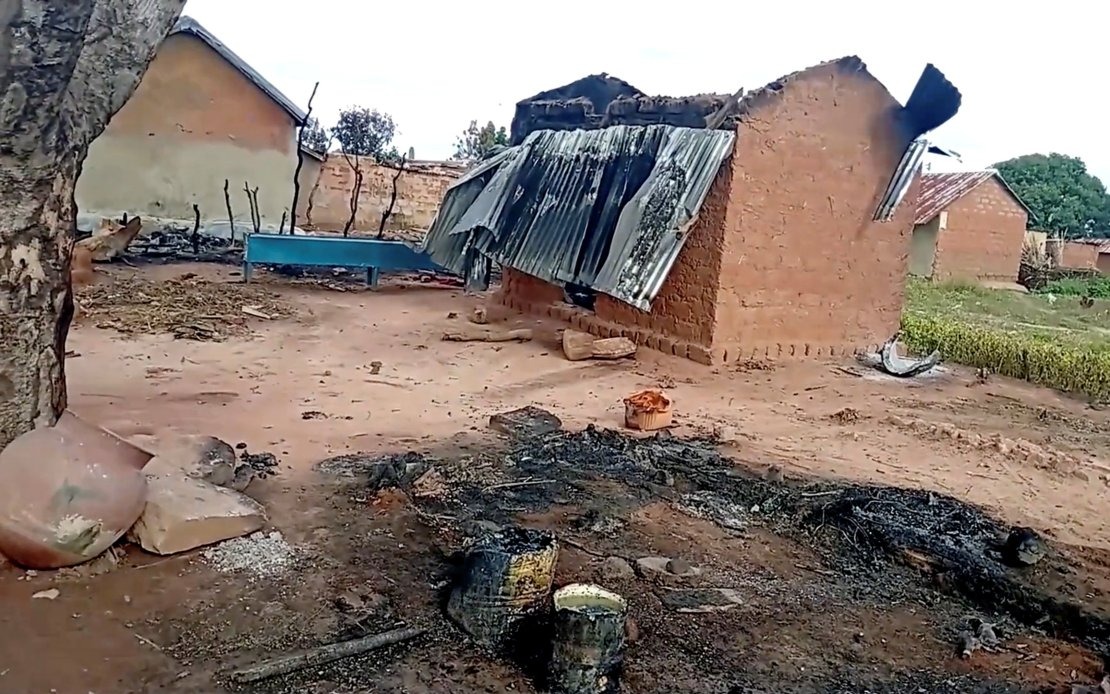
The Sahel region continues to confront escalating security challenges as western Niger experienced a significant terrorist offensive that resulted in substantial military casualties. At least 16 soldiers from Niger's Defence and Security Forces were killed and 23 sustained injuries during an attack in the Tera area, located within the Tillabery region of western Niger. The assault underscores the persistent threat posed by militant organisations operating across the porous borders connecting Niger, Mali, and Burkina Faso—a volatile corridor that has become increasingly difficult for regional governments to control effectively.
The Tillabery region occupies a strategically sensitive position in the Sahel, situated near multiple international boundaries where terrorist networks have established operational bases and supply lines. This geographical vulnerability has rendered the area particularly susceptible to cross-border incursions and coordinated militant campaigns. The attack on the military detachment represents another episode in the ongoing confrontation between state forces and non-state armed groups that have proliferated throughout the region, exploiting weak governance structures and limited security infrastructure.
According to statements released by Niger's Ministry of Defence, the military response was swift and decisive. Fifteen terrorists were eliminated during the engagement, preventing what could have escalated into a more catastrophic situation for the Nigerien armed forces. The military also recovered operational equipment from the attackers, including five motorcycles that were seized intact, while four additional motorcycles were destroyed during the firefight. These motorcycles represent critical mobility assets for militant organisations operating in the Sahel's vast, sparsely populated terrain where rapid movement across desert landscapes provides tactical advantages.
The success in neutralising attackers and recovering equipment was partly attributable to aerial support deployed during the confrontation. Niger's Defence Ministry emphasised that air assets played an instrumental role in forcing the militant contingent to withdraw from the engagement area. This coordination between ground forces and aviation capabilities demonstrates efforts by Nigerien military leadership to modernise response capabilities and prevent tactical defeats that have characterised previous encounters with better-organised militant groups in the region.
Following the initial engagement, Nigerien security forces expanded operations beyond the immediate conflict zone. The Ministry of Defence indicated that comprehensive search, sweep, and security operations commenced across the Tera area and surrounding localities. These follow-up actions aim to eliminate remaining hostile elements, gather intelligence on militant cell structures and supply networks, and establish temporary security measures to prevent further incursions. Such extended operations are standard military procedure in counterinsurgency environments where militants frequently disperse into civilian populations and difficult terrain.
The casualty figures—16 killed and 23 wounded—represent a substantial loss for Niger's Defence and Security Forces, reflecting the intensity and coordination displayed by the attacking group. These numbers indicate that the militants possessed sufficient planning capacity and firepower to sustain a prolonged engagement against military personnel. The scale of casualties raises questions about the tactical preparation and resource availability of the insurgent force, suggesting possible external support or coordination with other militant networks operating across the Sahel.
For Malaysia and Southeast Asian observers, this incident illustrates broader regional security patterns affecting Sahel nations that extend beyond purely local significance. The operational sophistication demonstrated by these militant groups, their access to weaponry and motorised transport, and their capacity to inflict substantial military losses reflect a concerning trajectory across the Sahel. Similar patterns have emerged in other African regions experiencing Islamist insurgencies, where terrorist organisations have evolved from isolated cells into coordinated fighting forces capable of challenging state military authority.
The security implications for West African governments remain severe. Niger, Mali, and Burkina Faso have each experienced intensifying militant violence that has displaced hundreds of thousands of civilians and overwhelmed fragile state institutions. International partnerships with France, the United States, and regional security frameworks have provided external support, yet localised military successes remain inconsistent and frequently temporary. The Tillabery incident demonstrates that despite military engagements and technical advantages like aerial support, the underlying security situation continues deteriorating.
The broader strategic context reveals that militant networks operating in the Sahel maintain resilience through distributed organisational structures, cross-border sanctuaries, and sustained recruitment capabilities. The attack in Niger fits an established pattern where groups launch assaults on military facilities and personnel with regularity and mounting effectiveness. For regional and international stakeholders monitoring African security developments, such incidents underscore the urgency of addressing root causes including youth unemployment, weak governance, and limited economic opportunity that enable militant recruitment and expansion.
The outcome of this particular engagement, while tactically favourable for Nigerien forces through the neutralisation of fifteen attackers and temporary disruption of militant operations, represents merely one episode in a protracted conflict with uncertain trajectory. The continuing operations announced by Niger's Ministry of Defence reflect determination to maintain pressure on militant cells, yet long-term security restoration requires comprehensive strategies encompassing military action, governance reform, economic development, and regional cooperation mechanisms that remain inconsistently implemented across the Sahel.

