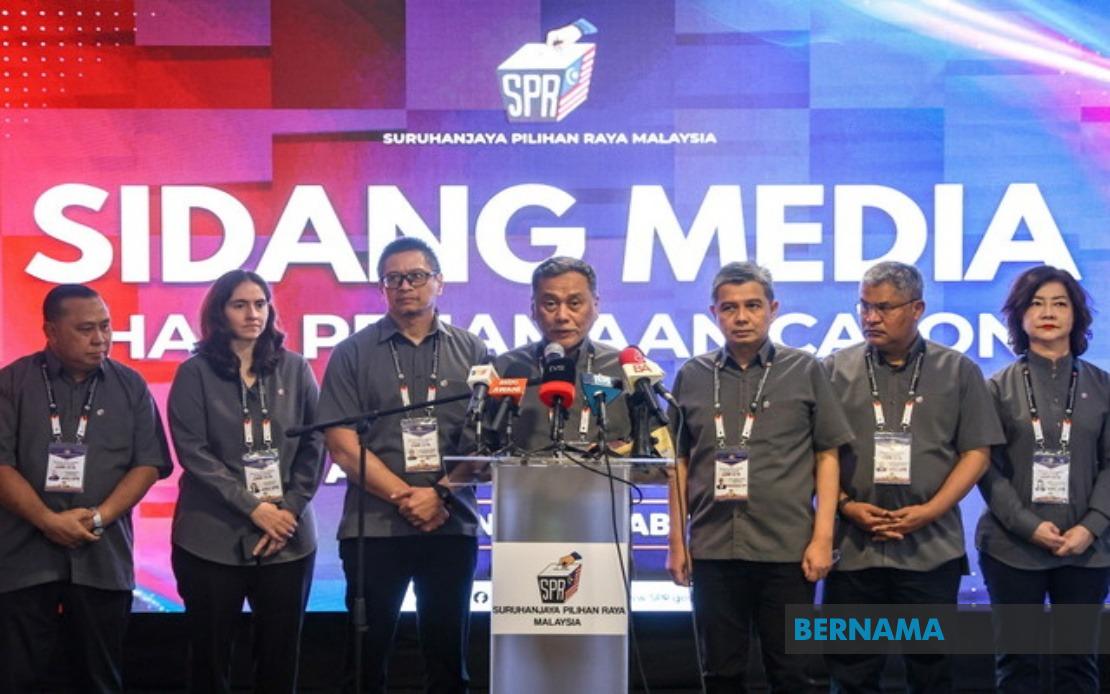
The Election Commission has formally approved 172 candidates to contest the 16th Johor state election, with the nomination process concluding successfully across all 56 polling centres on June 27. EC chairman Datuk Seri Ramlan Harun confirmed that every nomination paper submitted by the deadline of 10 am was accepted, and crucially, no aspirants faced disqualification on procedural or other grounds. This administrative milestone sets the stage for what is shaping up to be a closely watched electoral contest in Malaysia's second-largest state by population.
The gender composition of the candidate pool reflects ongoing efforts towards greater female representation in state politics, though imbalances persist. Among the 172 contenders, 138 are men and 34 are women, meaning females account for just under one-fifth of the field. While this represents gradual progress towards gender parity in political candidacies, it underscores the continued dominance of male candidates across Malaysia's electoral landscape. The distribution of female candidates across party lines varies, with larger coalitions and established parties likely hosting proportionally more women aspirants than smaller entities.
The contest configuration reveals significant variation in competitive intensity across Johor's constituencies. Fourteen seats will feature straight fights between two candidates, suggesting these are either strongholds where one party faces token opposition or highly polarised battlegrounds where a third force has been unable to gain traction. More common are the 27 three-cornered contests, which typically offer the most unpredictable outcomes as votes fragment across competing visions. Twelve constituencies will see four-way races, while three seats present five-candidate contests—these crowded fields make vote-splitting and strategic coalition-building increasingly critical for aspirants seeking victory.
Barisan Nasional and Pakatan Harapan enter the contest on apparently equal footing, each fielding exactly 56 candidates across all available seats. This parity in candidate numbers masks potentially significant differences in campaign resources, ground organisation, and voter sentiment in different regions of Johor. Both coalitions have invested substantially in candidate selection and campaign preparation, recognising Johor as a heavyweight political prize. The state remains economically significant and strategically important for national coalition mathematics, making this election far more than a local affair.
Perikatan Nasional's decision to contest with 33 candidates positions it as the third major force in the race, maintaining its challenge to the traditional BN-PH duopoly that has long dominated Malaysian politics. This configuration reflects PN's broader strategy of establishing itself as a permanent fixture in national and state electoral competition, particularly in states where it has secured earlier electoral successes or command strong grassroots support. The party's selective approach—contesting roughly 59% of available seats—suggests strategic concentration in areas where internal polling or party organisation is strongest.
The emerging smaller parties and independent candidates add important texture to the electoral landscape. Parti Bersama Malaysia's 15 candidates indicate it views Johor as a promising testing ground for expanding political influence beyond its existing strongholds. MUDA's four-candidate slate reflects the challenges facing newer parties in building the organisational capacity required for large-scale electoral campaigns. Parti Orang Asli Malaysia and Parti Sosialis Malaysia's single candidates each represent niche political interests, while six independents offer alternatives for voters dissatisfied with established party options or localised personalities with strong personal followings.
The nomination process's conclusion without any candidate being rejected represents administrative efficiency but also reflects that most aspirants successfully navigated the formal requirements governing candidacy. These requirements typically include citizenship verification, residential qualifications, financial disclosure, and freedom from criminal conviction or disqualification. The absence of rejections suggests the Commission's pre-nomination guidance to parties and candidates was effective, or that parties themselves exercised sufficient internal vetting to present only compliant nominations.
Johor's electoral significance extends beyond the state itself, carrying implications for national political dynamics and coalition stability. The state has historically been a BN stronghold, though Pakatan Harapan made substantial gains in 2018 and contested vigorously in 2023. How voters respond to the competing visions presented by this diverse candidate pool will influence perceptions of which coalition possesses momentum heading into potential future national contests. Additionally, the performance of newer parties and how they eat into traditional coalition support bears watching for broader trends in Malaysian electoral behaviour.
The concentration of political competition in Johor also reflects Malaysia's regional political fragmentation, where different states have developed distinct partisan alignments and voter preferences. What resonates with Johor voters—whether economic messaging, governance track records, personality politics, or divisive identity issues—may differ substantially from dynamics in other states. This election thus offers a revealing snapshot of contemporary political preferences in a state that remains economically vital and demographically diverse, encompassing urban centres, industrialised zones, agricultural areas, and communities with varied ethnic and religious compositions.
With nomination papers now processed and candidate lists finalised, campaigning will formally intensify as parties mobilise resources and activists prepare to engage voters across the 56 constituencies. The coming weeks will determine whether the numerical parity between BN and PH translates into competitive equilibrium on the ground, whether Perikatan Nasional can consolidate recent gains, and whether smaller parties or independent candidates can secure any representation. The 172 candidates collectively represent competing visions for Johor's future governance and development priorities.

