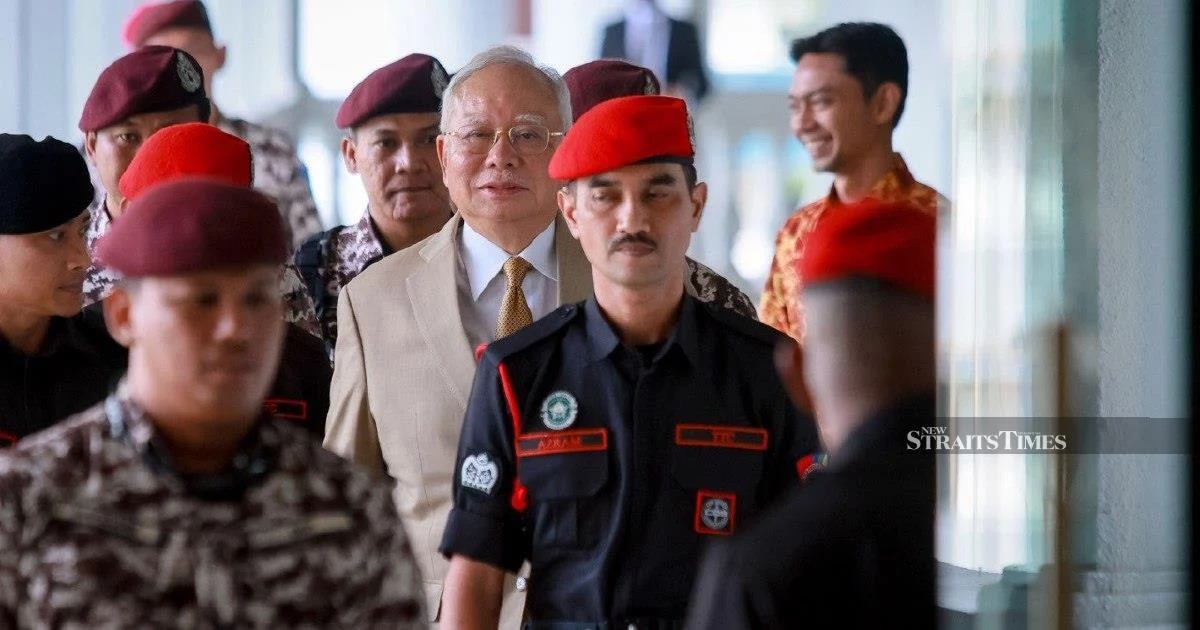
Malaysia's judiciary has released the comprehensive judgment in the landmark 1Malaysia Development Bhd scandal, marking a watershed moment in the nation's fight against financial crime. The ruling arrived six months after Datuk Seri Najib Razak was found guilty of all charges related to the sovereign wealth fund's systematic plundering, providing the first detailed judicial examination of the case that has dominated Malaysian politics and law for years.
The timing of this judgment holds significance beyond mere legal procedure. The interval between conviction and detailed sentencing remarks is standard in complex trials, yet in this instance it underscores the magnitude of evidence requiring judicial analysis. The case has riveted the nation since allegations emerged that billions of ringgit disappeared from 1MDB through a web of shell companies and international transfers, eventually implicating high-level government officials and prominent figures across multiple continents.
The judge's characterisation of the fraud as making historical figures appear insignificant by comparison reflects the gravity with which the bench views the offences. This rhetorical device—comparing modern-day financial crime to ancient plundering—signals judicial exasperation at the scale and sophistication of the scheme. For Malaysian readers, accustomed to discussions of political accountability and governance standards, this language represents an unusually forceful condemnation from the bench, suggesting the court views the conduct as exceptionally egregious.
Understanding the 1MDB saga remains essential for grasping contemporary Malaysian politics. The fund was established in 2009 as an investment vehicle intended to generate wealth for the nation's future, channelling billions in government guarantees and bonds. Instead, the structure became a conduit for what prosecutors characterise as one of the world's largest kleptocratic theft operations, with stolen funds surfacing in properties, luxury goods, and offshore accounts from Beverly Hills to London to Singapore.
Najib's conviction encompassed multiple charges related to abuse of power and money laundering. The guilty verdicts covered his role in authorising transfers and concealing the true nature of transactions, alongside breach of fiduciary duty in his capacity as Prime Minister overseeing the fund. Each guilty finding required the court to weigh extensive documentary evidence, witness testimony, and expert analysis regarding financial flows and intended deception.
The detailed judgment now provides the legal reasoning underpinning these convictions, a crucial element for potential appeals and for establishing precedent in Malaysian jurisprudence regarding corporate fraud and governmental misconduct. The written ruling clarifies which evidence the court found persuasive, how it assessed credibility of competing accounts, and what legal principles governed its decision-making. This transparency matters for the integrity of Malaysia's judicial system and public confidence in outcomes.
The 1MDB affair has carried ramifications extending well beyond Malaysia's borders. International authorities in Singapore, the United States, and Switzerland pursued parallel investigations and enforcement actions, recovering some stolen assets and charging or convicting numerous co-conspirators. Goldman Sachs paid substantial fines for its role in raising bonds for the fund. These global dimensions illustrate how Malaysian governance failures intersected with international financial architecture, affecting the reputation of the nation's institutions and its position within regional economic networks.
For the Southeast Asian context, the case serves as a cautionary example of institutional capture and the dangers of insufficient checks on executive authority. When a sitting Prime Minister controls a fund lacking adequate independent oversight, the potential for abuse becomes acute. Malaysia's subsequent implementation of governance reforms, enhanced transparency requirements, and legislative amendments reflect efforts to address vulnerabilities exposed by the scandal.
The judgment's release also comes amid broader Malaysian discourse regarding political reform and anti-corruption mechanisms. The country has witnessed transitions in political administration, with subsequent governments pursuing investigations and prosecutions that Najib's own administration resisted. This evolution itself raises questions about how Malaysia balances political accountability with legal due process, and whether conviction and detailed sentencing remarks have adequately addressed public demand for justice.
The detailed reasoning now available to legal scholars, policymakers, and citizens contributes to national learning about how organised financial crime operates at the highest levels of government. The judgment provides a comprehensive record of how billions were systematically extracted, the methods employed to obscure transfers, and the mechanisms of denial and concealment used by those responsible. This documentation becomes valuable for future policymakers designing safeguards.
Looking forward, the judgment sets the stage for appellate proceedings that will continue testing Malaysia's legal system. Whether conviction stands, faces modification, or is overturned will influence not only Najib's fate but also broader jurisprudence surrounding political corruption and financial crime in Malaysia. The judgment's language and reasoning will feature prominently in such appeals, making its quality and clarity matters of substantial public interest.
Ultimately, the comprehensive judgment represents Malaysian society's grappling with perhaps its most significant governance scandal. The court's harsh characterisation reflects judicial recognition that 1MDB violated fundamental principles of stewardship and public trust. How Malaysia learns from this episode—through reforms, institutional strengthening, and cultural shifts toward accountability—will define the nation's trajectory for transparency and governance quality in years to come.