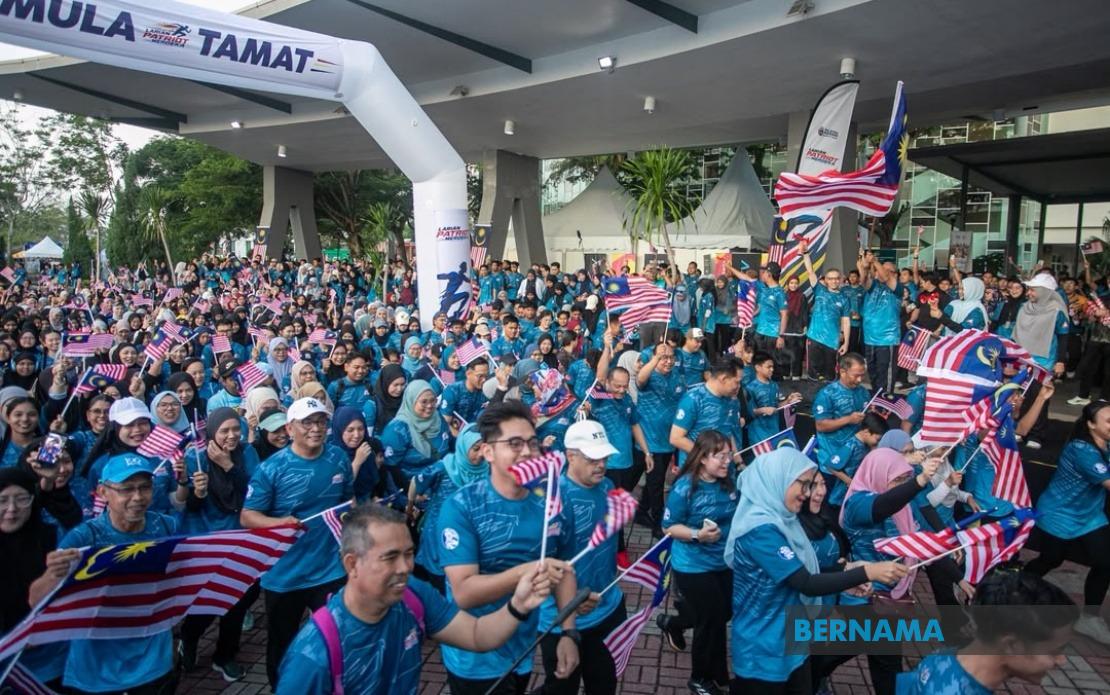
The grounds of Sultan Azlan Shah Ministry of Health Training Institute in Ipoh transformed into a sea of patriotic colour as approximately 2,000 Malaysians gathered on July 19 for the Patriot Merdeka Run, a family-oriented event designed to kindle national pride while promoting wellness. By 7 am, the venue was already bustling with participants spanning diverse backgrounds and age groups, many arriving with their families and children to participate in what organisers intended as a celebration of Malaysian unity and independence.
The morning unfolded with a collective energy as attendees began with a mass aerobics session, setting an energetic tone for the subsequent festivities. The display of Malaysia's flag, the Jalur Gemilang, featured prominently throughout the grounds and along the entire 2.5-kilometre route, serving as a visual reminder of national identity and collective pride. What struck observers was the genuine family atmosphere—parents accompanying young children, participants donning clothing inspired by the red, white, and blue hues of the national flag, and supportive exchanges between runners and walkers throughout the event.
Communications Ministry secretary-general Datuk Abdul Halim Hamzah officially inaugurated the fun run at 7.30 am, sending participants off on their route through Ipoh's morning landscape. The inclusive 2.5-kilometre distance ensured accessibility for participants of varying fitness levels, allowing the event to genuinely represent the breadth of Malaysian society rather than excluding those unable to undertake longer distances. This deliberate design choice underscored a broader philosophy that patriotic expression and community engagement need not be reserved for the physically elite or particularly athletic.
The Patriot Merdeka Run represented far more than a simple health promotion initiative. Organisers explicitly conceived the programme as a vehicle for instilling patriotic values through grassroots community participation, deliberately choosing an activity that families could enjoy together. The scenes of parents guiding small children through the route, the shared sense of purpose among strangers unified by national identity, and the celebratory atmosphere throughout demonstrated how civic engagement can strengthen neighbourhood bonds and foster inter-generational appreciation for Malaysia's independence.
This inaugural event functioned as the opening salvo in a broader calendar of activities celebrating the 2026 National Day and Malaysia Day (HKHM 2026) festivities. By launching these celebrations months in advance, planners signalled an intent to sustain momentum and deepen public consciousness of national milestones rather than relegating them to perfunctory single-day observances. The Patriot Merdeka Run's early positioning within this calendar suggests organisers believe that extended, sustained engagement with patriotic themes will prove more effective at cultivating genuine national sentiment than concentrated last-minute campaigns.
The event's emphasis on the Fly the Jalur Gemilang Campaign (MPBKKJG 2026) added another dimension to the morning's proceedings. By pairing flag displays with community movement and celebration, organisers attempted to reframe national symbols from abstract state apparatus into expressions of lived, embodied patriotism felt by ordinary Malaysians. This approach recognises that national pride strengthens not through top-down pronouncement but through participatory experiences where individuals actively choose to engage with their nation's identity.
For Malaysia's diverse demographic landscape, such inclusive family-oriented activities carry particular significance. Bringing together Malaysians of different ethnicities, religions, and socioeconomic backgrounds around a common patriotic endeavour reflects aspirational national unity. The Ipoh gathering's apparent success in attracting genuine cross-section participation—with families of various backgrounds participating side-by-side—suggests that non-partisan, wellness-focused patriotic events can serve as powerful platforms for demonstrating the nation's pluralistic character.
The timing of this initiative also merits consideration within Malaysia's broader political calendar. With Prime Minister Datuk Seri Anwar Ibrahim expected to officiate the formal celebrations launch at 10 am on the same day, the Patriot Merdeka Run functioned partly as a grassroots complement to high-level government proceedings. This two-tiered approach—simultaneous bottom-up community participation and top-down ceremonial leadership—reflects contemporary understanding that sustainable national sentiment emerges when citizens perceive government celebrating alongside them rather than merely directing patriotic observance from above.
Looking forward, the success of the Ipoh gathering will likely influence how subsequent years approach National Day and Malaysia Day celebrations across the country. If organisers can replicate this event's apparently organic family participation and enthusiastic community turnout in other regions, Malaysia might cultivate a more vibrant, participatory culture around national milestones. The Patriot Merdeka Run's emphasis on physical activity, intergenerational participation, and inclusive community building offers a template that transcends the specific moment of its inaugural staging, potentially establishing a template for future observances that prioritises genuine engagement over ceremonial formality.

