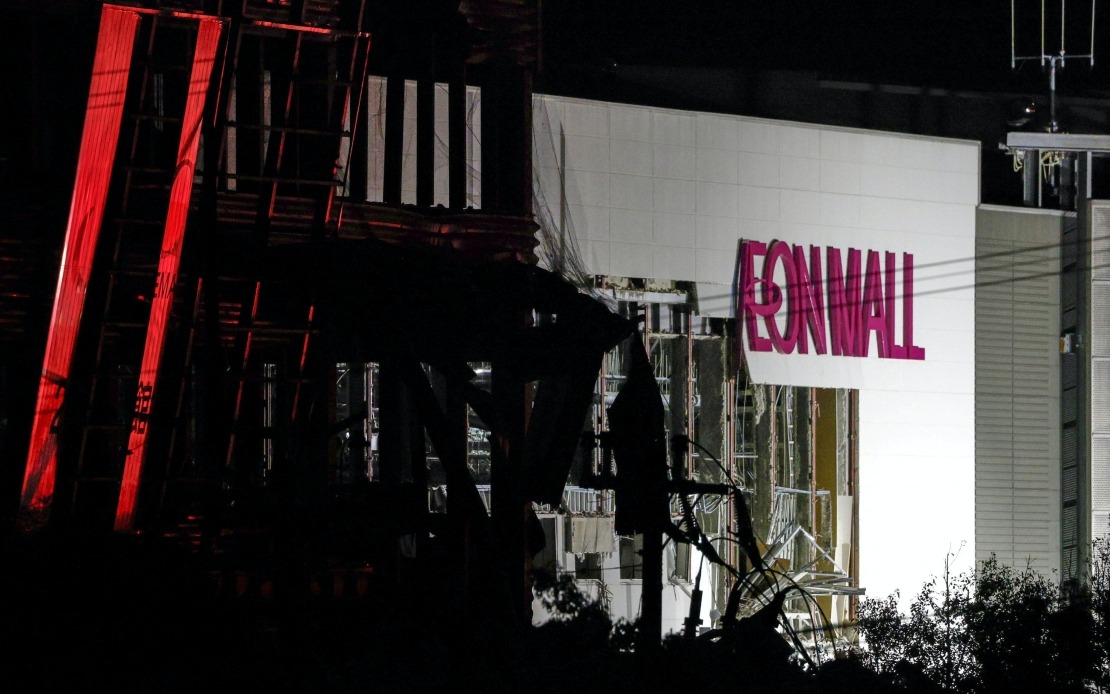
A major incident unfolded at one of Japan's largest shopping centres on Tuesday when an explosion tore through Aeon Mall Kumamoto in Kashima Town, leaving authorities scrambling to locate dozens of missing employees. The blast occurred roughly two hours after a magnitude-7.1 earthquake rocked Kumamoto Prefecture in southwestern Japan at 4:27 pm local time, compounding what has become a serious emergency response operation for rescue workers and police. According to the National Police Agency, between 20 and 30 employees at the mall have been unable to be reached since the explosion struck at around 6 pm, though the precise circumstances surrounding their disappearance remain unclear as rescue efforts continue.
The explosion's timing—occurring shortly after the region had already experienced significant seismic activity—raises important questions about the structural integrity of the shopping complex and whether the earlier earthquake may have compromised the building's safety systems or caused damage that contributed to the blast. Such compounding disasters are particularly challenging for emergency responders, as infrastructure damage from the initial earthquake can hinder rescue and evacuation operations during subsequent incidents. The mall, a major commercial hub in the region, would normally have housed hundreds of customers and staff during early evening hours, making the scale of potential casualties a significant concern for regional authorities and national disaster management officials.
Most visitors to the shopping centre had already been moved to outdoor areas by the time the explosion occurred, according to local authorities—a fortunate circumstance that suggests evacuation procedures implemented after the earthquake may have prevented higher casualty numbers among the general public. However, the situation for staff members appears more dire, with employees potentially trapped within sections of the damaged structure. The unclear status of whether any customers are among the missing adds further complexity to the rescue operation, as emergency teams must search through a substantial facility while managing the risks posed by structural damage and potential secondary hazards.
The National Police Agency and local firefighting units have initiated search operations within the damaged building, systematically checking whether the unaccounted-for employees might still be trapped inside. Such operations demand careful navigation of unstable structures and potential gas leaks or other hazards that commonly follow explosions of this magnitude. The coordination between multiple agencies—including police, firefighters, and local government—represents the standard disaster response protocol for incidents of this scale in Japan, though the recent earthquake adds operational complexity that rescue teams must carefully manage.
Beyond the immediate crisis at Aeon Mall Kumamoto, authorities have recorded additional casualties resulting from the earthquake itself. Fewer than ten other people remain unaccounted for in various locations across the prefecture as a direct consequence of the seismic event. This suggests that while the earthquake alone did not cause catastrophic loss of life—a testament to Japan's advanced building codes and emergency preparedness systems—the subsequent explosion has created a separate and potentially more severe humanitarian emergency requiring urgent response.
Broadcaster reports indicate that multiple fatalities are feared as a result of the mall explosion, with Kumamoto Prefectural Police stating that the incident is believed to have caused numerous deaths. Police officials have cautioned that the exact death toll cannot yet be confirmed, acknowledging that rescue and recovery operations are still in their early stages. The expectation of "many fatalities" reflects the severity of the explosion and the structural damage inflicted on the shopping complex, though authorities have emphasized that comprehensive casualty figures will only emerge as search operations progress and missing persons are either located or accounted for through other means.
The incident carries significant implications for Japan's disaster management frameworks and raises questions about building resilience in regions prone to seismic activity. Shopping malls and other large commercial complexes represent complex structures that must simultaneously accommodate high occupancy levels while maintaining safety systems capable of withstanding both earthquakes and potential secondary hazards. The apparent gap between the earthquake evacuation and the subsequent explosion suggests that while initial earthquake response protocols functioned adequately, the cascading nature of compound disasters presents ongoing challenges for emergency planners.
For Malaysia and other Southeast Asian nations, this incident serves as a sobering reminder of the interconnected risks posed by natural disasters and infrastructure failure. While the region experiences its own seismic vulnerabilities and faces typhoon threats rather than earthquake-related concerns, the principle that major disasters frequently involve multiple cascading events remains universally relevant. Building safety standards, evacuation procedures, and emergency response coordination all require continuous refinement based on real-world incidents like the Kumamoto explosion.
The search and rescue operation at Aeon Mall Kumamoto will likely continue for several days, with workers systematically examining the damaged structure and surrounding areas for survivors. As details emerge regarding the cause of the explosion—whether mechanical failure, gas leak, or structural compromise from the earthquake—engineering and safety experts across the region will undoubtedly scrutinize the findings. The incident underscores the critical importance of regular safety inspections, properly maintained emergency systems, and swift evacuation protocols in large commercial facilities, particularly in areas where earthquake risk requires enhanced structural resilience and preparedness planning.

