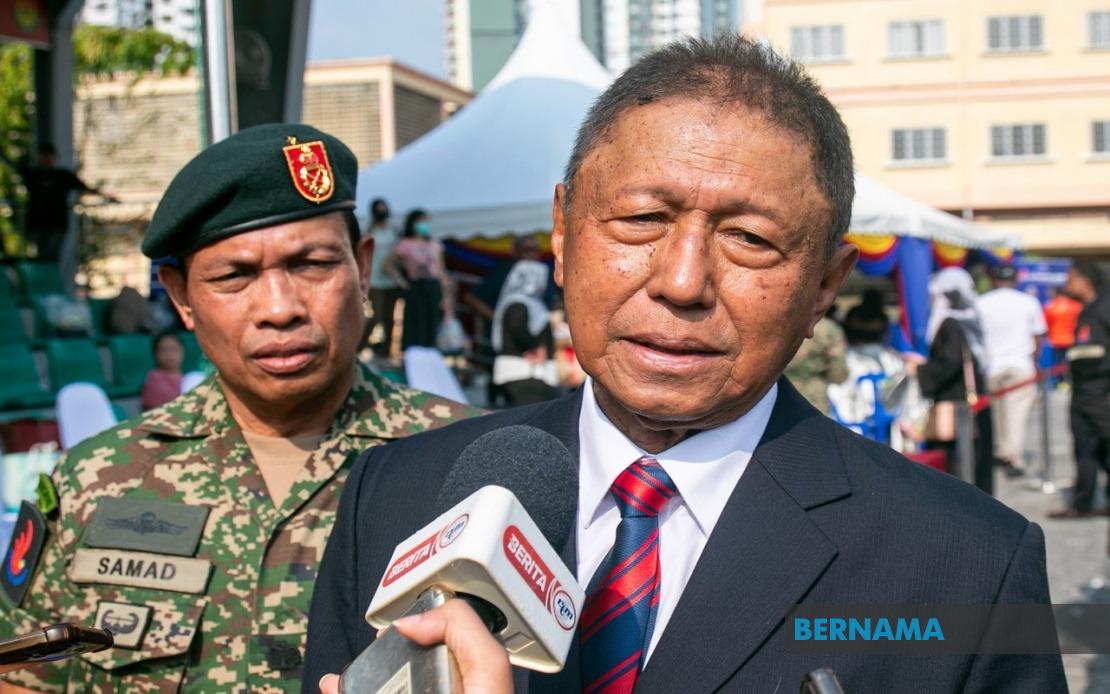
For the first time in its implementation, the National Service Training Programme 3.0 will have a prominent platform at Malaysia's most significant civic occasion. Two hundred selected PLKN 3.0 alumni have been chosen to participate in the National Day parade in Putrajaya on August 31, marking a symbolic recognition of the revived national service scheme and its graduates. General (Retired) Tan Sri Dr Abdul Aziz Zainal, chairman of the National Service Training Council (MLKN), confirmed the participation and disclosed that intensive rehearsals would commence in Putrajaya, underscoring the military precision expected for an event attended by the nation's highest officials.
The decision to feature PLKN 3.0 trainees during the National Day celebration represents a deliberate strategy to elevate public awareness of the national service initiative. This inaugural participation before the King, the Prime Minister, Cabinet ministers, and the Malaysian public carries symbolic weight beyond the ceremonial aspects. By presenting young citizens who have undergone structured military-style training, the government aims to demonstrate tangible outcomes from an investment in youth development and national cohesion. The move reflects confidence in the programme's results and serves as a powerful visual statement about the character and discipline being instilled in a new generation of Malaysians.
The completion of PLKN 3.0 Series 3/2026 demonstrates substantial throughput in the early stages of the revived programme. A total of 795 trainees successfully finished the training cycle that commenced on July 11, distributed across three designated camps nationwide. Camp 504 AW at Bukit Keteri in Perlis accommodated 106 female trainees, while Camp 505 AW in Pekan, Pahang, hosted 442 male participants. Camp 515 AW based in Kuala Lumpur trained 247 female recruits, establishing a foundation of operational experience across different regions and demographics.
Recognition of top performers from each camp underscores the competitive and merit-based elements embedded within PLKN 3.0's framework. An'nur Najiha Muhammad, an 18-year-old from Ipoh, Perak, earned best trainee honours at Camp 504 AW. Muhammad Firdaus Muhammad Said, also 18 and from Kuantan, Pahang, received similar distinction at Camp 505 AW. Cheyenne Alessandra Michael, likewise 18 and hailing from Kuala Lumpur, topped Camp 515 AW's rankings. These individuals represent the calibre of young Malaysian achieving excellence through disciplined participation in structured national service.
Expansion plans announced by MLKN leadership signal confidence in PLKN 3.0's trajectory and acknowledgement of demand. The next iteration, PLKN 3.0 Series 4/2026, will substantially enlarge participant numbers through strategic partnerships and infrastructure additions. Abdul Aziz revealed intentions to leverage training facilities operated by the Malaysian Volunteer Corps Department (RELA), effectively creating a hybrid training ecosystem. This collaborative approach maximises existing government infrastructure while circumventing the delays typically associated with establishing entirely new military installations, a pragmatic solution for rapid programme scaling.
The expansion encompasses five new dedicated camps, representing geographic diversification across Malaysia's regions. Camp 503 at Hutan Melintang in Perak will serve the western corridor, while Camp 506 in Sungai Durian, Kelantan, addresses the east coast. Camp 513 at Bukit Pinang, Kedah, facilitates northern participation. Complementing these facilities, two Public Training Institute (ILA) centres—one in Sungai Petani, Kedah, and another in Tuaran, Sabah—function as alternative training hubs, extending coverage to Borneo and addressing logistical constraints. Combined capacity across existing and proposed facilities is projected to exceed 1,000 trainees per cycle, representing a tenfold increase from current numbers.
Trainee testimonies illuminate the personal transformations occurring within PLKN 3.0's structured environment. Cheyenne Alessandra Michael, the Camp 515 AW top performer, articulated how her voluntary participation crystallised a longstanding ambition toward military service. Her reflection on 45 days of intensive training reveals the programme's capacity to cultivate patriotic consciousness and emotional connection to national identity. Exposure to Wataniah territorial army personnel within the camp environment created daily reinforcement of military discipline and ethos, contextualising abstract concepts of national service within lived human examples.
Beyond individual aspirations, trainee reflections demonstrate PLKN 3.0's success in fostering generational understanding of historical sacrifice and contemporary responsibility. Michael's acknowledgement of warrior sacrifices underpinning independence—a narrative often abstract for younger Malaysians—became viscerally comprehensible through immersion in a military ecosystem. Her emphasis on younger generational responsibility for maintaining peace articulates an internationalised awareness that national security transcends military hardware and encompasses civilian participation in social cohesion. Such testimonies suggest the programme successfully bridges historical consciousness with present-day civic identity.
The PLKN 3.0 expansion trajectory carries implications for broader youth policy in Southeast Asia, where regional governments grapple with questions of civic engagement and national identity formation among digital-native populations. Malaysia's decision to re-establish mandatory national service after a two-decade hiatus represents a counter-movement to increasingly atomised youth cultures. The programme's emphasis on cross-ethnic, cross-religious, and cross-regional cohesion through shared military experience addresses specific Malaysian demographic complexities requiring periodic institutional reinforcement. Neighbouring nations including Singapore, Thailand, and Indonesia monitor such initiatives for lessons applicable to their distinct contexts.
Integration of RELA infrastructure into mainstream PLKN 3.0 operations reflects sophisticated institutional thinking about maximising existing government apparatus. Rather than duplicating specialised facilities, the approach acknowledges RELA's three-decade history of community-based training and mobilisation. This synergy potentially transforms RELA from a parallel civil defence structure into an integrated component of national youth development strategy. The partnership also distributes training responsibilities geographically, reducing pressure on military-controlled facilities and creating employment and professional development opportunities for civilian trainers.
Longer-term considerations regarding PLKN 3.0's sustainability deserve attention as the programme scales beyond initial pilot cohorts. Sustaining training quality across multiple dispersed locations while recruiting and retaining qualified instructors presents logistical and budgetary challenges. The projected transition from 795 to over 1,000 annual participants represents a 26 percent increase that will test institutional capacity. Malaysian policymakers must ensure that expanded throughput does not compromise the disciplinary outcomes and civic values that testimonies from early cohorts currently emphasise.
The National Day parade debut of PLKN 3.0 alumni functions simultaneously as milestone celebration and recruitment advertisement. By positioning programme graduates prominently during Malaysia's most visible civic occasion, the government reinforces social legitimacy and appeals to prospective participants. The spectacle of 200 uniformed young citizens marching before national leaders creates powerful imagery that circulates through media and social networks, amplifying reach beyond actual attendees. For many Malaysian teenagers, such visibility may catalyse consideration of voluntary participation or acceptance of eventual conscription into subsequent programme iterations.
Moving forward, PLKN 3.0's trajectory will indicate whether Malaysia's approach to youth mobilisation reflects durable policy consensus or temporary political expedience. The announcement of expansion plans, coupled with visible public participation, suggests institutional embedding rather than provisional experimentation. Successfully absorbing successive cohorts through 1,000-plus annual participants will establish the programme as permanent feature of Malaysian citizenship rites, comparable to military service traditions in Israel, Singapore, or South Korea. For Southeast Asian observers, the coming years will reveal whether a mature democracy can revive compulsory national service as legitimate expression of civic obligation and national identity.

