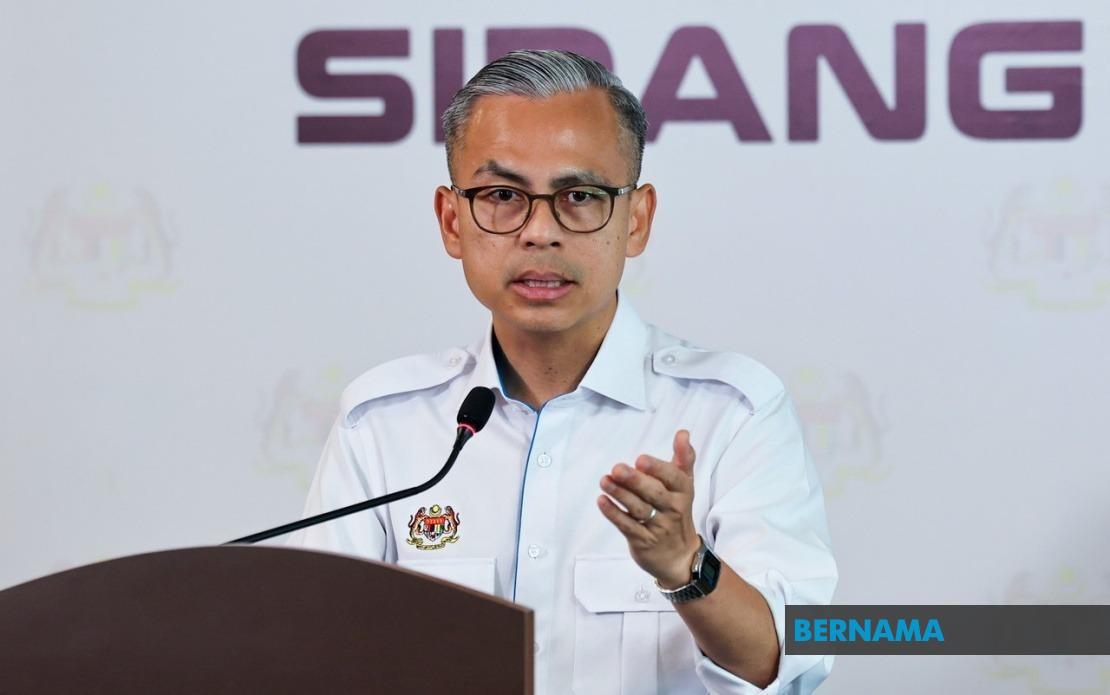
Malaysia's preparations for the 2026 National Day and Malaysia Day celebrations are on track to reach near-completion by tomorrow's comprehensive dress rehearsal, according to Communications Minister Datuk Seri Fahmi Fadzil. The celebrations, centred at Dataran Putrajaya, have undergone intensive planning and rehearsals in recent weeks, with organisers focusing on ensuring a seamless and precisely choreographed event that will showcase Malaysia's national pride and unity.
Fahmi, who chairs the Main Committee for the 2026 National Day and Malaysia Day observances, conducted a site inspection of today's rehearsal before briefing reporters on the progress. He indicated that the remaining work involves technical adjustments rather than substantive changes, primarily concerning the spacing and synchronisation of different contingents participating in the procession. The focus on these details reflects the government's commitment to presenting a parade that not only succeeds in honouring the nation but does so with the precision and coordination befitting a major state ceremony.
The specific adjustments needed centre on tightening the distances between successive contingents to create a more cohesive visual presentation as the parade moves through Putrajaya. Fahmi explained that some groups had excessive gaps separating them from preceding formations, and reducing these spaces would enhance the overall aesthetic and orderliness of the event. These refinements, he suggested, would be implemented during tomorrow's full rehearsal, after which organisers expect to declare preparations substantially complete.
Weather conditions proved favourable during today's rehearsal, a significant advantage given the outdoor nature of the event and the thousands of participants involved. The positive environmental factors allowed rehearsals to proceed without interruption, enabling organisers to observe how contingents and formations would behave under conditions likely to be encountered during the actual celebration. Fahmi commended the dedication and enthusiasm displayed by all participants, including security personnel and school students from three states who are preparing for the human graphics performance segment.
The 2026 celebrations will introduce several novel elements designed to captivate audiences and reinforce Malaysia's position as a nation embracing innovation alongside tradition. Most significantly, the Johor Military Force will make its inaugural appearance at a national-level parade, marking a historic moment for the state's armed contingent. Additionally, a maritime asset known as the Ibrahim-class boat, specifically designed by His Majesty Sultan Ibrahim, King of Malaysia, will feature prominently in the proceedings, adding a distinctive royal dimension to the festivities and celebrating the monarch's personal involvement in shaping the nation's celebrations.
The human graphics performance represents one of the most visually spectacular components of the parade, with 1,500 students from three states forming coordinated patterns and displays. These performances require students to be positioned on a multi-level structure, raising legitimate concerns about safety and structural integrity. Fahmi provided assurance that Putrajaya Corporation has conducted thorough safety assessments of the platform, confirming that all engineering standards have been met and maintained. The slight movements visible during rehearsals, he clarified, fall well within acceptable engineering tolerance levels and are necessary to accommodate the rhythmic movements and choreography of the student performers.
The structure in question has been utilised on two previous occasions without incident, providing an additional reassurance regarding its reliability and safety record. This track record, combined with rigorous technical inspections, underscores the organisers' commitment to protecting the young participants while delivering a spectacular visual experience. The reduction in the number of students performing from 2,000 to 1,500 this year was made partly for safety considerations, though the core purpose of creating memorable human graphics remains unchanged.
One aspect that drew attention during planning has been the slightly asymmetrical positioning of the multi-level structure within Dataran Putrajaya. Fahmi attributed this to geometric factors: the parade route and the nearby Putrajaya Corporation building do not align on the same axis, creating physical constraints on positioning. Additionally, the reduction in participant numbers from 2,000 to 1,500 necessarily altered the footprint required for the structure, further contributing to the apparent asymmetry. While Fahmi accepted these practical realities for this year's event, he acknowledged concerns about negative perceptions and has directed the organising secretariat to review technical adjustments for future editions of the celebrations to address positioning issues more satisfactorily.
The involvement of Communications Ministry secretary-general Datuk Abdul Halim Hamzah in today's inspection reflects the high level of administrative oversight being applied to the event preparation. This level of engagement from senior officials indicates the importance the government places on ensuring the 2026 celebrations succeed in every dimension, from safety and logistics to visual impact and symbolic meaning. The presence of these officials during rehearsals also facilitates rapid decision-making and problem-solving when issues arise.
Looking ahead to tomorrow's full dress rehearsal, organisers will be watching closely for how the adjusted spacing between contingents enhances overall visual coherence. They will also be monitoring the performance of student participants on the multi-level structure and assessing the successful integration of the new elements, particularly the Johor Military Force and the Sultan's specially designed Ibrahim-class boat. The rehearsal will serve as the final major checkpoint before the actual celebration, allowing organisers to make any last-minute adjustments necessary to ensure the event unfolds flawlessly.
The 2026 National Day celebration at Dataran Putrajaya will be watched not only by Malaysians but by regional and international observers as a reflection of the nation's capability to organise large-scale ceremonial events. The celebration carries particular significance as it will demonstrate Malaysia's stability, unity, and forward-looking approach during a period when such displays carry broader geopolitical meaning. The meticulous preparation under Fahmi's leadership and the integration of new symbolic elements, including the royal maritime asset, aim to create a celebration that resonates powerfully with national identity and pride.

