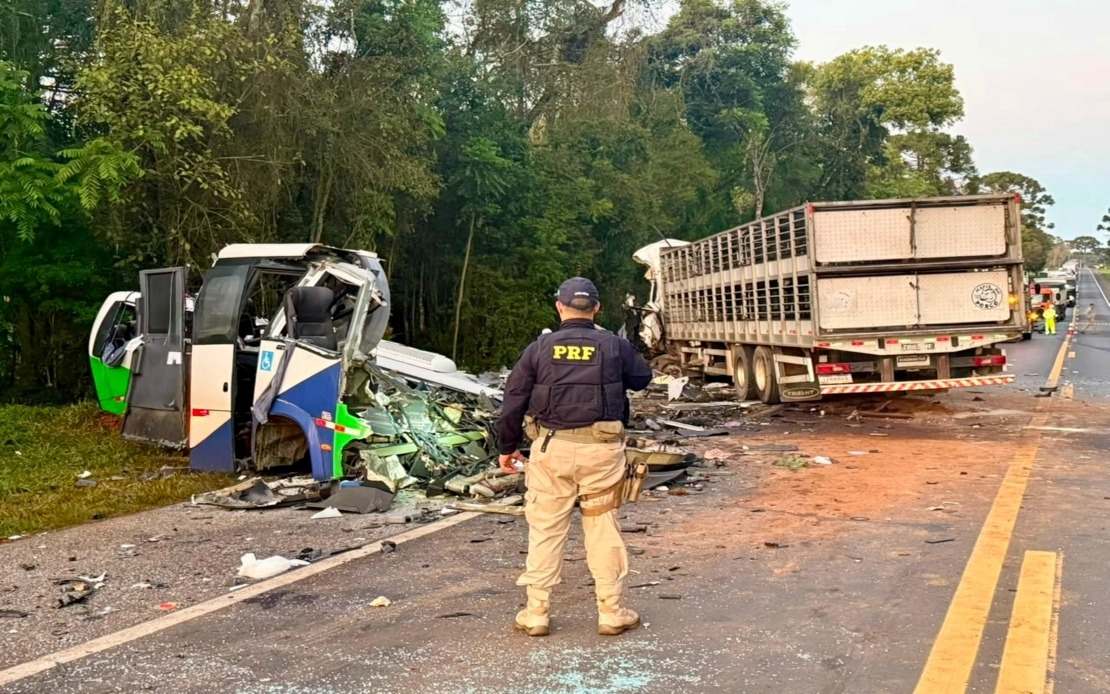
A devastating road accident in Brazil's southern Paraná state has resulted in 23 fatalities, marking one of the region's most serious transport disasters. The collision occurred in the early hours of Wednesday near Ipiranga in the Campos Gerais region when a minibus carrying patients collided head-on with a lorry on a national highway. Initial investigations suggest the truck may have crossed into the opposing traffic lane, triggering the catastrophic impact that claimed multiple lives within minutes.
The minibus was operated as part of the state's health service network and was in transit with patients destined for hospital facilities in the greater Curitiba metropolitan area, approximately 200 kilometres away from the accident site. The vehicle was essentially serving as a mobile healthcare transfer service, underscoring the tragedy's impact on vulnerable individuals already receiving medical care. The diversity of those killed reflects the nature of the journey: the victims comprised 13 women, eight men, and two children, with one fatality being the truck driver himself. An additional five survivors sustained injuries and were transported to medical facilities for treatment, according to statements released by the Paraná State Secretariat for Public Security.
The national highway traversing southern Brazil's interior connects several regional population centres but remains inadequately developed in certain sections, functioning as a two-lane thoroughfare in many locations. This infrastructure limitation compounds the risk profile of the route, as passing manoeuvres and emergency evasion become constrained by road design constraints. The collision's location on such a vulnerable stretch of highway suggests that road safety improvements may be necessary to prevent similar incidents. The accident site was cordoned off completely for several hours as emergency services attended to casualties and investigators began preliminary examinations of the wreckage and surrounding circumstances.
The circumstances surrounding the initial cause of the collision remain under formal investigation, though preliminary evidence points toward the lorry operator's loss of lane control. The hypothesis that the truck drifted into oncoming traffic suggests either driver fatigue, mechanical failure, or momentary inattention—factors that repeatedly emerge in major Brazilian highway accidents. Understanding the precise sequence of events and causative factors will be essential for determining whether systemic issues contributed to the tragedy, including driver working hour regulations, vehicle maintenance standards, or road condition factors.
Brazil has grappled persistently with high rates of fatal road accidents, particularly on federal highways where heavy commercial traffic intersects with long-distance passenger services. The Paraná region, while more developed than northern Brazilian states, still experiences significant safety challenges on its transport corridors. For Malaysian and Southeast Asian observers, this incident underscores the ongoing risks that persist in countries where rapidly expanding vehicle populations, aging road infrastructure, and enforcement inconsistencies create dangerous conditions. Many developing nations across the region face comparable challenges when managing mixed-traffic scenarios on limited-capacity highways.
The Paraná state government responded by declaring three days of official mourning, acknowledging the magnitude of the public loss. This gesture indicates the severity with which Brazilian authorities treated the incident and its impact on the local community. The mourning period also provides space for families and healthcare providers to process the trauma of losing patients and colleagues in such sudden and violent circumstances. The healthcare workers and volunteers involved in the transfer service faced an unimaginable crisis when their routine patient transport turned catastrophic within seconds.
Investigators will likely examine multiple contributing factors beyond the immediate cause of the collision. Roadway conditions, weather circumstances at the time, visibility levels, and whether any mechanical defects in either vehicle contributed to the accident all form part of comprehensive accident reconstruction. The Brazilian authorities will also presumably review whether appropriate safety measures exist on the highway section where the collision occurred and whether additional guardrails, lane markings, or warning systems might have prevented or mitigated the impact.
For regional transport operators and highway authorities across Southeast Asia, this incident serves as a sobering reminder of the risks inherent in long-distance patient transfer operations on inadequately resourced road networks. The convergence of vulnerable passengers, heavy commercial traffic, and limited road capacity creates a particularly dangerous combination. Transport regulatory bodies in Malaysia, Indonesia, and other neighbouring nations may review their own protocols for medical transport vehicles, driver training standards, and highway safety measures in light of such catastrophic outcomes documented elsewhere.
The tragic loss of life in this Paraná collision reflects broader global challenges in road safety management, particularly in nations where economic development and motorisation outpace investments in traffic infrastructure and enforcement. As Brazil's transport sector continues to expand, the imperative for comprehensive safety improvements—including driver training standards, vehicle inspection protocols, and highway modernisation—becomes increasingly urgent to protect both vulnerable passengers and the general motoring public.

