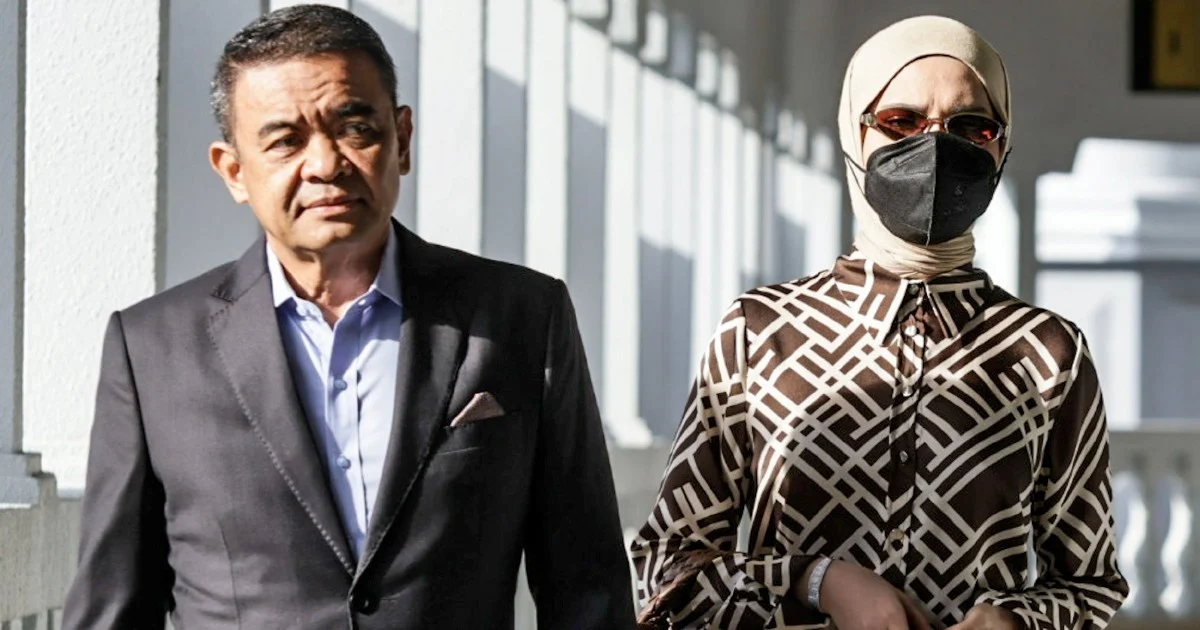
The Malaysian Anti-Corruption Commission has successfully secured the forfeiture of 23 Rolex watches and 15 pieces of jewellery seized from the sister-in-law of retired General Tan Sri Muhammad Hafizuddeain Jantan, with the valuable items now reverting to government ownership following legal proceedings in Kuala Lumpur.
This outcome represents a significant development in ongoing anti-corruption efforts targeting unexplained wealth linked to high-ranking military and political figures. The seizure and subsequent forfeiture underscore the MACC's expanding mandate to trace and recover assets suspected of being acquired through illicit means or during positions of public authority. Such cases have become increasingly prominent in Malaysia's anti-corruption landscape as the country seeks to strengthen enforcement mechanisms and demonstrate commitment to recovering ill-gotten gains.
The connection between the seized assets and General Tan Sri Muhammad Hafizuddeain Jantan, who served as Chief of Defence Force before his retirement, places this matter within a broader pattern of scrutiny directed toward family members and associates of senior defence establishment figures. Malaysian law enforcement agencies have repeatedly demonstrated willingness to pursue extended networks beyond the principal subjects of investigation, recognising that corrupt proceeds often flow through familial relationships and business associates as a means of concealment.
Luxury watch collections have emerged as a particularly significant indicator in corruption investigations across Southeast Asia. Rolex timepieces, which can command prices ranging from RM30,000 to several hundred thousand ringgit depending on model and rarity, represent portable wealth that is difficult to trace and frequently accumulates beyond what legitimate income might justify. The seizure of multiple units suggests either a systematic acquisition strategy or the consolidation of proceeds from various sources, patterns typical in sophisticated white-collar crime cases.
The jewellery component of this forfeiture adds another dimension to asset tracing investigations. Precious metals and gemstone assets serve similar functions in wealth concealment strategies, offering portability, liquidity, and the advantage of being difficult to track through conventional financial monitoring systems. The MACC's ability to link such personal valuables to investigation subjects demonstrates the agency's capacity to build comprehensive asset profiles beyond bank accounts and property holdings.
Forfeiture proceedings represent a critical enforcement tool that operates somewhat independently from criminal prosecution outcomes. Even where criminal charges may face prolonged litigation or evidentiary challenges, civil forfeiture provisions enable authorities to remove contested assets from private ownership based on a lower standard of proof. This approach has gained prominence in anti-corruption frameworks across Asia-Pacific nations seeking to reverse the burden of proof regarding asset origins, compelling owners to demonstrate legitimate acquisition rather than requiring prosecutors to prove illicit provenance beyond reasonable doubt.
The timing and execution of such forfeitures carry symbolic weight within Malaysia's anti-corruption efforts. Public visibility of asset recovery, particularly when involving recognisable luxury brands and high-profile subjects, reinforces messaging about systemic consequences for corruption and demonstrates that investigations do yield tangible results. Media attention to such cases also serves to deter similar conduct by illustrating that accumulated wealth, regardless of concealment mechanisms, remains subject to recovery.
For Malaysian readers and the broader regional context, this case illustrates the expanding reach of anti-corruption investigations into circles historically considered relatively insulated from accountability. The defence establishment, civil service, and security apparatus have traditionally presented investigative challenges due to classification of operations, restricted access, and institutional resistance. Successful forfeitures involving military-adjacent figures signal institutional willingness to pursue sensitive cases despite potential political complications.
The forfeiture to government ownership raises questions about asset utilisation and accountability in recovered proceeds management. Various jurisdictions employ recovered assets for designated purposes including education, healthcare, victim restitution, or general revenue, with transparency regarding such allocations varying considerably. The Malaysian government's approach to deploying these luxury items—whether through sale, auction, or other means—will merit observation as a barometer of institutional commitment to demonstrating tangible public benefit from anti-corruption enforcement.
This outcome also carries implications for ongoing investigations into wealth accumulation patterns among retired senior military personnel and their families. Should additional similar cases emerge, they would reinforce an emerging narrative about systematic acquisition of luxury assets during or following periods of command authority. Such patterns, if substantiated across multiple cases, could prompt structural reforms in defence establishment financial accountability and disclosure requirements.
Stakeholders in Southeast Asia's governance reform agenda will likely view this forfeiture as validation of institutional capacity to pursue complex asset tracing investigations. Malaysia's MACC, despite ongoing debates about independence and resourceing, has demonstrated technical capability in identifying, seizing, and securing legal forfeiture of concealed assets. The sustainability of such enforcement, however, depends on continued institutional support and political will to pursue investigations regardless of rank or profile of subjects involved.

