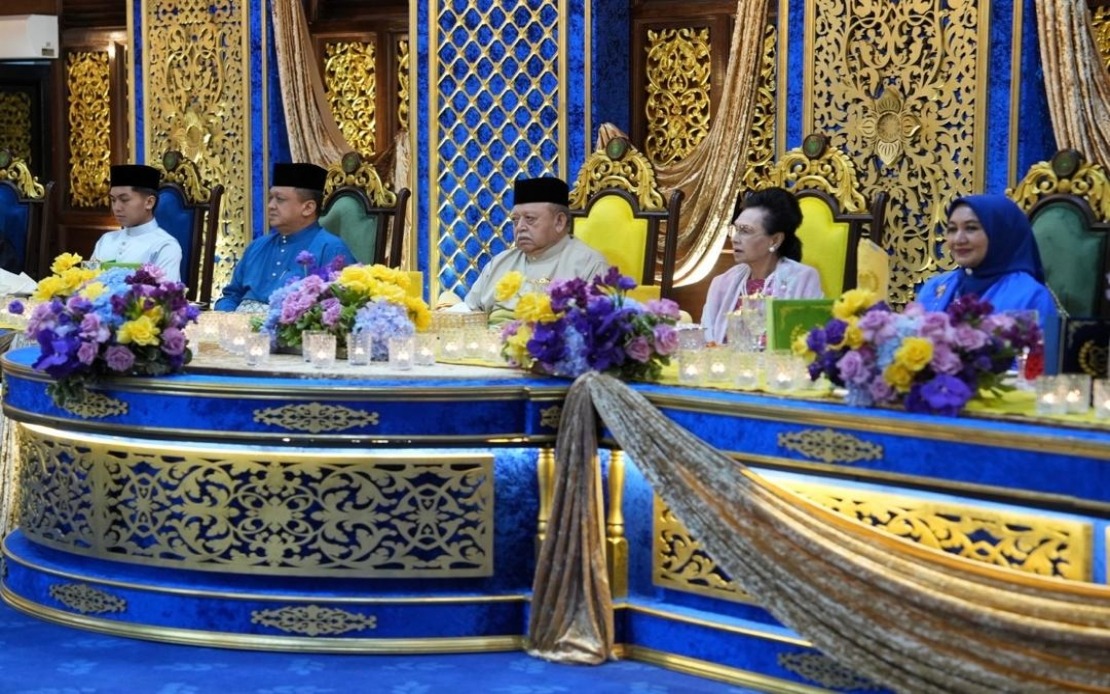
A landmark honour ceremony in Perlis has recognized 246 individuals for their dedicated service to the state and nation, as the Raja of Perlis, Tuanku Syed Sirajuddin Jamalullail, celebrated his 83rd birthday. The second round of investiture proceedings took place on July 27 at Istana Arau, with a final session scheduled for July 30, demonstrating the scale of recognition extended across various government departments and public institutions across the northern state.
The distribution of honours reflects a deliberate acknowledgment of contributions spanning multiple sectors vital to Perlis' development and administration. The highest award conferred, the Darjah Seri Sirajuddin Perlis, went to fourteen recipients, underscoring the selective nature of this prestige honor. Among those receiving this distinction were police and military personnel, academics, and healthcare officials, indicating that the ruler's recognition spans both security and civilian spheres of public service.
Among the SSP recipients were figures from strategic institutions. ACP Ahmad Sahrin Hussain, serving with the Kedah Police Contingent Headquarters, exemplifies the security sector's representation. The academic community received recognition through Mazmin Mat Akhir of Universiti Malaysia Perlis and Megat Mohd Noor Megat Teh, director of the Teacher Education Institute Perlis Campus, highlighting the state's commitment to education and knowledge advancement. The inclusion of Dr Mohamad Zamri Kamis from the Perlis State Health Department underscores healthcare professionals' pivotal role during challenging times for public wellness.
The second tier of awards, the Darjah Ahli Mahkota Perlis, honoured fifteen individuals working across regulatory bodies and departmental leadership roles. ACP Mohd Shokri Abdullah, identified as the Padang Besar district police chief, joins recipients from health administration and development agencies like RISDA, reflecting law enforcement and rural economic development priorities. These appointments signal the ruler's recognition of those managing day-to-day governance and public safety operations that sustain community cohesion.
The Pingat Mahkota Perlis, awarded to sixty-eight recipients, represents the broadest category of recognition at this honour tier, encompassing mid-level administrators and specialized professionals. Recipients included Maizura Shamsuddin, directing the Perlis Islamic Religious Affairs Department, Mohammad Afifi Othman from the education sector, and Azizi Ahmad of the Anti-Corruption Commission. This distribution demonstrates that excellence is recognized across religious administration, educational management, developmental work, and institutional integrity—domains fundamental to the state's social fabric.
Two individuals received the Pingat Pekerti Terpilih, the rarest honour in this ceremony, with recipients identified as ACP Yusharifuddin Mohd Yusop, the Kangar district police chief, and Major Mohammad Saifulrizal Abu from Army Headquarters. The scarcity of this award suggests it targets those demonstrating exceptional character and moral leadership within their respective fields, particularly within the security apparatus.
The broader recognition extended through fifty-five medals at the Pingat Jasa Kebaktian and Pingat Jasa Baik levels encompassed media professionals, statistical officers, and administrative staff working across government institutions. Izuani Abdul Wahab from RTM Perlis, Noor Aini Hanapiah serving in the information service, and Muhamad Hafiz Ab Mutalib, Utusan Malaysia's Perlis bureau chief, highlight acknowledgment of journalism and information dissemination roles—sectors essential for transparent governance and public communication. Meanwhile, fourteen recipients of the Pingat Perkhidmatan Lama represented long-serving civil servants, recognizing decades of institutional loyalty.
For Malaysian readers and observers of state governance practices, this ceremony illustrates how constitutional monarchies utilize honours systems to reinforce institutional legitimacy and public morale. The careful categorization of awards according to seniority, field, and contribution type reflects structured recognition protocols common across Malaysian states, where rulers' honours ceremonies serve both ceremonial and administrative purposes. The ceremony's staging across three sessions—itself an administrative arrangement—demonstrates the logistical complexity of such events when they encompass this many recipients.
The Perlis state government's accompanying statement emphasized that these honours served purposes beyond mere ceremonial recognition. By acknowledging the "dedication and sacrifices" of recipients, the honours reinforced the ruler's active engagement with his subjects' welfare and aspirations. This messaging function proves particularly valuable in smaller states like Perlis, where direct ruler-subject relationships maintain greater cultural salience than in more urbanized states. The emphasis on fostering "loyalty and unity among the people of Perlis" suggests that such ceremonies function as instruments of social cohesion, particularly important for a state with more limited economic resources and a smaller population base compared to Selangor or Johor.
The geographic and sectoral diversity of recipients—including law enforcement from neighboring Kedah, health professionals, religious administrators, educators, and anti-corruption officials—illustrates how state honours transcend administrative boundaries. Officials from central government agencies receiving recognition from state rulers reflects Malaysia's federal structure, where state rulers maintain ceremonial and symbolic authority over residents regardless of their employing organization's nominal jurisdiction. This cross-cutting recognition pattern is particularly evident in Perlis, which hosts federal military installations, federal police units, and numerous federal agencies operating under state rule's nominal authority.
The inclusion of media professionals and information officers among recipients underscores the ruler's recognition of those shaping public discourse and managing state communications. In an era where information dissemination proves critical to legitimizing government action and managing public perception, acknowledging media and information sector contributions sends deliberate signals about the ruler's support for transparent governance and informed citizenry. This becomes especially significant in smaller states where media infrastructure and professional journalism capacity may be more limited.
As Malaysia's states continue modernizing their governance systems and refining their administrative structures, occasions like Perlis' 83rd birthday investiture ceremony demonstrate how traditional honour systems adapt to recognize contemporary professional excellence. The ceremony bridged ceremonial tradition with practical acknowledgment of modern institutional roles—from anti-corruption officials to meteorological experts—suggesting that Malaysian royal honors remain dynamic instruments for recognizing and incentivizing excellence across governmental and public sectors. The third and final session scheduled for July 30 would likely process additional recipients, potentially bringing the total recognition scope even broader.

