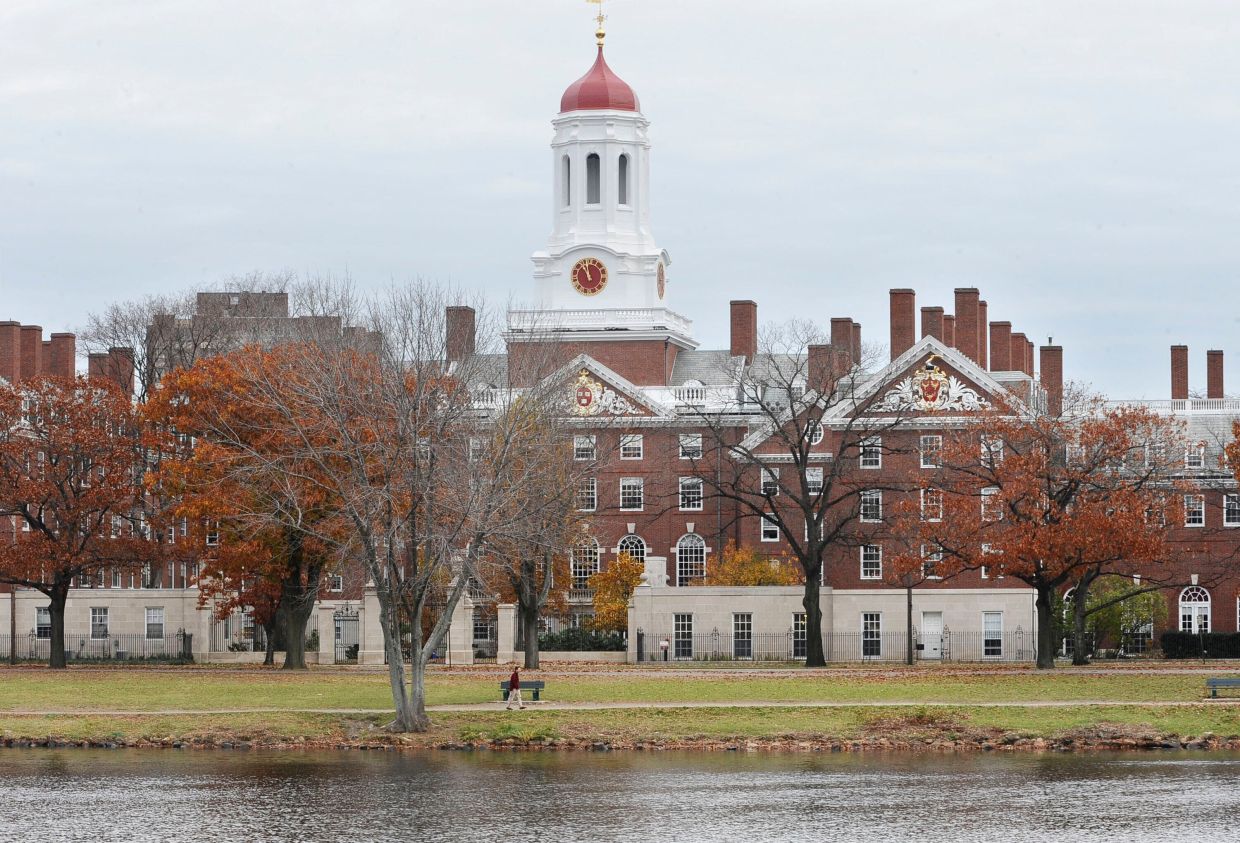
The United States Department of Defence has escalated its scrutiny of American academic research by ordering 30 prestigious universities to conduct comprehensive audits of their ties with foreign research institutions and entities, according to an unnamed American official who confirmed the details to the Associated Press. The affected institutions represent some of the nation's most significant research powerhouses, ranging from Ivy League universities such as Harvard and the Massachusetts Institute of Technology to major state universities like the University of California system campuses at Berkeley, Los Angeles and San Diego. The timing and scope of the directive underscore Washington's deepening concerns about potential technology transfer, intellectual property protection and national security risks embedded within the American higher education ecosystem.
The Pentagon has given institutions until 31 August to complete thorough reviews of their academic, financial and research relationships with designated foreign "entities of concern", assess whether sensitive or export-controlled research has been compromised, and implement corrective measures that could involve severing existing partnerships. Beyond the named institutions of Harvard, MIT and Johns Hopkins, the audit targets include Cornell, Duke, Georgetown, New York University and multiple University of California campuses, alongside dozens of other research universities spanning the continental United States. Compliance carries significant teeth: universities that fail to meet the deadline or adequately address identified vulnerabilities risk losing access to federal research funding, a penalty that could cripple their research operations given the substantial reliance on government grants.
The Pentagon's action stems from its enforcement of Section 1286 of the 2019 National Defence Authorisation Act, which requires federal review of research relationships with foreign institutions deemed potential security risks. An updated list released last month identified 130 academic and research institutions globally that fall under this framework, though the Pentagon has declined to specify which institutions triggered concerns at each of the 30 universities under audit. The department has further expanded its definition of security concerns to encompass entities affiliated with what it characterises as "rebranded Confucius Institutes", reflecting American concerns about Chinese government soft power initiatives operating within Western universities. However, Pentagon officials have provided no public evidence distinguishing whether the 30 universities were selected because specific technology transfers or violations occurred, or whether their inclusion stems merely from maintaining relationships with listed foreign entities.
The academic sector has responded with considerable pushback and frustration. Sarah Spreitzer, vice-president of the American Council on Education representing American university and college presidents, characterised the Pentagon's approach as unfairly prejudicial. She pointed out that universities actively collaborated with the federal government in developing the very foreign institution list now triggering these audits, and that most council members subsequently terminated partnerships with listed organisations. Spreitzer expressed particular concern that universities now face potential liability for collaborations predating the Pentagon's restrictions, effectively penalising institutions for decisions made before the security risks were formally identified. Her statement reflects broader anxiety within American academia about retroactive application of security standards and what universities perceive as inconsistent government communication regarding acceptable research partnerships.
China's diplomatic response has been swift and measured in tone but firm in substance. A spokesperson for the Chinese embassy in Washington rejected what Beijing characterised as America's "overstretching of the concept of national security" and its "politicisation or instrumentalisation of normal scientific, educational and academic exchanges." The Chinese position emphasises that scientific innovation fundamentally requires openness and international cooperation, and that restricting research exchanges ultimately damages all parties, including American researchers and institutions themselves. This diplomatic statement reflects Beijing's broader frustration with what it views as the Trump and Biden administrations' weaponisation of national security rhetoric to curtail Chinese participation in American research ecosystems, a concern resonating across allied nations in Southeast Asia and Europe who maintain their own research partnerships with Chinese institutions.
Congressional investigators have already begun laying groundwork for these Pentagon audits through parallel inquiries into university-China research relationships. Representative John Moolenaar's committee reported that many of the 30 universities under Pentagon audit had previously appeared in its own research-security investigations, which raised specific concerns about relationships with Chinese military-linked institutions, participation in programmes supported by the China Scholarship Council and federally funded research collaborations involving Chinese researchers. Notably, Moolenaar's committee and the House Education and Workforce Committee released a recent report specifically targeting Harvard, alleging inadequate oversight of collaborations with institutions associated with China's military and defence-industrial sectors. The investigation documented that Harvard-affiliated researchers had co-authored more than 140 academic papers with researchers connected to Chinese military institutions, though Harvard has not been formally accused of legal violations and the congressional findings represent the committees' interpretive assessment rather than established fact.
The Pentagon's handling of the audit process has itself drawn criticism for opacity and compressed timelines. The department initially withheld the identities of the 30 universities while granting only two weeks for institutions to initiate comprehensive audits of their international research portfolios—a remarkably brief window for institutions managing thousands of active research relationships across multiple departments and research centres. This approach suggests the Pentagon prioritised rapid compliance pressure over providing universities adequate time and information to conduct genuinely thorough reviews. The refusal to publicly disclose which specific foreign collaborations prompted concerns at each institution effectively forces universities to cast wide compliance nets, potentially disrupting beneficial and legitimate research partnerships in the process of achieving defensive compliance.
For Malaysian and Southeast Asian observers, this American academic crackdown carries significant implications. Many regional universities maintain research collaborations with both the affected American institutions and Chinese research organisations, positioning them at the intersection of strategic competition between Washington and Beijing. The tightening of American research partnerships could redirect collaboration opportunities toward other regions or strengthen Beijing's alternative research ecosystem, potentially reshaping international academic networks. Additionally, the precedent of using national security justifications to restrict academic partnerships raises questions about academic freedom and the proper boundaries of government intervention in university research across democracies, concerns that ripple throughout the Asia-Pacific region where similar pressure points exist.
The broader context involves escalating American concern about research security and technology protection as competition with China intensifies across multiple domains. The Pentagon's framing of university research as a potential vulnerability reflects a shift toward treating academic institutions as strategic assets requiring government oversight, marking a departure from the post-Cold War consensus that celebrated academic freedom and international research collaboration. Whether these audits yield evidence of actual misconduct or simply reinforce existing suspicions about China-linked research remains uncertain, but the process itself signals that American national security policy increasingly views higher education through a geopolitical lens. For universities navigating these pressures, compliance with Pentagon requirements while maintaining institutional research missions and international scholarly commitments presents a complex balancing act with no clearly established precedent.

