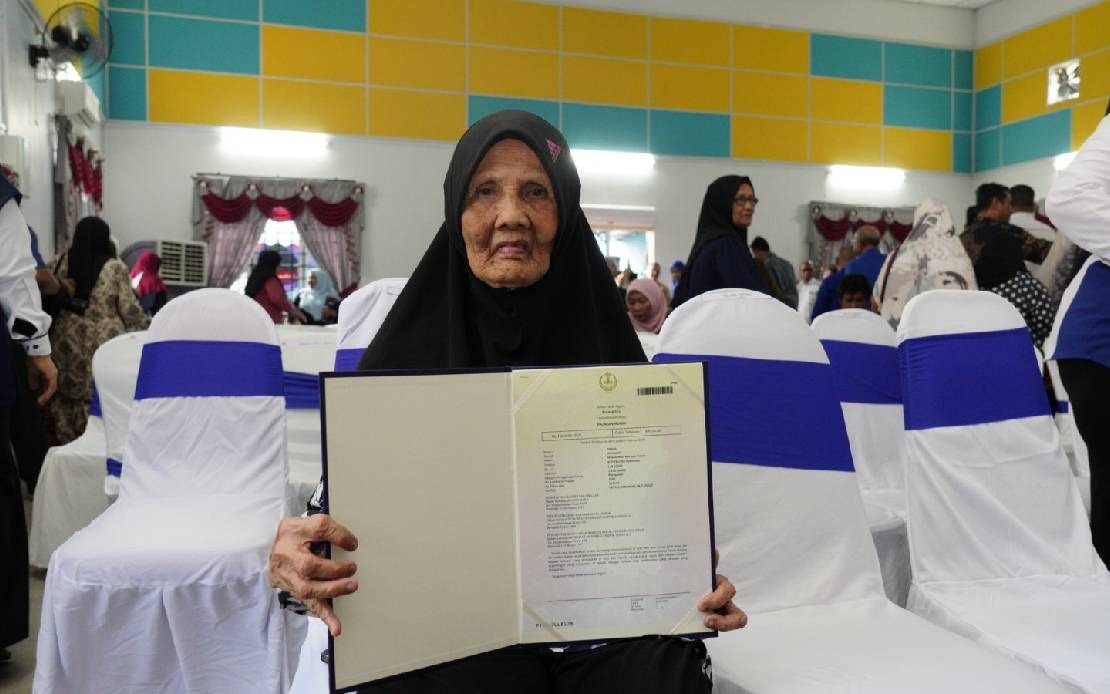
The Federal Land Consolidation and Rehabilitation Authority (FELCRA) has formally distributed land ownership grants to 47 programme participants in the Seri Gala area of Perak, underscoring what government officials regard as a proven model for sustainable rural development in Malaysia. The grant handover ceremony, held in Ipoh on July 14, also inaugurated the FELCRA Seri Gala Area Village Rearrangement Programme (PPSK) Grand Hall, symbolising the consolidation of gains achieved through decades of land management and community development work in the state.
Peeak Menteri Besar Datuk Seri Saarani Mohamad characterised the FELCRA Consolidation and Rehabilitation (P&P) Programme as one of the most effective rural initiatives undertaken by Malaysian authorities, arguing that its impact extends well beyond the mere transfer of land titles. According to Saarani, the scheme has successfully transformed communities by generating employment, stimulating local commerce, and rebuilding confidence among rural populations in the viability of agricultural and land-based livelihoods. The granting of formal ownership rights, he contended, represents far more than routine bureaucratic procedure—it constitutes a meaningful affirmation of dignity for rural dwellers and a tangible instrument for securing the financial futures of participant families.
The Menteri Besar elaborated on what he sees as the structural advantages of the FELCRA model, emphasising its systematic methodology and cost efficiency. Through this approach, previously marginal or unproductive land parcels have been converted into reliable revenue sources for participants, he argued, while simultaneously strengthening the overall equilibrium between urban and rural economic development across the nation. The programme's demonstrated capacity to deliver sustained income streams has, in his view, reinvigorated community faith in the inherent value and potential of their landed assets—a psychological and economic shift that extends benefits beyond individual participants to entire rural settlements.
The scale of FELCRA's operational footprint across Perak reflects the scheme's established position within the state's development architecture. Zainal Abidin Alias, FELCRA's director of participant affairs, disclosed that the authority currently manages approximately 32,000 hectares encompassing nearly 20,000 programme participants across the state. This landholding situates Perak as the second-largest FELCRA operational jurisdiction in Malaysia, trailing only Pahang, a standing that underscores the scheme's historical prominence in the state's agricultural and rural economy. The concentration of such extensive land management responsibilities in Perak reflects decades of implementation dating back to the scheme's origins.
For Malaysian policymakers and development observers, the Seri Gala grant distribution exemplifies a particular approach to rural advancement that prioritises asset ownership alongside productive land use. Unlike purely subsidy-based interventions, the FELCRA model anchors development on the principle of vesting tangible property rights in participant communities, thereby creating an ownership stake in long-term economic outcomes. This philosophy aligns with broader contemporary thinking about rural development that extends beyond infrastructure investment to encompass human capital, entrepreneurial capacity, and community agency in shaping local futures.
The Deputy Prime Minister and Minister of Rural and Regional Development, Datuk Seri Dr Ahmad Zahid Hamidi, has recently articulated an expanded vision for rural development that informed discussions at the Seri Gala ceremony. Speaking during the World Rural Development Day 2026 celebration in Jengka, Pahang, Ahmad Zahid cautioned against viewing rural advancement solely through the lens of physical infrastructure—a perspective that Zainal Abidin echoed when discussing FELCRA's strategy. Instead, Ahmad Zahid advocated for a holistic framework encompassing skills development, economic strengthening, business acumen, living standards, and rural communities' capacity for self-determination. This comprehensive outlook reflects a growing recognition within government that sustainable rural prosperity requires attention to multiple dimensions beyond roads and buildings.
The FELCRA framework, as articulated by programme officials, endeavours to operationalise this more expansive rural development philosophy. By securing land ownership for participants, establishing clear economic incentives, and building institutional capacity at the community level, FELCRA proponents argue the scheme addresses several dimensions of rural advancement simultaneously. Participants gain both tangible assets and the psychological benefits of legitimate ownership; communities develop commercial capabilities and generate local employment; and rural regions achieve greater economic integration with national growth trajectories rather than remaining peripheral or dependent on subsidy flows.
The Seri Gala grant ceremony also signified the completion of a physical infrastructure investment—the new PPSK Grand Hall—that serves as a community facility and administrative centre for the FELCRA settlement. Such structures typically function as venues for participant meetings, skills training, market linkage initiatives, and local governance discussions, thereby facilitating the kind of community engagement and institutional strengthening that contemporary rural development frameworks emphasise. The inauguration of the hall alongside the grant handover ceremony symbolically linked asset distribution with community institution-building.
For Southeast Asian observers, Malaysia's FELCRA model offers a case study in land-centred rural development that has persisted and evolved across multiple decades and governmental administrations. Unlike schemes that have lapsed or fragmented, FELCRA has maintained operational continuity, accumulated extensive land holdings, and expanded participant numbers, suggesting institutional durability. Yet the scheme also faces ongoing challenges related to commodity price volatility, climate variability, generational transitions in farming communities, and competitive pressures in global agricultural markets—issues that extend beyond the FELCRA model itself to affect all land-dependent rural economies across the region.
The presence at the Seri Gala ceremony of State Rural Development, Plantation, Agriculture and Food Industry Committee chairman Datuk Mohd Zolkafly Harun and FELCRA Berhad chairman Datuk Seri Ahmad Jazlan Yaakub underscored the political significance that state and federal authorities accord to the scheme. This alignment of political attention and administrative resources reflects both the programme's electoral salience within rural constituencies and its role in fulfilling long-standing commitments to land distribution and rural uplift. For participating families, the grant represents not merely a property transfer but formal recognition by state institutions of their rights and stake in Malaysia's development trajectory.

