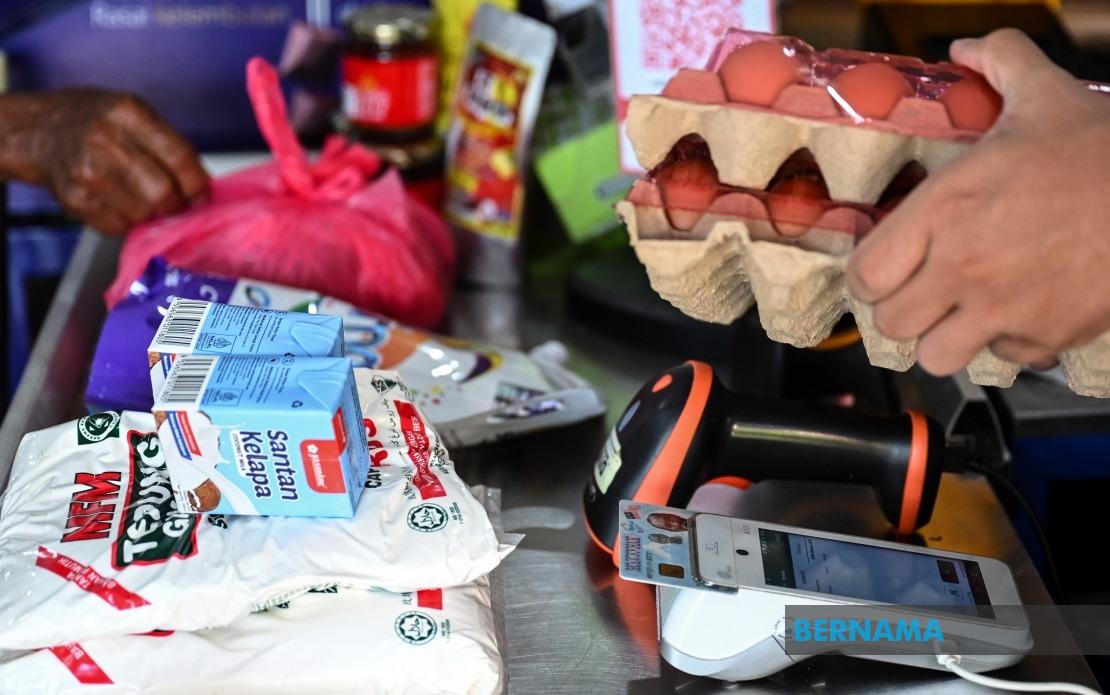
The Ministry of Finance has commenced Phase 3 disbursements of the Sumbangan Tunai Rahmah (STR) cash assistance programme today, extending support to 5.3 million eligible recipients through a RM1.2 billion allocation. This represents a significant expansion of Malaysia's targeted welfare apparatus, which has grown steadily since the start of 2026 to encompass an additional 300,000 beneficiaries compared to the five million recipients at the year's opening.
The recipient base consists primarily of 3.9 million low- and middle-income households, alongside 1.4 million single senior citizens who have qualified for the scheme. This stratification reflects the government's attempt to direct resources toward vulnerable population segments most exposed to inflationary pressures and economic uncertainties. The expansion in beneficiary numbers underscores both widening economic pressure on Malaysian households and the administration's commitment to extending assistance eligibility across a broader demographic spectrum than previously covered.
Phase 3 payments are calibrated according to household circumstances, with amounts ranging from RM150 to RM600 contingent upon recipients' income levels and the number of dependant children in their care. Single senior citizens receive a standardised allocation of RM150, recognising their typically fixed-income status and reduced earning capacity. By consolidating STR disbursements across three phases alongside the newly reformed monthly SARA basic aid programme, qualifying recipients can accumulate up to RM3,300 by August 2026, excluding additional one-off SARA payments available to all Malaysian citizens aged 18 and above.
The restructured welfare framework introduced this year fundamentally reorients cash assistance delivery mechanisms. Rather than episodic distributions, the revised approach delivers STR payments on a quarterly basis while SARA provides consistent monthly stipends to those who meet eligibility criteria. This transition toward more regular, predictable income transfers represents a deliberate policy shift designed to smooth household cash flows and enable better financial planning among recipients accustomed to irregular support disbursements under previous arrangements.
The cumulative financial commitment across the first three STR phases has now reached RM3.6 billion, demonstrating the substantial fiscal dedication toward direct cash transfers in 2026. To contextualise this commitment, the total allocation for both STR and SARA programmes throughout the year amounts to RM15 billion—the highest budgetary provision in federal history for such initiatives and nearly triple the total expenditure on the Bantuan Rakyat 1Malaysia (BR1M) scheme in 2016. This escalation reflects both population growth and the government's recalibrated prioritisation of direct household assistance within constrained public finances.
Prime Minister Datuk Seri Anwar Ibrahim framed the expanded assistance programmes within a broader economic philosophy combining immediate welfare relief with longer-term structural reforms. He acknowledged the persistent cost-of-living challenges confronting segments of the Malaysian population while articulating that assistance initiatives serve as temporary scaffolding supporting households during economic transitions. The government's stated objective extends beyond mere palliative cash distribution toward creating conditions enabling income growth and improved living standards through economic restructuring and sectoral development initiatives.
The Ministry of Finance attributed this expanded capacity for welfare expenditure to improvements in governance structures and revenue management practices that have liberated previously constrained fiscal space for redistribution purposes. Enhanced financial oversight and institutional reforms have supposedly enabled greater portions of state revenue to be directed toward targeted assistance programmes rather than administrative overhead or inefficiencies. This framing emphasises the complementary relationship between sound fiscal management and redistributive capacity—an argument that stronger public financial discipline creates room for expanded social spending.
Household payment collection mechanisms have been designed to accommodate financial inclusion disparities across the Malaysian population. Recipients maintaining active bank accounts will receive Phase 3 STR payments through direct electronic transfer beginning today, facilitating immediate fund access without physical collection requirements. For the substantial proportion of eligible Malaysians lacking formal banking relationships, cash disbursement facilities operate at Bank Simpanan Nasional branches nationwide, ensuring geographic accessibility across peninsular and East Malaysian regions.
To address programme integrity and minimise benefit leakage through fraudulent claims, the Ministry maintains year-round application and appeal channels via the official STR portal at bantuantunai.hasil.gov.my. This continuous intake mechanism contrasts with periodic application windows, theoretically reducing administrative barriers for households transitioning into eligible income categories or experiencing changed circumstances. Comprehensive frequently asked questions remain available through dedicated portals for both STR and SARA programmes, supporting beneficiary comprehension of eligibility requirements and payment procedures.
The Ministry has issued explicit public guidance regarding common fraud vectors exploiting assistance programme popularity, particularly proliferating scam links impersonating legitimate payment channels. Residents are advised to utilise only the authorised STR portal for programme information and payment verification, avoiding third-party intermediaries or suspicious digital platforms. This emphasis on fraud vigilance recognises the substantial sums circulating through assistance mechanisms and the vulnerability of economically disadvantaged populations to social engineering and financial predation.
The STR and SARA programmes occupy increasing prominence within Malaysia's social safety net architecture, particularly as cost-of-living pressures persist across Southeast Asia. The scale of financial commitment and breadth of beneficiary coverage position these initiatives as central to government welfare strategy, complementing means-tested programmes and targeted subsidies. For Malaysian households navigating inflationary environments and wage stagnation in many sectors, the quarterly STR distributions and monthly SARA transfers provide meaningful income supplements, though policy debates continue regarding whether assistance adequacy matches underlying economic pressures facing target populations.

