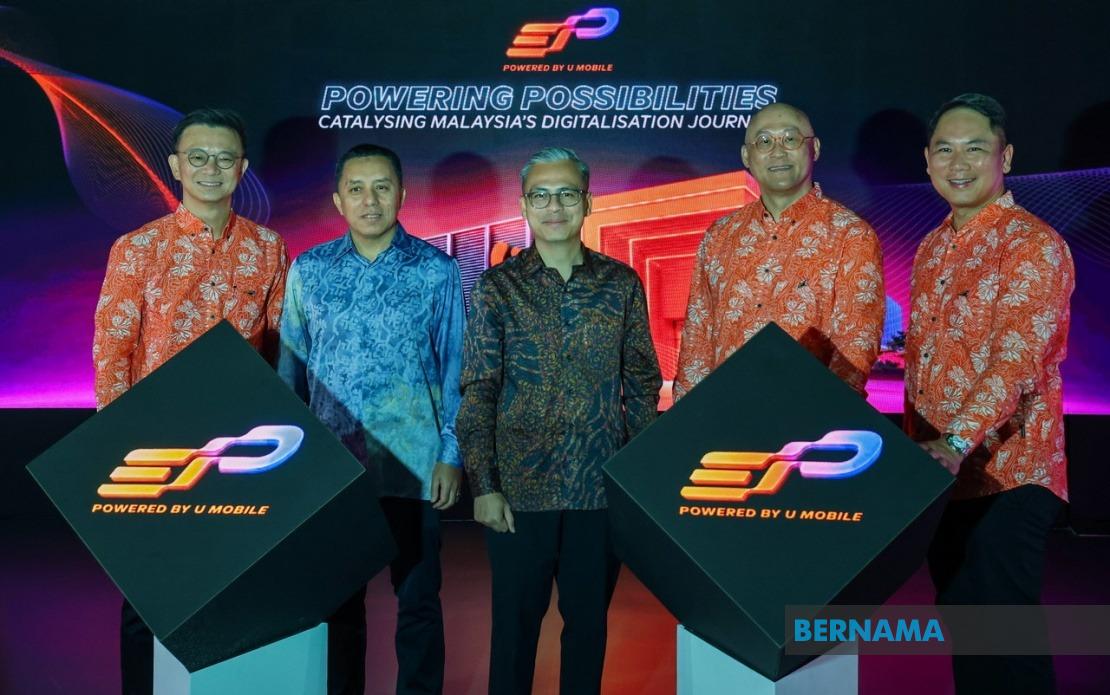
Communications Minister Datuk Seri Fahmi Fadzil has identified 5G Advanced, commonly referred to as Ultra 5G, as a transformative technology with far-reaching implications for Malaysia's economic and security landscape. Speaking at the launch of the U Mobile Enterprise Innovation Platform Hub in Kuala Lumpur, Fahmi emphasised that the technology's integration of artificial intelligence and robotics capabilities positions it as a potential driver of efficiency gains across multiple strategic sectors that form the backbone of the Malaysian economy.
The minister's remarks reflect growing recognition within government circles that fifth-generation mobile infrastructure represents more than incremental connectivity improvement. By combining ultra-low latency with network slicing capabilities and doubled capacity compared to conventional 5G systems, 5G Advanced promises to unlock operational possibilities that current networks cannot support. For Malaysia, a nation increasingly focused on digital economy expansion and productivity enhancement, this technological leap carries significant competitive implications as regional economies race to establish infrastructure advantage.
In healthcare contexts specifically, Fahmi pointed to tangible workforce support benefits, suggesting that 5G Advanced-powered systems could meaningfully reduce administrative burden on nursing staff within hospital settings. This application addresses a persistent challenge in Malaysian healthcare delivery, where worker shortages and excessive workloads continue to strain service quality. By automating routine monitoring and data collection tasks, such technology could free clinical personnel to concentrate on direct patient care activities, potentially improving treatment outcomes and staff retention in a sector grappling with chronic staffing difficulties.
Agricultural transformation emerged as another priority area highlighted by the minister, with particular emphasis on palm oil production efficiency. Malaysia's palm oil sector, while economically significant, faces persistent pressure to demonstrate sustainability improvements and operational modernisation. 5G Advanced deployment at plantation sites could enable real-time crop monitoring, automated harvesting coordination, and predictive maintenance of equipment—interventions that collectively promise meaningful productivity gains in an industry already operating at substantial scale.
Retail sector modernisation represents the third pillar of Fahmi's vision, with the minister specifically noting the data analytics advantages inherent to 5G Advanced architecture. Contemporary retail competition increasingly turns on inventory optimisation and rapid consumer trend identification. By processing point-of-sale and inventory data in real time with minimal latency, retailers can dynamically adjust stock allocation, personalise product offerings, and respond swiftly to shifting demand patterns. For Malaysia's retail industry, particularly as e-commerce penetration accelerates, such technological capability could prove decisive in competitive positioning.
Beyond commercial applications, Fahmi articulated a significant security dimension to 5G Advanced deployment, emphasising the technology's capacity to support autonomous drone operations for surveillance purposes. The minister indicated that experimental drone deployments utilising 5G connectivity have already commenced at certain locations, with particular focus on border monitoring applications. This trajectory reflects broader regional security concerns, as Southeast Asian nations increasingly seek technological solutions to border control challenges that conventional infrastructure struggles to address effectively across difficult terrain.
The border security use case deserves particular examination given Malaysia's geographical positioning and evolving transnational security environment. Equipping the Malaysian Border Control and Protection Agency (AKPS) and Royal Malaysia Police (PDRM) with drone capabilities supported by reliable 5G Advanced networks could materially enhance situational awareness along the country's extensive maritime and land boundaries. The ultra-low latency and high bandwidth characteristics of 5G Advanced make it uniquely suited to supporting real-time drone command and control across challenging geography, addressing a capability gap that conventional connectivity has thus far failed to bridge adequately.
Fahmi's comments regarding coordination between the Malaysian Communications and Multimedia Commission (MCMC), the Home Ministry, and security agencies suggest movement toward integrated policy frameworks acknowledging that infrastructure development and security deployment represent interconnected imperatives. This institutional coordination reflects a more sophisticated understanding of how telecommunications infrastructure decisions cascade across governance structures, a recognition increasingly evident in forward-thinking Southeast Asian governments grappling with complex technology deployment questions.
The technical specifications underlying 5G Advanced distinguish it meaningfully from earlier 5G iterations. Operating on a 5G Standalone architecture, the technology delivers enterprise-grade connectivity specifications that earlier 5G deployments could not guarantee. The doubled capacity figure that Fahmi highlighted addresses a critical bottleneck that many early 5G networks have encountered, while enhanced AI-powered security features respond to legitimate cybersecurity concerns accompanying increasingly mission-critical network usage. These technical characteristics position 5G Advanced less as incremental refinement and more as qualitatively different infrastructure foundation.
For Malaysian policymakers and industry participants, Fahmi's statements signal genuine government commitment to positioning the country competitively within the regional technology landscape. Vietnam, Thailand, and Singapore have all advanced substantial 5G deployment programmes, and Malaysia's ambition to compete effectively in emerging sectors like autonomous vehicles, precision agriculture, and advanced manufacturing hinges partly on achieving technological parity. 5G Advanced deployment, should it proceed systematically, could facilitate Malaysia's transition toward higher-value economic activities less dependent on labour cost advantages and more reliant on technological sophistication and operational excellence.
The broader implications for Southeast Asian digital infrastructure development deserve consideration. Malaysia's approach to 5G Advanced adoption will likely influence neighbouring economies' strategic planning, as technology diffusion within the region typically follows patterns of initial adoption by larger markets followed by regional cascade effects. Success in Malaysian deployment could accelerate broader Southeast Asian 5G Advanced adoption, collectively strengthening the region's technological foundation and creating cross-border digital ecosystem opportunities currently limited by inconsistent infrastructure standards.
Moving forward, the practical implementation challenges remain substantial. Spectrum allocation, infrastructure investment requirements, cybersecurity frameworks, and regulatory clarity all represent prerequisites for realising Fahmi's outlined potential. The government's stated commitment to working collaboratively across agencies suggests recognition of these multifaceted requirements, though translating policy intention into operational deployment invariably encounters unforeseen obstacles. Monitoring implementation progress across these designated sectors—healthcare, agriculture, retail, and border security—will provide early indicators of whether 5G Advanced technology lives up to the transformative promise that Malaysian leadership currently envisions.

