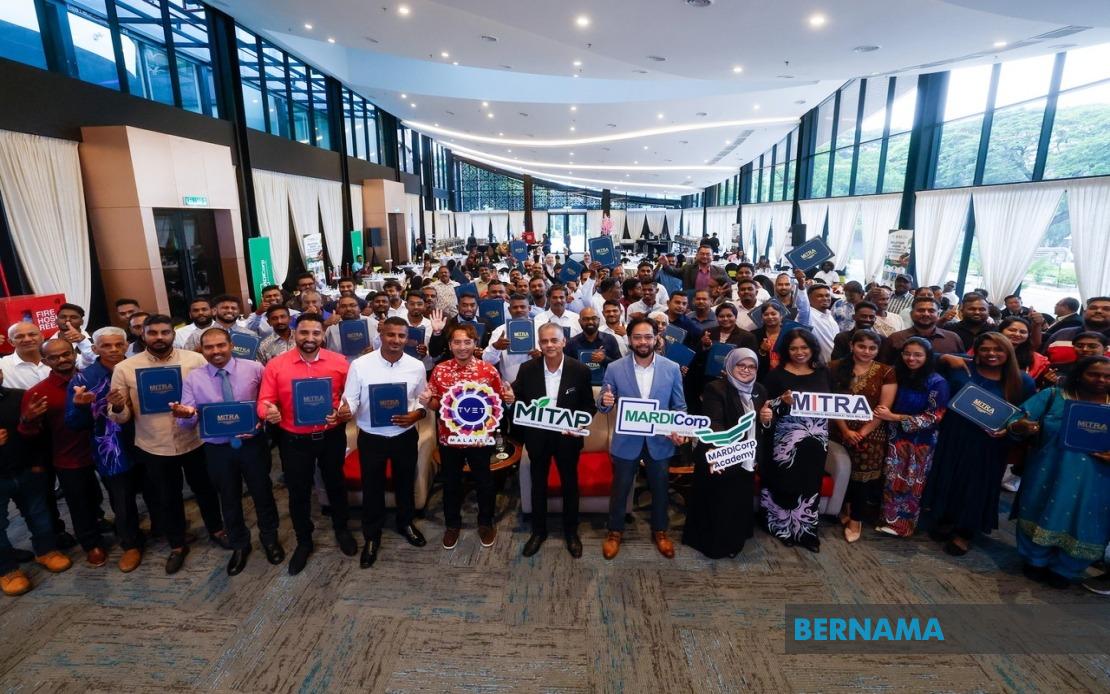
The Malaysian Indian Community Transformation Unit (MITRA) has distributed RM30,000 agricultural transformation grants to 68 young entrepreneurs as part of a comprehensive programme aimed at expanding farming participation within the Indian community. The financial support, administered through the Malaysian Indian Transformative Agri Programme (MITAP), represents a significant investment in rural economic development and community empowerment across Malaysia's diverse agricultural sector.
MITAP operates as a joint initiative between MITRA and MARDICorp, executed under the broader Indian Community Socioeconomic Development Programme framework. The scheme reflects government commitment to inclusive agricultural development by creating pathways for underrepresented communities to establish viable farming operations. By targeting young entrepreneurs specifically, the programme addresses both youth unemployment and the pressing need to attract new entrants into agriculture—a sector that has traditionally struggled with generational renewal across Malaysia.
According to MITRA director-general K. Raveendran Nair, the initiative comprises two distinct yet complementary components designed to support farmers at different stages of development. The QuickWin MITRA strand provides immediate capital grants of up to RM30,000 to enable young agropreneurs to launch or expand their operations without excessive bureaucratic delay. This approach recognizes that emerging farmers need rapid access to funding to capitalize on market opportunities and establish productive capacity quickly.
The Young Agropreneur Programme (PUM), the second component, takes a longer-term developmental approach through an intensive 10-month training curriculum. Eight participants have already completed this structured training, gaining comprehensive knowledge in business management, technical farming practices, and market-oriented production strategies. This dual-track model balances immediate financial support with skill-building, ensuring recipients possess both capital and competence to succeed.
The grant recipients represent diverse agricultural specializations, reflecting Malaysia's varied agroeconomic landscape. Supported activities include food crop production—the foundation of domestic agricultural output—alongside more specialized enterprises such as dairy cattle management, beekeeping, oyster mushroom cultivation, and freshwater fish farming. The inclusion of food processing technology highlights recognition that value-added activities generate superior returns and employment compared to raw commodity production alone.
MARDICorp managing director Mohamad Zamir Ghazali emphasized the corporation's ongoing commitment to mentoring programme participants beyond initial grant disbursement. This extended support system addresses a critical gap in many agricultural schemes, where farmers receive funding but lack sustained guidance for scaling operations and navigating market complexities. By providing marketing assistance, helping develop downstream products, and facilitating technology transfer, MARDICorp transforms passive fund distribution into active entrepreneurial partnership.
The networking dimension of MITAP merits particular attention for Malaysian policymakers and development practitioners. Zamir noted that bringing participants together creates communities of practice where farmers share experiences, troubleshoot challenges collectively, and build commercial relationships. Such networks enhance programme sustainability by embedding participants within formal agricultural structures and association membership, keeping them connected to government support systems and market intelligence. This social capital formation often proves as valuable as the financial grants themselves.
For Malaysia's broader agricultural transformation agenda, programmes like MITAP address several interconnected policy objectives. They combat rural-to-urban migration by creating economically attractive opportunities in farming communities. They expand food security through increased domestic production in priority sectors. They promote inclusive growth by ensuring emerging farmers from all communities access development resources. Additionally, by attracting young entrepreneurs, such initiatives help reverse agricultural sector aging and position farming as a viable career path for Malaysian youth.
The emphasis on technology transfer and modern farming methods reflects recognition that traditional subsistence agriculture cannot generate sufficient household income or employment. By coupling capital provision with training in contemporary production techniques—from aquaculture to mushroom cultivation to food processing—MITAP positions participants to compete in commercial markets rather than merely produce for household consumption. This market-oriented approach fundamentally transforms the value proposition of agricultural careers.
The programme's inclusive design within the Indian community context also carries broader significance for Malaysia's multicultural development strategy. Agricultural development has historically concentrated benefits among specific communities; targeted initiatives like MITAP explicitly address historical underrepresentation and build equitable participation. This approach strengthens social cohesion by demonstrating government commitment to enabling all Malaysian communities to benefit from agricultural growth and rural development investments.
Participants who complete the Young Agropreneur Programme gain preferential access to government-run agricultural entrepreneurship initiatives, creating pathways for career progression and scale-up. Early success in PUM can lead to participation in larger government programmes providing additional capital, technical expertise, and market connections. This structured progression model encourages participants to view MITAP as a launching platform rather than a final destination, motivating them to pursue ongoing professional development and business expansion.
The RM30,000 grant threshold appears calibrated to support meaningful agricultural operations while maintaining programme sustainability and reach. For food crop production or specialized farming enterprises, this funding enables land preparation, equipment purchase, seeds or livestock acquisition, and operational working capital. Combined with training and ongoing technical support, this capital injection provides realistic foundation for establishing productive, profitable enterprises.
Moving forward, monitoring programme outcomes will be essential for refining future iterations. Tracking beneficiary success rates, production volumes, income generation, and employment creation will reveal whether MITAP achieves its transformative ambitions. Additionally, assessing how effectively programme graduates remain engaged with agriculture and whether they subsequently create additional employment opportunities within their communities will determine the initiative's multiplier effects. Such evidence would inform expansion decisions and help shape agricultural policy across Malaysia's regions.

