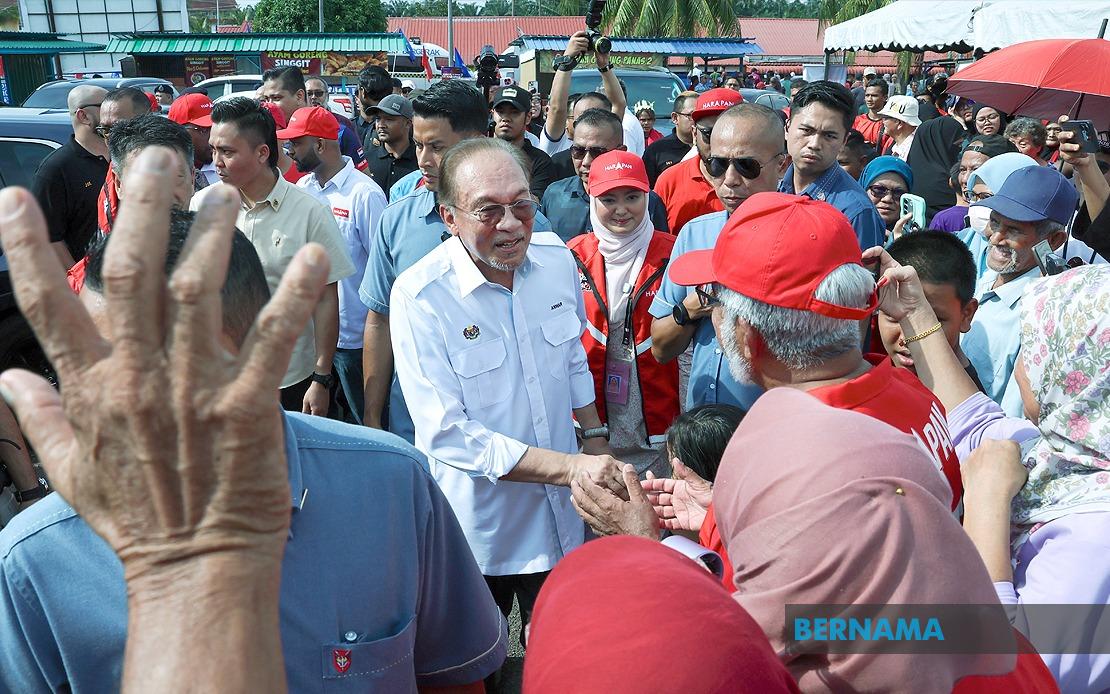
In a touching display of familial determination, a 58-year-old grandmother from Kampung Pudu, Segamat, navigated a motorcycle journey through an oil palm estate on Sunday to give her nine-year-old grandson Muhammad Afif Ikhwan the opportunity to meet Prime Minister Datuk Seri Anwar Ibrahim. What began as a modest attempt to get closer to a public event transformed into a defining moment that the young boy will likely treasure for years to come, illustrating how a grandparent's commitment to a child's aspirations can transcend practical obstacles.
Rosimah Mohammad recounted the preparations leading up to the encounter, noting that her grandson's anticipation had reached fever pitch in the days beforehand. Muhammad Afif's excitement was so pronounced that sleep eluded him as he contemplated the possibility of standing face-to-face with his political idol. This intensity of emotion speaks to the profound impact that public figures can have on young minds, particularly in Malaysia's politically engaged society where civic interest is cultivated from an early age. The boy's singular focus on this meeting reflected a genuine admiration that transcended typical childhood enthusiasm.
The Prime Minister's appearance at the Felda Palong Timur event in Segamat presented the window of opportunity that Rosimah had been seeking. Upon arrival at the venue, she and Muhammad Afif positioned themselves strategically near the pathway leading to the stage, calculating that this vantage point would offer the clearest view of Anwar as he moved through the crowd. What unfolded next exceeded even the grandmother's optimistic expectations. As Anwar made his way towards the stage while acknowledging well-wishers, Muhammad Afif summoned the courage to push through the gathering and extend his hand in greeting.
The moment transcended a simple handshake when Anwar, perhaps recognizing the genuine enthusiasm and determination evident in the young boy's gesture, made an unprecedented decision. Rather than offering a perfunctory acknowledgement, the Prime Minister invited Muhammad Afif onto the stage itself, allowing the child to accompany him during his address to the assembled crowd. This gesture transformed what could have been a fleeting encounter into a centerpiece memory—a validation of the boy's admiration and an affirmation of his courage in stepping forward.
Rosimah's recounting of her emotional response during this unexpected development revealed the profound satisfaction of witnessing her grandson's dream materialize in such an extraordinary fashion. She described observing the shock and elation that radiated from Muhammad Afif as he found himself not merely in the presence of the Prime Minister but actively integrated into the formal proceedings. The grandmother's gratitude extended beyond the moment itself, encompassing the ripple effects of such a positive experience on a child's confidence and sense of possibility.
What makes this narrative particularly significant in the Malaysian context is the attention it subsequently garnered within government circles. Anwar's office took deliberate steps to acknowledge and commemorate the occasion, moving beyond the spontaneous generosity of the stage invitation. Rather than allowing the encounter to fade into the realm of anecdote, the Prime Minister's office orchestrated a follow-up visit to Muhammad Afif's home in Kampung Pudu. This decision to extend recognition underscores a broader understanding that such moments of genuine human connection between political leadership and constituents carry genuine value in democratic societies.
Siti Aishah Shaik Ismail, representing Anwar as PKR deputy information chief, made the home visit on the Prime Minister's explicit request, framing it as a special gesture of appreciation for the young boy's faith and enthusiasm. The visit was accompanied by tangible gifts selected with a child's practical needs in mind: a bicycle for mobility and recreation, a school bag for educational purposes, and shoes—items that speak to everyday life rather than ceremonial grandeur. These choices suggest thoughtfulness about how such gestures could authentically benefit the recipient rather than serving purely symbolic purposes.
The emotional aftermath of this encounter reveals the depth of impact such experiences have on young lives. Siti Aishah shared that Muhammad Afif continues to preserve the memory of that Sunday in highly personal ways, hugging the shirt he wore during the meeting each evening before sleep. This detail encapsulates how children internalize significant moments through tactile, emotional connection rather than abstract understanding. The shirt becomes a tangible link to an intangible achievement—a young boy's dream realized through his grandmother's determination and the Prime Minister's spontaneous kindness.
For Malaysian society more broadly, this story carries implications worth examining beyond its surface charm. It demonstrates how accessible governance and responsive leadership can create lasting positive impressions, particularly among younger generations who form their foundational understanding of political institutions and public service through personal experiences. Muhammad Afif's memory of meeting Anwar will almost certainly shape his long-term civic engagement and trust in institutions in ways that formal civic education rarely achieves.
The role of Rosimah in this narrative deserves particular recognition, as her willingness to undertake a challenging motorcycle journey through an oil palm estate—hardly a trivial undertaking for a 58-year-old—speaks to the values of perseverance and unwavering support for family aspirations that remain central to Malaysian culture. Her actions transformed a child's wish into lived experience, demonstrating that sometimes the most meaningful contributions to our communities come through intimate family gestures rather than grand public pronouncements.
This encounter also highlights the importance of political accessibility in a democratic system. When leaders respond positively to genuine expressions of admiration from citizens—particularly young ones—it reinforces the notion that governance is not conducted from distant heights but remains rooted in human relationships and mutual respect. Muhammad Afif's experience suggests that such accessibility need not be formally scheduled or heavily orchestrated; spontaneous recognition of genuine enthusiasm can be equally powerful.

