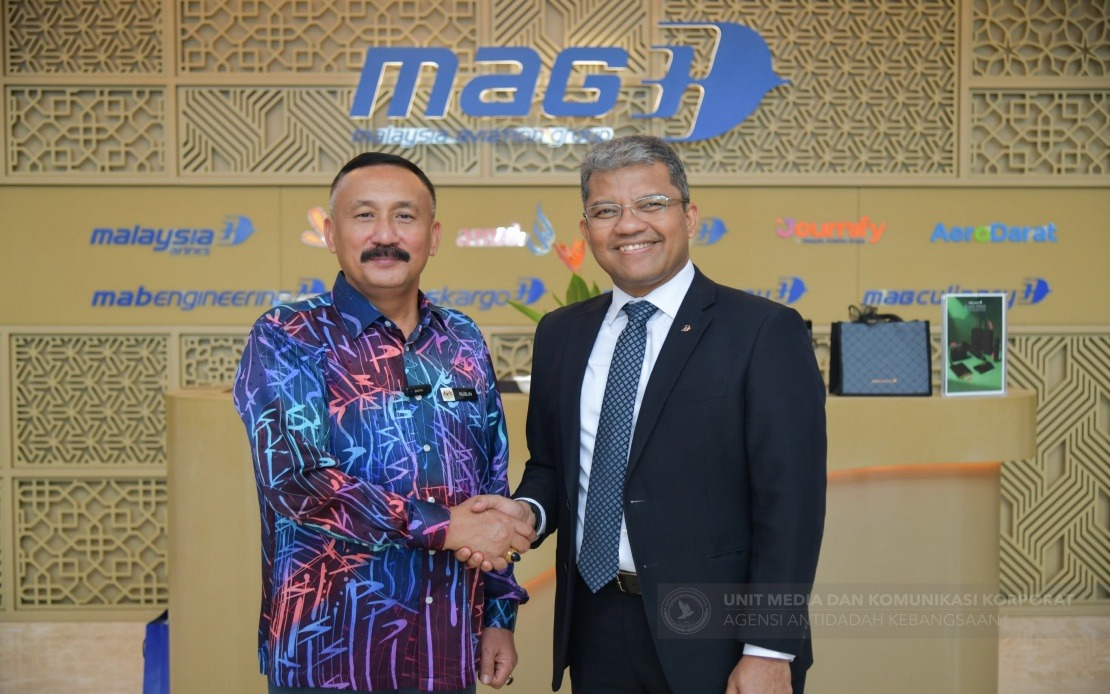
The National Anti-Drugs Agency (AADK) and Malaysia Aviation Group (MAG) have formalized a strategic partnership aimed at combating substance abuse within the aviation industry, signalling a coordinated approach to addressing drug-related threats in a sector where safety and operational integrity are paramount. The cooperation materializes through a newly signed memorandum of understanding that commits both organisations to advancing prevention strategies, enforcement measures, and community education initiatives targeting the dangers posed by controlled and prohibited substances.
Datuk Ruslin Jusoh, director-general of AADK, outlined the scope of collaboration during a courtesy visit to MAG chief executive officer Captain Nasaruddin A Bakar at the company's Sepang headquarters. The engagement reflected mutual recognition that aviation represents a critical infrastructure sector requiring heightened vigilance against substance abuse, both to protect workforce wellbeing and to safeguard the integrity of flight operations upon which millions of travellers depend annually.
The partnership moves beyond ceremonial cooperation by establishing concrete frameworks for implementation. A cornerstone initiative involves deploying the Drug-Free Workplace (TEKAD) programme across MAG facilities and operational sites, transforming prevention from an aspirational goal into systematic workplace policy. This targeted approach acknowledges that employees within aviation—from pilots and cabin crew to maintenance personnel and ground staff—occupy safety-sensitive positions where substance impairment carries catastrophic potential consequences.
Ruslin emphasised that the collaboration aims to strengthen drug prevention infrastructure not merely at the agency level but across the broader Malaysian aviation ecosystem, with Malaysia Airlines serving as a primary focal point. This systemic perspective recognises that individual airlines operate within interconnected networks involving airports, ground handlers, catering services, and regulatory bodies, each representing touchpoints where substance abuse prevention mechanisms must function cohesively.
The decision to prioritise aviation reflects international best practice in sectors where human error intersected with substance use can trigger disasters. Airlines globally have implemented stringent screening, testing, and rehabilitation protocols, recognising that transportation safety depends fundamentally on personnel operating at cognitive and physical peak capacity. By formalising this principle through the AADK-MAG agreement, Malaysia positions itself within a responsible safety paradigm.
The TEKAD initiative specifically targets creating drug-free work environments through preventive programmes, employee education, testing protocols, and support mechanisms for those struggling with substance dependencies. Such comprehensive approaches prove more effective than punitive-only frameworks, as they balance workplace safety requirements with recognition that addiction constitutes a health condition warranting treatment pathways alongside disciplinary measures.
Ruslin articulated that this collaboration simultaneously elevates safety standards while contributing to broader national drug prevention architecture. When major employers implement systematic prevention frameworks, they generate demonstration effects encouraging other sectors—hospitality, transportation, manufacturing—to adopt similar protocols. The aviation sector's prominent visibility and high-stakes safety profile lend particular weight to such initiatives in shaping national workplace culture around substance abuse prevention.
The timing of this partnership arrives amid global aviation industry recovery following pandemic disruptions, during which workforce stress, fatigue, and mental health challenges may have intensified substance abuse vulnerabilities. Simultaneously, evolving drug trafficking patterns and the emergence of synthetic substances with varying detection profiles necessitate updated prevention strategies that anticipate emerging threats rather than merely responding to established patterns.
From a Malaysian perspective, strengthening aviation sector drug prevention serves multiple strategic interests. Tourism depends substantially on international passenger confidence in Malaysian airline safety records. Foreign investors evaluating Malaysia for aviation hub development consideration factors including workforce reliability and safety culture. Regional aviation connectivity—critical for ASEAN integration and Malaysia's position within Southeast Asian travel networks—hinges on maintaining certifications and safety reputations that substance abuse problems jeopardise.
The partnership also reflects evolving institutional sophistication within Malaysian drug policy frameworks. Rather than confining anti-drug efforts to enforcement and criminal justice domains, contemporary approaches recognise that prevention through workplace integration, community partnerships, and sector-specific customisation yield superior outcomes. AADK's proactive engagement with major employers signals institutional capacity to function beyond traditional law enforcement modalities.
Deputy director-general Zainudin Abdullah's presence alongside delegations from both organisations underscored institutional commitment spanning multiple hierarchical levels, suggesting this memorandum represents substantive engagement rather than symbolic gesture. Such structured participation indicates both parties anticipate detailed implementation requirements demanding sustained coordination across technical, administrative, and policy dimensions.
Looking forward, the AADK-MAG cooperation establishes a replicable model for sectoral partnerships targeting substance abuse prevention. Manufacturing, logistics, construction, and energy sectors—all involving safety-sensitive operations—represent potential candidates for similar frameworks. By demonstrating successful cooperation mechanisms within aviation, AADK and MAG potentially catalyse sector-wide approaches that collectively reshape Malaysian workplace cultures surrounding drug prevention, ultimately contributing to broader national drug control objectives.

