Bollywood's Aamir Khan has publicly contested accusations levelled against him in connection with his recent marriage to longtime acquaintance Gauri Spratt, firmly rejecting characterisations that he represents a so-called 'love jihad' movement. The veteran actor, speaking to media outlets, framed the allegations as increasingly absurd and defended his approach to relationships across religious boundaries as entirely consistent with his family's longstanding values.
In his rebuttal, Khan emphasised that his household has consistently demonstrated openness toward individuals of diverse faiths, never pressuring anyone to abandon their religious identity. This principle, he suggested, has guided his own matrimonial choices across three marriages spanning nearly four decades. The actor's remarks come amid broader social and political discourse in India surrounding interfaith relationships, a topic that has garnered heightened attention in recent years.
The Khan family history itself reflects substantial religious plurality. Khan noted that both his sisters have married Hindu men, while his daughter is similarly wed to someone from the Hindu faith. Beyond these direct family connections, his cousin, filmmaker Mansoor Khan, married a Christian woman. This pattern, Khan contended, demonstrates that interfaith matrimony represents nothing unusual or concerning within his immediate circle, but rather reflects genuine acceptance and mutual respect.
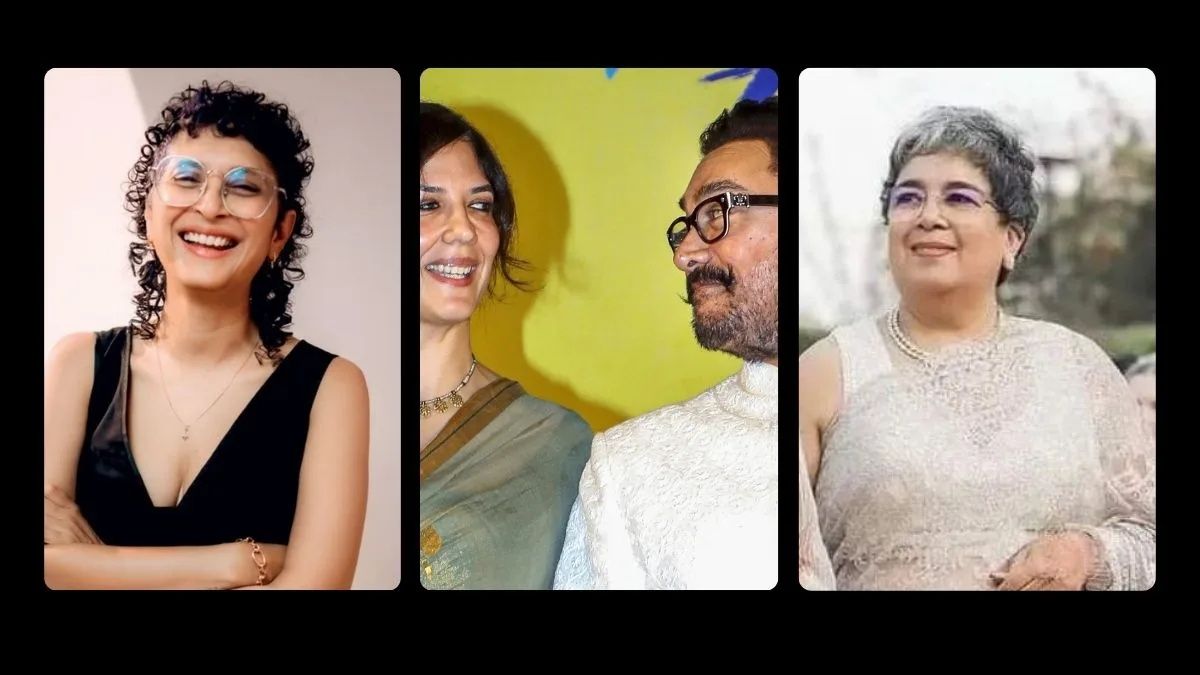
Regarding his own three marriages, Khan provided explicit clarification on each union. His first marriage to Reena Dutta, which lasted from 1986 until their 2002 divorce, involved no religious conversion. Subsequently, his 2005 union with filmmaker Kiran Rao similarly required no change to either party's religious affiliation. Most recently, his July 5 wedding to Gauri Spratt also remained free of any conversion requirement. Khan underscored that all three relationships were solemnised as civil ceremonies rather than religious rites.
Khan elaborated on his current wife's background, noting that Gauri practices Christianity but does not engage in active religious observance. This detail appeared designed to illustrate that their marriage proceeded without religious considerations playing a determining role. The actor's tone when addressing the controversy suggested frustration with what he perceives as an increasingly polarised discourse around personal relationships and religious identity.
The journey leading to Khan's marriage with Spratt spanned considerable time. The pair had maintained acquaintance for approximately 25 years before reconnecting little more than two years ago in Bengaluru, introduced through Khan's cousin Nuzhat Khan. Their rediscovered connection gradually deepened from friendship into romance, culminating in a two-year courtship before they chose to formalise their relationship through marriage at Khan's Mumbai residence.
Khan chose to introduce Spratt publicly during celebrations marking his 60th birthday last March, allowing media presence at the occasion. This managed disclosure preceded their wedding by several months and appeared designed to normalise the relationship within public consciousness before their formal nuptials. The timing and methodology of this revelation suggest Khan anticipated the controversy that would subsequently materialise.
Khan's previous marriage to Kiran Rao, which lasted roughly 16 years before their 2021 separation announcement, had itself been subject to public scrutiny and commentary. Nevertheless, Khan and Rao have maintained collegial professional relationships post-separation and continue collaborating on film projects while co-parenting their son. This continued cooperation demonstrates that Khan's approach to interfaith or cross-cultural relationships emphasises pragmatism and mutual respect extending beyond marriage itself.
The broader context for Khan's statement involves ongoing debates in India regarding interfaith relationships and the politically charged terminology surrounding them. The phrase 'love jihad,' employed critically by Khan's detractors, carries significant ideological baggage within contemporary Indian political discourse. Khan's systematic enumeration of his family's interfaith marriage history appears calculated to establish a pattern suggesting normalcy rather than ideological motivation.
From a Malaysian and Southeast Asian perspective, Khan's intervention into this debate carries particular relevance given the region's own experiences navigating religious identity and interfaith relationships. Many Southeast Asian societies, including Malaysia, contain substantial religious diversity and have developed specific legal and social frameworks governing interfaith unions. Khan's emphasis on individual agency, mutual respect, and the absence of coercion in matrimonial decisions aligns with progressive approaches to religious pluralism advocated by certain quarters across the region.
Khan's dismissal of the accusations as increasingly 'comical' suggests weariness with what he perceives as outsized public interest in his personal affairs. The actor's resort to humour, however, masks what appears to be genuine irritation with the politicisation of personal relationships. His detailed factual response indicates he takes the allegations seriously enough to warrant comprehensive public counter-argument, even while maintaining a veneer of dismissiveness.
The actor's statement ultimately functions as both personal defence and implicit broader commentary on social attitudes toward religious difference. By positioning interfaith marriage as an unremarkable family norm rather than exceptional deviation, Khan implicitly challenges narratives depicting such unions as inherently problematic. Whether this public intervention effectively shifts public perception remains to be seen, but it certainly establishes Khan's explicit positioning on the matter for the historical record.

