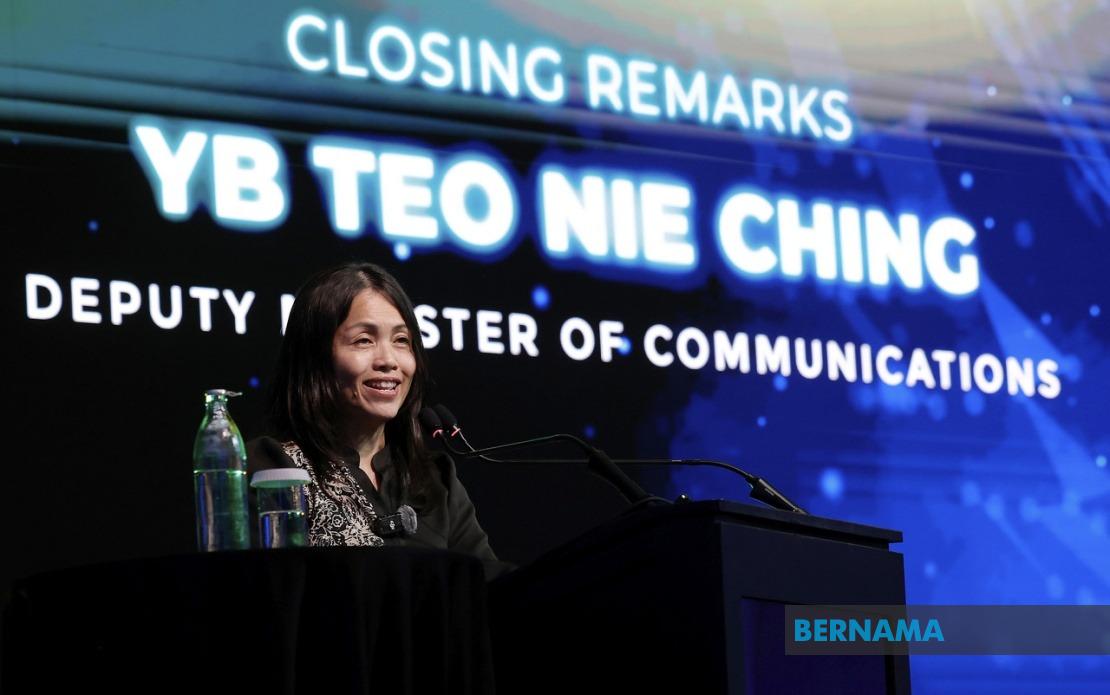
Deputy Communications Minister Teo Nie Ching has underscored the centrality of accountability and public-focused governance to constructing a secure and inclusive digital ecosystem, delivering remarks at the closing of the International Regulatory Conference 2026 in Kuala Lumpur. Rather than treating technological advancement as an end in itself, she positioned digital progress as fundamentally intertwined with institutional responsibility, systemic resilience and whether innovation ultimately serves the broader public interest rather than narrow commercial or ideological objectives.
Teo's framing reflects a philosophical shift in how policymakers across Southeast Asia are approaching digitalisation. While nations in the region have long pursued rapid technological adoption, the emphasis increasingly centres on the governance frameworks and accountability mechanisms that determine whether such progress benefits or harms citizens. This distinction matters particularly in markets where rapid platform adoption has outpaced regulatory capacity, creating gaps where harmful content, misinformation and exploitative practices flourish largely unchecked.
The minister articulated a perspective that resonates beyond Malaysia's borders: citizens evaluate digital systems not primarily through metrics of technical sophistication or processing speed, but through whether they feel safe, treated fairly and justified in placing their trust in these platforms and the systems governing them. This observation acknowledges that public confidence in digital infrastructure—whether in commerce, governance or social interaction—cannot be engineered purely through technological means but requires transparent, accountable stewardship.
Teo highlighted the evolving nature of digital governance by emphasising that innovation and accountability must develop in tandem rather than sequentially. The traditional regulatory model, where technologies are invented first and governance structures hastily assembled afterwards, has proven inadequate for managing contemporary digital challenges. Instead, she advocated for embedding accountability considerations into innovation processes from inception, ensuring that choices about technology design fundamentally reflect ethical commitments to public welfare rather than attempting to retrofit safeguards after deployment.
Data from the Malaysian Communications and Multimedia Commission (MCMC) provides concrete context for why such governance frameworks have become essential. Between January 2022 and mid-July 2026, the MCMC issued 1.2 million content removal requests to social media platforms, with platform providers successfully taking down 1.138 million items identified as harmful. The velocity of this work has intensified significantly: from January through mid-July 2026 alone, MCMC issued 377,502 removal requests—nearly equivalent to the entire 2025 annual total—averaging approximately 1,900 daily requests. Platforms responded by removing 350,332 pieces of harmful content during this same period.
These figures illuminate the scale of online harms that regulators must address and the practical challenges of managing digital spaces reactively. The sheer volume suggests that harmful content creation substantially outpaces removal capacity, even with coordinated efforts between regulators and platforms. For Malaysia and comparable Southeast Asian markets, this data underscores that technology platforms, despite their operational sophistication, struggle to maintain safe environments without sustained external regulatory pressure and accountability mechanisms.
Teo explicitly rejected the notion that regulation alone can bear the full burden of safeguarding digital spaces, a recognition that acknowledges both regulatory limitations and the shared responsibility across stakeholders. Instead, she advocated for what might be characterised as distributed accountability: platforms, regulators, educational institutions, community organisations and the broader technology industry must coordinate efforts to establish digital safety as a foundational principle rather than an afterthought or compliance checkbox.
The shift from reactive to preventative approaches constitutes a critical analytical distinction. Rather than waiting for harmful content to proliferate and then mobilising removal efforts, Teo's framework envisions safety being systematically embedded into how digital platforms operate from their architectural design phase onwards. This approach acknowledges that by the time harmful content becomes visible enough to trigger regulatory action, significant damage may have already occurred—reputational harm to individuals, spread of dangerous misinformation, exploitation of vulnerable populations.
For Malaysian stakeholders and the broader Southeast Asian region, this regulatory philosophy carries important implications. Nations attempting to balance innovation with citizen protection cannot rely exclusively on either market self-regulation or heavy-handed governmental controls. Instead, sustainable digital governance requires building institutional capacity within regulatory bodies, establishing clear expectations and accountability standards for platform operators, integrating digital safety into educational curricula, and fostering community-level awareness about online risks and responsible digital participation.
The International Regulatory Conference 2026, now in its third iteration and themed "Shaping the Next Digital Era: Regulation, Resilience and Trust," serves as a convening mechanism for this distributed accountability model. By bringing together regulators from different jurisdictions, platform leadership, technical experts and civil society representatives, such forums create space for knowledge exchange about effective governance approaches and emerging challenges that outpace individual national responses.
Teo's emphasis on trust as a central objective reflects recognition that digital economies function optimally when users and businesses have confidence in the integrity of online environments. Without such confidence, transactions decline, investment flows toward safer jurisdictions and civic participation in digital spaces diminishes. Malaysia's positioning as a regional technology hub and service provider thus depends substantially on establishing credible governance frameworks that international partners and investors recognise as legitimate and effective.
The accountability framework Teo outlined also addresses power asymmetries inherent in platform governance. Individual users typically lack meaningful agency in determining how their data is used, what content they encounter or how their rights are protected. Absent robust external accountability mechanisms, platforms face minimal consequences for practices that prioritise engagement maximisation or advertising revenue over user wellbeing. Regulatory frameworks and institutional accountability can help counterbalance these structural imbalances, though doing so requires regulators themselves to operate transparently and responsibly.
Looking forward, the challenge for Malaysian policymakers and their counterparts across Southeast Asia involves operationalising these principles at scale. While Teo's articulation of accountability, people-centred design and collective responsibility provides a conceptual foundation, translating these into specific regulatory standards, institutional practices and enforcement mechanisms requires sustained effort, adequate resourcing and willingness to adapt approaches as digital technologies and threats evolve.

