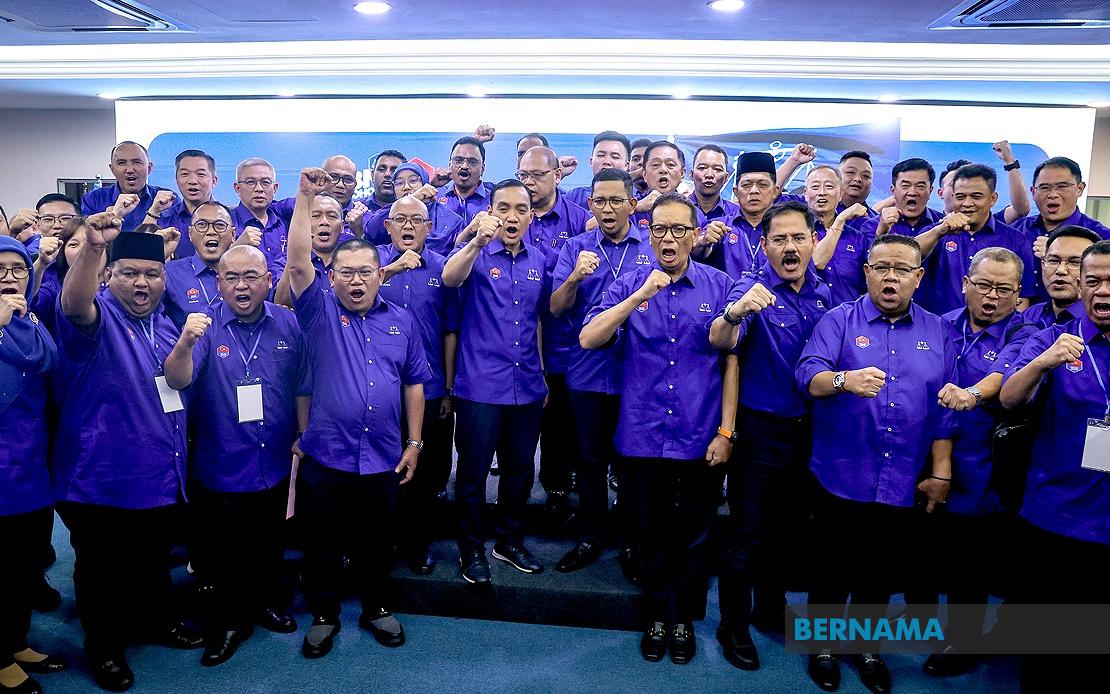
Johor Barisan Nasional unveiled its complete roster of 56 candidates for the 16th state election on Monday, signalling the coalition's readiness to defend its traditional stronghold with a blend of battle-hardened veterans and fresh political talent. The announcement ceremony in Johor Bahru revealed a slate comprising 37 UMNO nominees, 15 from the Malaysian Chinese Association and four from the Malaysian Indian Congress, with the selections endorsed by national BN chairman Datuk Seri Dr Ahmad Zahid Hamidi.
The candidate line-up reflects strategic positioning ahead of what is shaping into a closely watched contest in one of Malaysia's most politically consequential states. Johor's electoral performance carries symbolic weight beyond its borders, often serving as a bellwether for broader shifts in voter sentiment across the nation. The coalition's decision to retain experienced members while introducing new candidates suggests confidence in its organisational machinery, though it also points to succession planning challenges within the coalition's ranks.
Among the marquee nominations, former health minister Datuk Seri Dr Adham Baba's return to Pasir Raja represents a homecoming of sorts for the seasoned politician. Adham previously held the seat for two consecutive terms between 2008 and 2018, demonstrating sustained electoral appeal in the constituency. His track record extends beyond state politics; he served as Tenggara MP during two separate periods spanning 2004 to 2008 and again from 2018 to 2022, establishing himself as a fixture in Johor's political establishment. His nomination as Tenggara UMNO division chief adds institutional weight to his candidacy, positioning him as a stabilising force within the party hierarchy.
Menteri Besar Datuk Onn Hafiz Ghazi, who chairs the state BN machinery, will defend his Machap constituency following his victory in 2022. Onn Hafiz's continued stewardship of Machap while retaining control of the broader state coalition underscores his position as the paramount political figure in contemporary Johor governance. His dual role managing both the seat and the coalition reflects the intertwining of state and local politics that characterises Malaysian electoral contests at the state level.
One notable exclusion from the candidate roster involves former Menteri Besar Datuk Seri Hasni Mohammad, who held the Benut seat but was not renominated for the forthcoming election. The decision to field UMNO working secretary Datuk Mohd Sumali Reduan in Benut instead signals potential internal recalibration within the coalition's upper echelons. Hasni's tenure as Menteri Besar represents an earlier chapter in Johor's post-Mahathir political landscape, and his non-selection may indicate generational transitions or shifts in factional dynamics within UMNO's Johor machinery.
The coalition retained nine of ten former executive councillors who contested during the 2022 state election, demonstrating continuity in administrative experience at the state government level. The single exception is Khairin-Nisa Ismail @ Md On, who previously chaired the State Women, Family and Community Development Committee. Her non-renomination to defend the Serom seat represents one of the more conspicuous personnel changes, though the specific reasoning behind individual decisions remains undisclosed by the party machinery.
Onn Hafiz's public remarks during the announcement ceremony carry significance for understanding the coalition's framing of candidacy within its organisational culture. His characterisation of nomination as a trust and responsibility rather than a reward or privilege speaks to efforts in redefining the relationship between party structures and elected representatives. This rhetorical positioning may reflect broader concerns about public perception of political privilege or attempts to instil greater accountability within the coalition's structures.
The emphasis on conducting campaigns with courtesy, respect and prudence reflects sensitivity to electoral conduct and the broader political environment in Malaysia. State-level campaigns, whilst technically confined to individual constituencies, inevitably intersect with national political currents and broader societal expectations regarding political behaviour. BN's explicit invocation of Johor's values in campaign conduct suggests awareness that electoral legitimacy increasingly depends on meeting heightened standards of political propriety beyond traditional party loyalty mechanics.
From a strategic perspective, Johor's electoral contest holds implications extending beyond state boundaries. As one of Malaysia's largest and most developed states, Johor's results often influence national political calculations and coalition confidence. The strength of BN's performance here may affect negotiating positions for federal government formation or reshuffling, making these state-level elections consequential for national power dynamics. For readers across Southeast Asia observing Malaysian political stability, Johor's direction serves as an important indicator of whether ruling coalitions can maintain electoral relevance in an increasingly competitive democratic environment.
The composition of the candidate slate itself merits scrutiny regarding demographic representation and political diversity within the ruling coalition. With UMNO dominating at 66 per cent of nominations, the coalition structure reflects UMNO's continued preponderance within BN's Johor operations, though the inclusion of MCA and MIC candidates maintains the coalition's multi-communal facade. Whether this composition adequately reflects Johor's electoral demography and evolving voter expectations regarding representation remains an open question as campaigning commences.