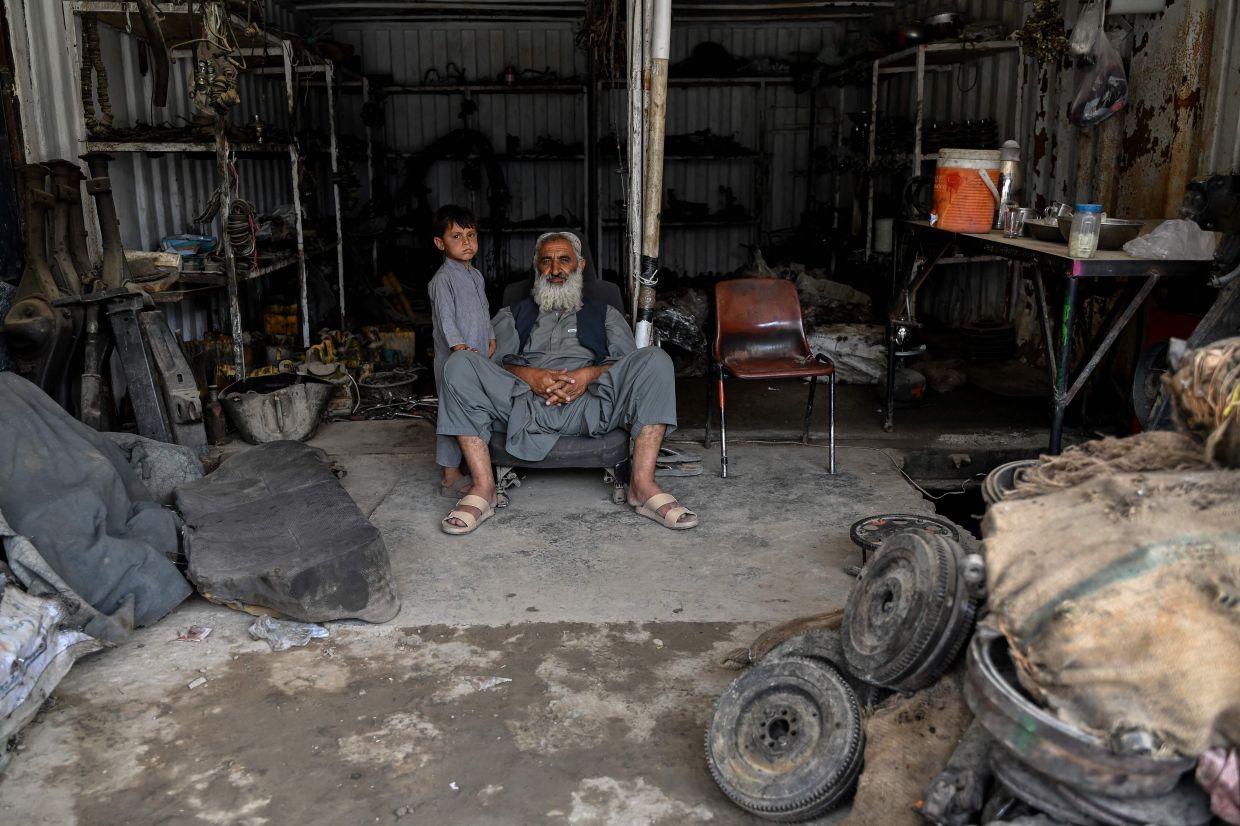
The vibrant automotive marketplace of Spin Boldak in Kandahar province, once a vital hub for importing and assembling vehicle components across Afghanistan, now stands eerily quiet as multiple regional crises have severed the lifelines that sustained this crucial economic sector. The convergence of Pakistan border violence and Middle East shipping disruptions has created a perfect storm for traders, many of whom are staring at their locked warehouses and idle workshops wondering if their businesses will survive.
The first blow came in October when escalating cross-border tensions with Pakistan forced authorities to close the frontier, virtually eliminating the primary overland route through which Japanese and other foreign vehicle parts had flowed into Afghanistan for years. This closure immediately threatened the livelihoods of the vast distribution network dependent on this supply chain. However, traders initially found an alternative pathway by rerouting shipments through Iran's Bandar Abbas port, albeit at substantially higher costs and with considerable logistical complications. According to Abdul Baqi Bina, deputy head of the Kandahar Chamber of Commerce and Investment, this temporary workaround proved arduous but at least maintained some semblance of ongoing commerce during an otherwise desperate period.
Then came February's eruption of conflict in the Middle East, which transformed a manageable crisis into an existential threat. The outbreak sparked unprecedented disruption to maritime trade flowing through the Strait of Hormuz, one of the world's most critical shipping corridors. Cargo diversion became inevitable as shipping companies implemented precautionary measures, and industry analysts have warned that normalising operations through this vital waterway could require months. For Afghan traders whose supply chains already depended on rerouting through United Arab Emirates ports, this new complication proved devastating. The longer journey through Dubai added not only time but also significantly inflated costs, fundamentally altering the economics of the entire operation.
The financial toll has been staggering. Traders report that container shipping costs have skyrocketed from approximately US$2,000 to US$8,000 in the months since Middle East tensions erupted. Asadullah, who operates an import business bringing components from Dubai and Japan, noted that his company operated two containers daily before the crises but has now exhausted its inventory. More than thirty containers remain stranded across Japan and the UAE, largely because of gridlock at Dubai's Jebel Ali port, the region's paramount logistics facility. The accumulating demurrage charges and storage fees represent a haemorrhage of capital with no corresponding revenue generation.
The World Bank's May assessment of Afghanistan's economic predicament underscored the nation's acute vulnerability to international shocks. The institution warned that the gap between imports and exports had widened to 70 per cent of gross domestic product in the 2025 fiscal year, rendering the economy dangerously dependent on external trade flows. For a country already grappling with political instability, this structural imbalance means that any disruption to major trade corridors reverberates throughout the entire economic system. The vehicle parts sector, which once represented a substantial portion of import-dependent commerce, now epitomises the fragility of Afghanistan's development prospects.
Masoud, another established trader in imported Japanese components, has essentially ceased operations entirely. He recalls importing dozens or even hundreds of containers monthly before the conflicts began, but that volume has plummeted to zero. Unable to justify mounting storage costs in foreign warehouses, he has reluctantly initiated the costly process of shipping containers back to Japan, accepting what he describes as total financial loss. The decision reflects the grim calculus facing traders: accepting losses now or hoping against diminishing odds that circumstances might improve and justify continued holding costs.
The human consequences of this commercial paralysis extend far beyond merchant ledgers and boardroom discussions. The assembly workshops where components were transformed into functioning vehicles have become largely dormant. Samiullah, a workshop proprietor, operated at an impressive capacity of five to seven completed vehicles weekly before supplies vanished. Now his workshop sits idle, yet his obligation to maintain a workforce persists, creating an unsustainable financial burden. Mohammad Naeem, a 21-year-old crane operator whose work depended on continuous container arrivals, contemplates abandoning his profession entirely if current conditions persist. The domino effect through employment cascades across the broader Kandahar economy.
Retailers have experienced the consumer-side collapse equally acutely. Noor Ali, who operates a showroom displaying vehicles assembled from imported Japanese parts, has endured an entire month without a single sale. His inventory of colourful automobiles sits as mute testimony to a market that has essentially evaporated. Potential customers, recognising that new vehicle imports have virtually ceased, have withdrawn from the market. The showroom, once a destination for buyers seeking reliable imported vehicles, has transformed into a storage facility for unsaleable inventory.
The technical impediments to normalisation are substantial. Shipping companies have cautioned that restoring predictable operations through the Strait of Hormuz will require extended periods even after immediate military threats subside. The reputational damage to maritime trade through the corridor has prompted some logistics operators to permanently reroute shipments, adding permanent inefficiencies to global supply networks. For Afghan traders, this means that even optimistic scenarios involving political settlements may not immediately restore historical supply patterns.
The broader implications for Afghanistan's economic development are sobering. The vehicle parts sector represented more than merely a commercial enterprise; it constituted a visible demonstration that Afghanistan could participate meaningfully in global trade networks. The sector employed thousands across assembly, distribution, retail, and support services. Its collapse signals to potential investors that geopolitical volatility in the region remains sufficient to invalidate long-term business planning. Traders who had invested capital and built expertise now face potential permanent displacement from their sector.
Looking forward, Afghan commercial interests face a trilogy of dependencies beyond their control. They depend on Pakistan restabilising its borders and reopening frontier crossings. They depend on Middle East tensions moderating sufficiently for maritime traffic to resume normalised patterns. And they depend on global shipping companies to re-establish economic confidence in the Strait of Hormuz route. The convergence of these multiple conditions represents an unusually complex geopolitical equation for traders operating in one of the world's most crisis-prone regions. Until these external circumstances align favourably, Spin Boldak's once-bustling marketplace seems destined to remain largely dormant, its silence representing a metaphor for Afghanistan's broader vulnerability to forces beyond its borders and its borders' capacity to control.

