Sudan's stability has emerged as a critical concern for the African Union, which on Sunday mounted a forceful pushback against what it views as destabilising external interference in the nation's internal struggles. Senior officials from the continental body, led by Algerian diplomat Mohamed Khaled in his capacity as rotating chair of the Peace and Security Council, conveyed this unequivocal message during high-level talks in Khartoum with Sudan's Sovereignty Council Chairman Abdel Fattah al-Burhan.
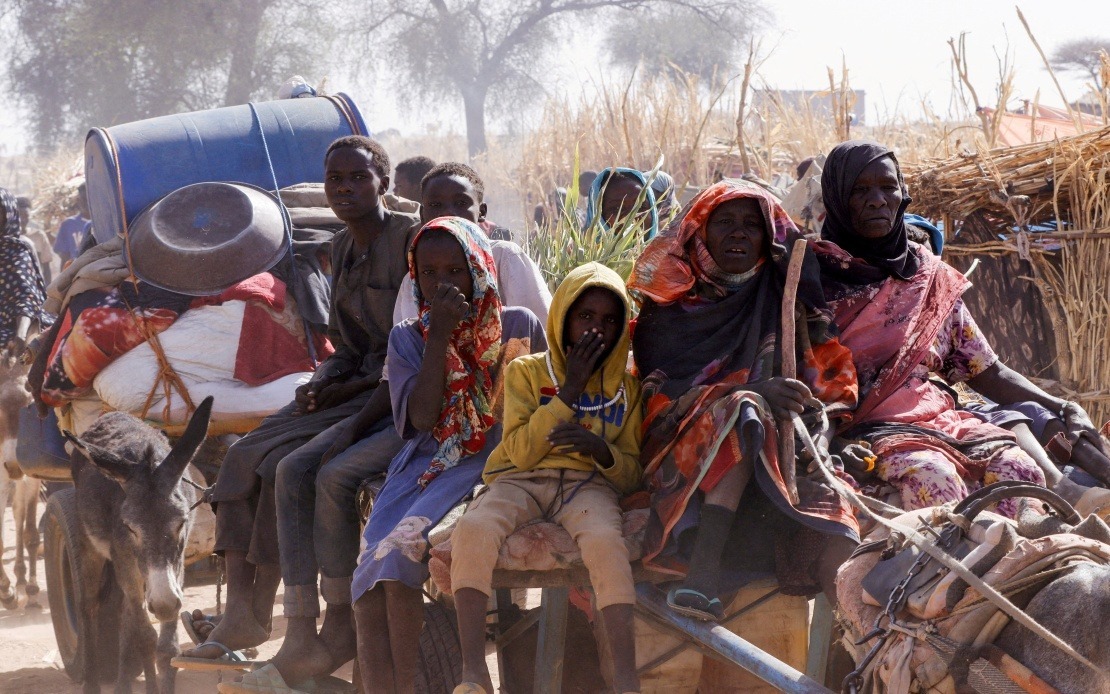
The timing of this diplomatic intervention carries particular significance given Sudan's descent into catastrophic conflict since mid-2023, when tensions between the regular armed forces and the paramilitary Rapid Support Forces erupted into open warfare over the contentious issue of military integration. The fractious relationship between these two powerful military institutions has transformed Sudan into a humanitarian disaster zone, with the death toll climbing into the tens of thousands and the resulting displacement crisis affecting approximately 13 million people according to United Nations assessments.
During the Khartoum meeting, the African Union delegation articulated a position that directly addresses what its members perceive as unhelpful foreign involvement in Sudanese affairs. Khaled emphasised that external meddling actively worsens the conflict's trajectory rather than facilitating resolution, suggesting that various international actors may be pursuing competing interests rather than Sudanese stability. This framing reflects broader African Union concerns about how external powers historically have complicated continental conflicts through selective support for competing factions.
Equally significant is the council's explicit rejection of parallel governance structures that could fragment Sudan's already fractured institutions. The AU's position reflects a fundamental principle of state sovereignty and territorial integrity that underpins continental peace architecture. Such warnings typically target scenarios where foreign powers, armed groups, or rival political movements establish de facto alternative administrations that challenge central authority and further splinter national governance.
Khaled characterised the meeting as productive, suggesting that despite the gravity of Sudan's situation, diplomatic channels remain open and functional. This assessment carries weight in a conflict environment where communication breakdown often exacerbates tensions. The council's engagement with al-Burhan signals that the African Union maintains faith in the military-led government's capacity to navigate toward resolution, even as the conflict grinds forward with devastating humanitarian consequences.
The path forward, according to the AU's prescription, hinges on domestic political processes rather than external solutions. The council explicitly called for Sudanese-led dialogue, national reconciliation initiatives, and comprehensive political settlements designed to address the aspirations of ordinary Sudanese citizens. This emphasis on inclusive governance processes suggests concern that the current conflict resolution trajectory may exclude critical political voices and civil society perspectives.
Prime Minister Kamil Idris responded to the AU's engagement by indicating that intra-Sudanese dialogue would commence imminently, a development the council welcomed. The announcement of imminent talks, even if representing diplomatic positioning, signals at least rhetorical commitment to negotiated settlement. The AU delegation also lauded the government's reestablishment of administrative presence in Khartoum, viewing such moves as essential steps toward restoring functional state institutions capable of delivering public services that the conflict has systematically eroded.
For Malaysia and Southeast Asian observers, Sudan's trajectory carries instructive lessons about the fragility of governance structures when military institutions fragment and compete for supremacy. The Sudanese experience demonstrates how institutional conflicts can metastasise into broader societal collapse, displacing millions and creating regional instability. Malaysia's own experience managing civil-military relations offers perspective on the risks that Sudan now faces.
The AU's insistence on inclusive governance and constitutional processes leading toward free elections reflects continental best practice standards, yet implementation in Sudan's fractured environment presents formidable practical challenges. The council's emphasis on national consensus-building acknowledges that military force alone cannot resolve the underlying political contestation that triggered the conflict. Such consensus-building demands extensive political negotiation precisely when military leaders may believe their institutional interests require military victory.
The African Union's diplomatic engagement also illustrates its evolving role in continental conflict management. Rather than accepting external mediation, the body has positioned itself as the primary forum for Sudan discussions, asserting African agency in resolving African crises. This stance carries implications for how regional and international powers engage African conflicts, establishing expectations that continental mechanisms should operate first before external actors intervene.
Sudan's humanitarian catastrophe continues to unfold even as diplomatic initiatives accumulate. The gap between rhetorical commitments to dialogue and actual cessation of hostilities remains substantial. Whether the announced commencement of Sudanese-Sudanese talks produces genuine momentum toward political settlement or represents tactical positioning by competing military factions will determine whether the African Union's latest diplomatic initiative proves transformative or merely another cycle in an ongoing crisis.

