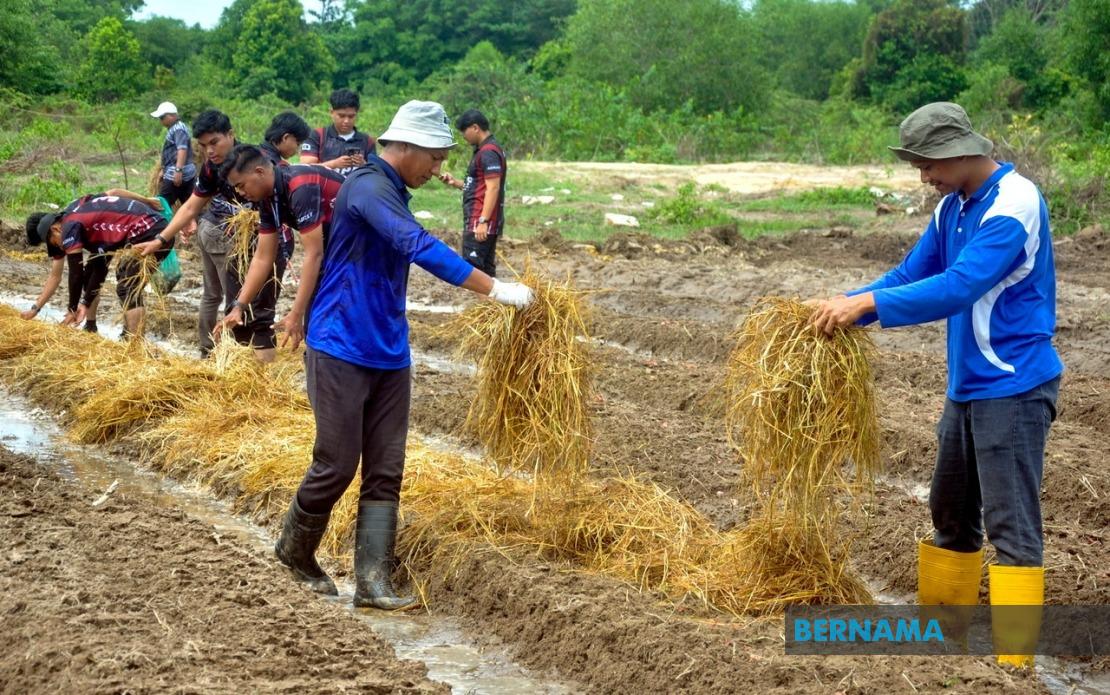
Malaysia's agricultural sector is seeing modest progress in absorbing technical and vocational graduates, with employment among those trained in farming and related fields reaching 76 per cent in 2024, up significantly from just 61 per cent six years earlier. The milestone, revealed through the Graduate Outcomes of Agricultural TVET in Malaysia report, underscores ongoing efforts to strengthen the nation's food security workforce. However, the figure still trails considerably behind the broader TVET employment performance of 95 per cent, suggesting that agricultural pathways face persistent challenges in competing with other vocational sectors for graduate placement.
The ministry responsible for agriculture and food security unveiled the findings at a stakeholder engagement session in Putrajaya on July 23, marking the culmination of collaborative research with PNB Research Institute. This partnership, formalized through a memorandum of understanding signed in September 2025, was designed to address a critical gap in understanding how agricultural TVET programmes translate into career outcomes for young Malaysians. By analysing years of institutional data, researchers examined not only employment rates but also income trajectories and entrepreneurial engagement among graduates who chose to remain in or transition away from farming roles.
One significant revelation from the study concerns earning potential within the agricultural sector itself. Graduates who pursued careers in farming earned an average of RM100 more monthly than their peers working outside agriculture, suggesting that despite lower overall employment rates, those who do secure agricultural positions enjoy competitive remuneration. This finding gains further weight when examining agro-entrepreneurs, whose incomes exceeded those of graduates running non-agricultural businesses. The data therefore challenges a persistent narrative that farming careers offer inferior financial prospects compared to urban, service-sector alternatives—a perception that may have contributed to declining youth interest in agricultural vocations.
Yet the broader demographic context reveals why such income advantages have failed to reverse declining youth participation in farming. The agricultural workforce is ageing rapidly, with one in every two farm workers now aged 40 and above. Over the past decade, young people have increasingly turned away from agricultural careers, a trend that threatens the sustainability of food production at a time when Malaysia faces mounting pressure to reduce import dependency for essential food commodities. The generational shift away from farming reflects complex social factors—perceptions of rural hardship, limited infrastructure, and cultural preferences for white-collar work—that income differentials alone cannot overcome.
Geographic disparities in agricultural TVET graduate distribution present another puzzle for policymakers. Sabah leads at 15 per cent of concentrated agricultural TVET participation, followed by Kedah at 14 per cent and Sarawak at 13 per cent. These three states account for a disproportionate share of graduates, yet several major agricultural producers remain underrepresented. States such as Johor, Pahang, and Perak—traditional breadbaskets producing rice, palm oil, rubber, and vegetables—have yet to be fully mobilized as sources of agricultural TVET enrolment and employment. This mismatch between graduate distribution and regional agricultural capacity suggests inefficiencies in training programme targeting and career guidance systems.
In response to these findings, Malaysia's agriculture ministry outlined a six-point policy framework intended to recalibrate the entire agricultural TVET ecosystem. The approach prioritizes customizing programme expansion to match the specific agricultural needs and opportunities of individual states rather than applying uniform national standards. Success metrics are being redefined to prioritize outcomes directly relevant to agricultural sectors—such as farm productivity, sustainability certifications, and market-oriented skills—rather than generic TVET benchmarks. A third pillar addresses entrepreneurial risk, aiming to provide aspiring agricultural business owners with financial instruments and mentorship that reduce barriers to entry.
The remaining policy directions tackle workforce capability gaps with unusual specificity. All agricultural TVET programmes will incorporate dedicated components in entrepreneurship and market dynamics, equipping graduates not merely to execute farming techniques but to understand and navigate agricultural supply chains, pricing mechanisms, and consumer demand patterns. Exposure to the complete agricultural value chain—from input suppliers and producers through processing, distribution, and retail—will replace the narrower farm-focused curricula that have traditionally dominated. Strengthened industry collaboration promises to embed employers directly in curriculum design and instructor training, ensuring that graduates possess immediately deployable skills aligned with contemporary farm management demands.
Government endorsement at the highest level has amplified the report's significance within Malaysia's policy hierarchy. Deputy Prime Minister Datuk Seri Dr Ahmad Zahid Hamidi presided over the National Technical and Vocational Education and Training Council meeting on June 4 where the study's findings were presented, signalling executive commitment to agricultural workforce development. This positioning places agricultural TVET reforms squarely within the broader national agenda, linking them explicitly to two foundational policy documents: the National Food Security Policy 2030 and the National Agro-Food Policy 2021-2030 (DAN 2.0). The alignment ensures that TVET initiatives will receive resource prioritization and bureaucratic coordination commensurate with food security imperatives.
For Southeast Asian observers, Malaysia's experience illuminates both the promise and pitfalls of using vocational education to address agricultural labour shortages. The 15-point improvement in employment rates over six years demonstrates that sustained policy focus and institutional capacity-building can shift outcomes. Simultaneously, the persistent 19-point gap between agricultural TVET and overall TVET employment performance suggests that structural factors—whether cultural attitudes toward farming, infrastructure limitations in rural areas, or global competitive pressures—resist quick remediation. The Malaysian government's willingness to conduct granular research into graduate outcomes and adjust policy frameworks accordingly reflects a pragmatic recognition that food security ultimately depends less on policy rhetoric than on the availability of skilled, motivated farmers and agribusiness professionals willing to build careers in the sector.

