Prime Minister Datuk Seri Anwar Ibrahim launched the Halal@Agrobank initiative at Politeknik Seberang Perai in Penang on Thursday, unveiling a strategic programme designed to accelerate the growth of Malaysia's halal agrifood ecosystem. The bank's leadership has set an expansive target of developing 10,000 entrepreneurs, predominantly small and medium enterprises, through this initiative over the coming five years, positioning it as a cornerstone effort to strengthen local participation in one of the world's fastest-growing economic sectors.
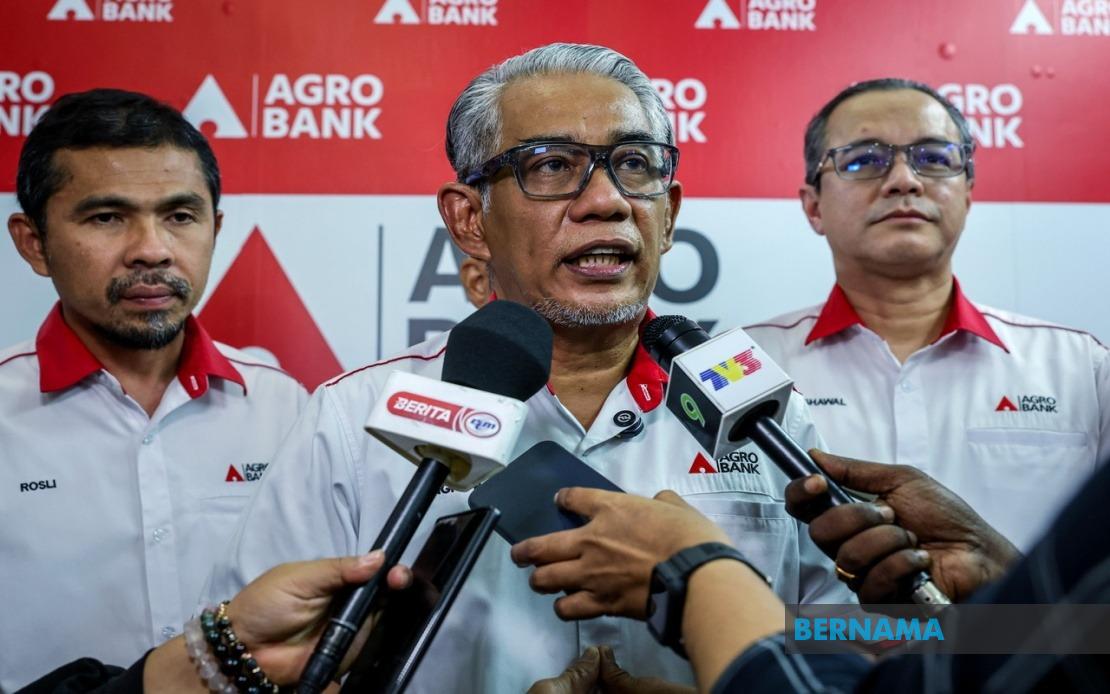
The ambition underpinning Halal@Agrobank reflects a hard reality facing many Malaysian agrifood producers: the assumption that halal certification is automatic or inherent simply because a business is operated by a Muslim entrepreneur. Agrobank President and Chief Executive Officer Datuk Tengku Ahmad Badli Shah Raja Hussin acknowledged this widespread misconception during the launch, explaining that genuine halal certification demands stringent compliance protocols and clearly defined standards that must be maintained across every operational layer. This knowledge gap has historically hindered smaller producers from accessing premium halal markets, despite their intrinsic capacity to compete globally.
The Agrobank Halal Roadmap 2026–2030 establishes three concrete benchmarks. The bank will facilitate halal and Ministry of Health certifications for 1,500 businesses while channelling RM1 billion in dedicated halal financing. Simultaneously, the institution intends to cultivate 300 exporters capable of generating combined export revenues of RM2 billion during this five-year window. These metrics represent a substantial acceleration in formalising Malaysia's halal agrifood supply chain, translating policy ambitions into measurable commercial outcomes that position local producers competitively within international markets.
The economic backdrop for this initiative is compelling. According to the Malaysia Halal Export Performance 2021–2025 report compiled by the Halal Development Corporation, the global halal ecosystem is projected to reach a valuation between US$9.5 trillion and US$10.5 trillion by 2030. This trajectory establishes halal as one of Earth's largest and most rapidly expanding economic sectors, offering substantial opportunities for locally-based agrifood entrepreneurs to enhance their international competitiveness and penetrate markets previously beyond their reach. Malaysia, traditionally a halal sector leader, risks ceding market share to regional and global competitors if its SME base cannot scale efficiently.
What distinguishes Halal@Agrobank from prior interventions is its holistic architecture. Rather than fragmenting support across multiple agencies and disconnected programmes, the initiative bundles financing, capacity building, business mentoring, halal certification readiness, and market access facilitation into a unified framework. Tengku Ahmad Badli Shah emphasised that this comprehensive approach guides entrepreneurs through not merely securing certification, but progressing across multiple dimensions simultaneously—enhancing productivity, developing branded products, securing export pathways, and building strategic industry networks. The structured pathway addresses a critical gap in Malaysia's entrepreneurial ecosystem.
Financing accessibility forms a cornerstone of the programme's design. Agrobank is deploying two specialised lending instruments: the Halal Certification Financing facility for micro-entrepreneurs, extending up to RM100,000 per borrower, and the Agro Halal SME facility, offering financing ceilings of RM5 million. These instruments acknowledge the distinct capital requirements at different business maturity stages, from nascent enterprises seeking certification through to established SMEs pursuing export expansion. By embedding Syariah-compliant financing mechanisms directly into the halal development pathway, the bank removes a traditional friction point that has constrained many Muslim-led businesses.
The initiative rests upon six strategic pillars that collectively create an enabling ecosystem. Halal awareness and readiness programmes establish foundational knowledge; capacity and entrepreneurship development builds technical and managerial capabilities; certification facilitation and halal advisory services navigate the regulatory landscape; business growth and market expansion unlock commercial opportunities; halal ecosystem development fosters peer networks and supply chain integration; and digital transformation and smart data deployment ensures modern business operations. This multifaceted design acknowledges that entrepreneurial success in the halal sector demands simultaneous advancement across knowledge, capability, regulatory, commercial, and technological dimensions.
The launch event brought together senior government figures, reflecting the political elevation of halal agrifood development within Malaysia's economic agenda. Communications Minister Datuk Seri Fahmi Fadzil, Penang Deputy Chief Minister I Datuk Dr Mohamad Abd Hamid, and Malaysian Communications and Multimedia Commission chairman Tan Sri Mohamad Salim Fateh Din participated alongside Agrobank's leadership. The convergence of federal and state policymakers signals institutional alignment around halal sector expansion, a prerequisite for sustained programme implementation and resource mobilisation.
Agrobank's commitment to collaborative governance extends across multiple institutional partners. The Department of Islamic Development Malaysia, State Islamic Religious Departments, the Ministry of Health Malaysia, tertiary education institutions, and industry specialists will collectively furnish entrepreneurs with integrated support spanning certification protocols, compliance frameworks, technical training, financing access, and market intelligence. This distributed partnership model distributes implementation responsibility while leveraging existing government expertise and private sector knowledge, reducing the burden on any single institution while broadening the programme's reach.
The timing of Halal@Agrobank coincides with Penang's emergence as a regional halal ecosystem hub. The Penang International Halal Expo and the concurrent Penang Bumiputera Entrepreneurs Gathering provided the launch platform, underscoring Penang's strategic role in Malaysia's halal sector development. The state's existing halal infrastructure, institutional capacity through the Penang Halal Industry Development Council, and geographic positioning within Southeast Asia's supply chains create natural advantages for concentrating halal agrifood innovation and export activity.
For Malaysian entrepreneurs and regional observers, Halal@Agrobank represents a recognition that market opportunity alone does not automatically translate into competitive participation. The programme's design acknowledges that halal sector participation requires deliberate institutional support addressing knowledge deficits, financing barriers, certification complexity, and market access constraints simultaneously. By bundling these support elements, Agrobank is attempting to systematically convert Malaysia's halal brand reputation and entrepreneurial potential into sustained commercial growth.
The broader implications extend throughout Southeast Asia's agrifood landscape. As halal markets expand globally and competition intensifies, countries leveraging structured support mechanisms comparable to Halal@Agrobank may capture disproportionate share of premium halal export revenues. Malaysia's institutional advantage in halal certification and Islamic finance positions it to lead this trend, provided implementation execution matches the programme's strategic ambition. The coming five years will reveal whether Agrobank can translate policy frameworks into tangible commercial outcomes for the 10,000 entrepreneurs it aims to mobilise.

