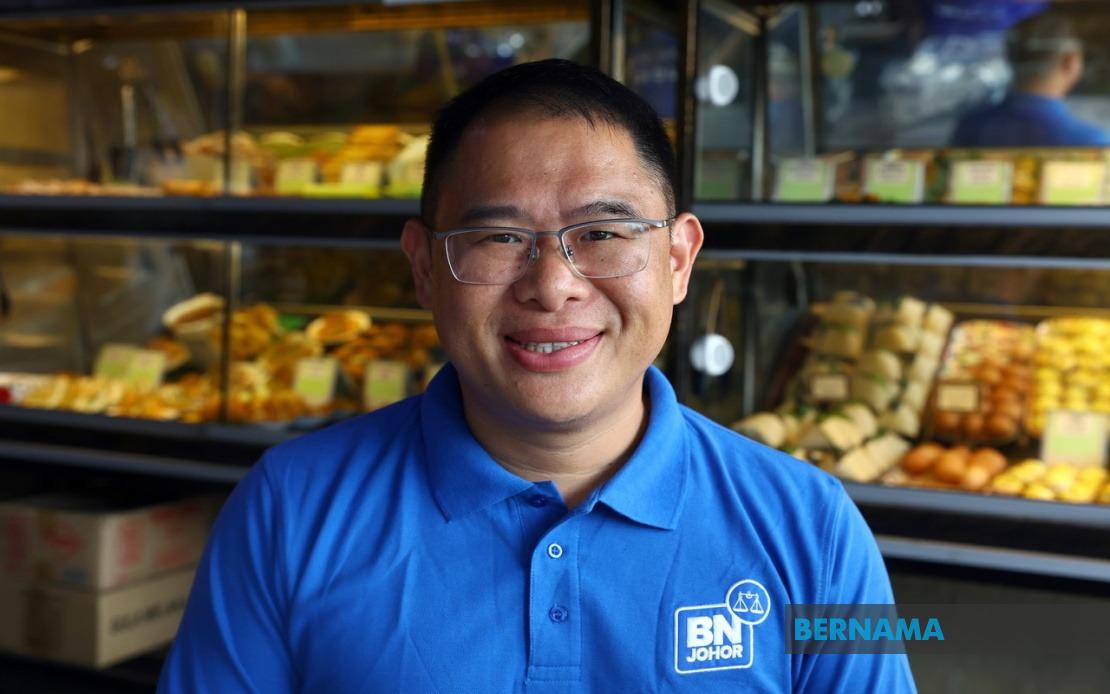
Ling Tian Soon, affectionately known as Ah Soon to constituents in Yong Peng, is making a bold pitch to voters ahead of the Johor state election: bet on the man who fixed the roads. What was once dismissively called 'Jalan Koyok'—a reference to the plaster patches that covered its deteriorating surface—has become the centrepiece of the assemblyman's case for a second term, illustrating how unglamorous infrastructure work can translate into tangible political capital in Malaysia's competitive state-level politics.
Since winning the Yong Peng seat in 2022, the 42-year-old Ling has channeled approximately RM23 million in development funds over three years to rehabilitate critical road networks spanning from Ayer Hitam to the Segamat border. The investment reflects a deliberate strategy rooted in an old Chinese saying that captures his development philosophy: when roads are well-built, economies move along them too. This isn't merely nostalgia or metaphor—Ling has witnessed tangible returns on that infrastructure expenditure, with major logistics operators and courier services now establishing operations in his constituency, recognising the improved connectivity as a foundation for their supply chain networks.
The economic transformation gathering momentum in Yong Peng underscores why Ling is confident enough to stake his re-election prospects on this singular achievement. Situated roughly 100 kilometres south of Johor Bahru's city centre and just an hour's drive from the Port of Tanjung Pelepas, Yong Peng occupies a strategically valuable position for industries dependent on efficient transportation and port access. A major e-commerce platform is now advancing plans to construct its largest distribution facility in the constituency, a project that promises to generate employment opportunities for young people and position Yong Peng as a distribution nerve centre for the broader region. The ripple effects extend beyond logistics: investors are acquiring industrial land at an accelerating pace, suggesting that the area is transitioning from a peripheral town into a genuine industrial growth corridor.
Ling's development narrative extends beyond roads. As the former chairman of the Johor state government's Health and Environment Committee, he brings a track record of navigating bureaucratic channels and securing funding allocations. His new manifesto, to be unveiled shortly, articulates three pillars: infrastructure consolidation, expanded social safety nets, and economic diversification centred on tourism. Within this framework sits a particular focus on amenities serving senior citizens, young families, and newlyweds—a demographic strategy aimed at anchoring young people to Yong Peng rather than seeing them migrate to urban centres.
What distinguishes Ling's political approach, however, extends beyond policy documents and budget allocations. He has cultivated a reputation as 'YB Kedai Kopi'—the assemblyman of coffee shops—a moniker reflecting his near-daily presence in the constituency's informal gathering spaces. Rather than reserving interaction for campaign seasons or formal engagements, Ling positions himself as a permanent fixture at coffee shops, stalls, and mamak restaurants, transforming the transactional relationship between elected representative and constituent into something resembling kinship. This grassroots immersion began during his 16 years working in parliamentary affairs under Ayer Hitam's Member of Parliament, Datuk Seri Dr Wee Ka Siong, where he established the relational foundations that would eventually propel him to state-level office.
The 2022 Johor state election served as his entry point, but the intervening years have solidified his presence at ground level. Ling openly acknowledges that his electoral strength derives not from charisma or rhetorical flourish but from consistency and accessibility. By remaining visible and engaged throughout the electoral cycle rather than materialising only when votes are at stake, he has reframed the representative-constituent dynamic. The relationship, in his framing, transcends the ceremonial and enters the familial. This approach carries particular resonance in constituencies like Yong Peng, where industrial growth and demographic change can generate anxieties about authenticity and whether political representatives remain rooted in community concerns.
His confidence in defending the seat rests substantially on this foundational work. Rather than articulating elaborate policy arguments or attacking opponents, Ling invokes a straightforward appeal to his track record. He has presented his 'report card' to the electorate and calls on voters to assess whether his performance merits continuation. This framing shifts the burden of proof away from grand promises—the currency of political newcomers—and toward measurable delivery. In the Malaysian electoral context, where infrastructure development remains a primary metric by which voters evaluate representative competence, the visibility of a RM23 million investment in local road networks carries substantial weight.
The upcoming contest, a straight fight between Ling and Pakatan Harapan candidate Yong Hui Yi, takes on added significance given these dynamics. For opposition-leaning voters, the Yong Peng race represents an opportunity to challenge not merely an individual but a model of development governance that privileges logistics and industrial expansion. For Ling, the race represents validation of a thesis: that patient, unglamorous infrastructure work, combined with authentic community engagement, provides a more durable foundation for electoral success than rhetorical appeals or programmatic radicalism.
The transformation of Jalan Koyok from a byword for neglect into a functioning arterial highway encapsulates Ling's broader argument to the electorate. Infrastructure represents not merely cement and asphalt but the foundation upon which economic opportunity rests. By converting a visible problem into a tangible solution, Ling has created a material demonstration of competence that transcends the abstractions of electoral politics. Whether voters across Yong Peng share his conviction that this foundation deserves reinforcement through another term remains to be determined, but his willingness to rest his re-election bid primarily on this single achievement suggests confidence in the persuasive power of delivered results.

