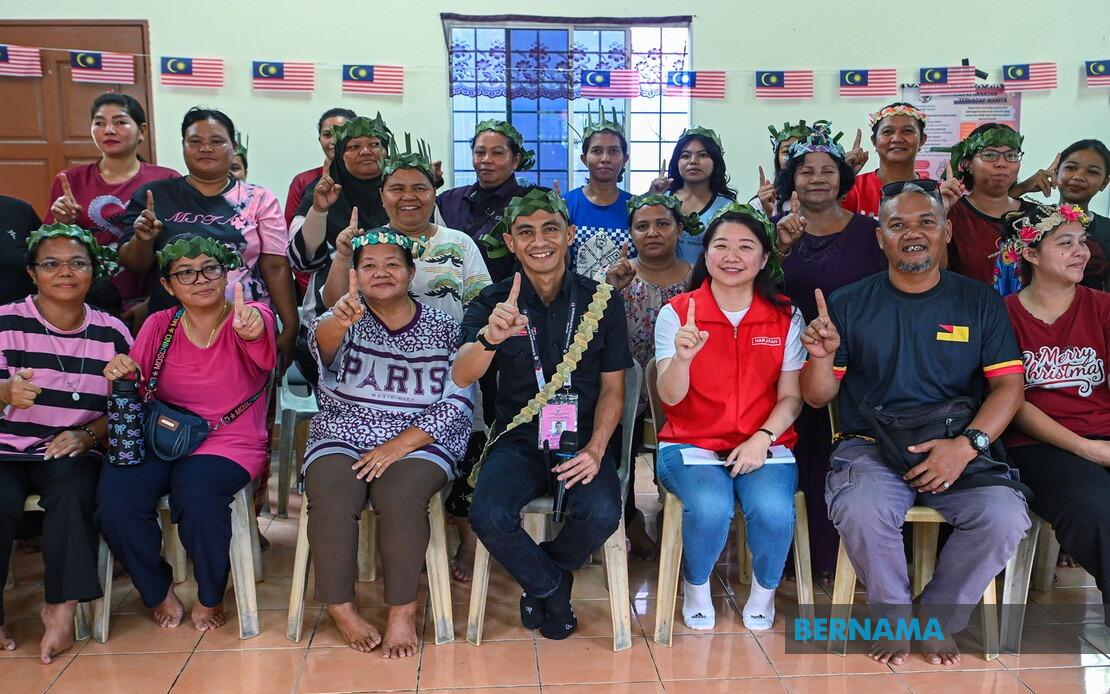
Datuk Ahmad Faez Abdul Razak, the Pakatan Harapan candidate for Labu in the upcoming Negeri Sembilan state election, has positioned indigenous community development as a cornerstone of his campaign strategy. Speaking at Kampung Orang Asli Tekir, he outlined a comprehensive agenda centred on economic empowerment and improved living standards for the Orang Asli residents in his constituency, reflecting broader efforts by opposition parties to engage Malaysia's indigenous populations in electoral contests.
Among his stated priorities should voters grant him the mandate, Ahmad Faez has committed to raising the contentious matter of customary land rights affecting Kampung Orang Asli Tekir before the Negeri Sembilan State Legislative Assembly. This pledge addresses a perennial grievance within indigenous communities, where unclear tenure arrangements and competing claims over ancestral territories have long complicated development initiatives and land-based economic ventures. By elevating the issue to the state legislative level, he aims to provide a formal institutional pathway for resolution, though the complexity of customary land disputes in Malaysia suggests this will require sustained engagement with multiple stakeholders including the state government, federal authorities, and the affected community itself.
Infrastructure deficits represent another critical dimension of Ahmad Faez's platform. The candidate has promised to upgrade basic amenities including road networks and internet connectivity within the village, improvements that extend beyond symbolic gestures to address practical barriers to economic participation. Poor road conditions and digital connectivity gaps significantly hamper market access for artisans and farmers, while inadequate telecommunications infrastructure limits educational and entrepreneurial opportunities for younger residents. These infrastructure gaps, common across Orang Asli settlements throughout Peninsular Malaysia, often reflect historical underinvestment in indigenous areas and persistent resource allocation disparities between urban and rural communities.
Education and youth development feature prominently in Ahmad Faez's platform, reflecting recognition that demographic sustainability and social mobility within the community depend on building human capital. He emphasises that whilst young people possess considerable potential, they require structured support mechanisms to develop marketable skills and establish viable income streams. This framing aligns with broader Southeast Asian demographic challenges where rural youth migration to urban centres continues as young people seek better employment prospects, potentially depopulating indigenous settlements and disrupting traditional knowledge transmission.
The candidate has identified handicraft production as a particularly promising economic avenue for Kampung Orang Asli Tekir. Indigenous communities across Malaysia possess distinctive artisanal traditions that hold considerable commercial potential, yet producers often struggle with market access, value-chain integration, and competition from mass-produced alternatives. Ahmad Faez's commitment to expand marketing networks for locally-produced handicrafts could facilitate direct consumer connections and price premiums that bypass exploitative middlemen, though successful execution requires sustained investment in branding, quality standards, and distribution channels.
Agricultural modernisation through technology adoption represents a complementary economic strategy. Ahmad Faez has proposed introducing fertigation systems—controlled irrigation techniques combining water and nutrient delivery—to enhance agricultural productivity and sustainability. Such technological approaches offer pathways to intensify yields whilst reducing water consumption and environmental degradation, addressing dual imperatives of food security and ecological conservation. However, technology adoption programmes for smallholder farmers typically require extension services, training, initial capital investment, and ongoing technical support that exceed what individual candidates can typically provide, suggesting such commitments would require coordinated efforts across multiple government agencies and development partners.
Ahmad Faez's narrative regarding his prior engagement with Labu residents emphasises continuity beyond electoral cycles. He claims to have maintained presence in the constituency for the past two years, assisting with local concerns before formally entering the electoral contest. This positioning seeks to counter perceptions that politicians parachute into communities solely during campaign seasons, though verifying such ground-level engagement claims requires scrutiny of tangible contributions, community feedback, and documented activities over the stated period.
Village chief Nasir Musil's endorsement of Ahmad Faez, whilst cautiously framed around hoped-for future actions rather than past performance, provides some community validation. Nasir identified infrastructure development and economic upliftment as primary expectations from elected representatives, priorities that align closely with Ahmad Faez's stated agenda. The chief also highlighted the persistent problem of stray cattle—a seemingly parochial issue that nonetheless reflects inadequate livestock management, land use conflicts, and potential risks to public safety, demonstrating that rural constituency concerns often encompass practical governance challenges distinct from urban political preoccupations.
The Labu contest features a three-cornered competition pitting Ahmad Faez against incumbent Mohamad Hanifah Abu Baker representing Parti Pribumi Bersatu Malaysia and Siti Nur Umaira Hasim of Barisan Nasional. Ahmad Faez contests for the first time, positioning him as an insurgent challenger against the incumbent administration. The presence of three significant competitors suggests genuine electoral contestation rather than predetermined outcomes, with the ultimately victorious candidate likely enjoying either substantial grassroots organisation, incumbent institutional advantages, or superior mobilisation capacity.
The Negeri Sembilan state election scheduled for August 1, with early voting on July 28, represents part of Malaysia's broader post-2022 political realignment. The state election occurs within the context of Pakatan Harapan's strengthened position following recent federal and state-level electoral gains, creating momentum that candidates like Ahmad Faez attempt to leverage. However, Bersatu's retention of the Labu seat and continued BN presence indicates competitive resilience among opposition forces, suggesting the electoral landscape remains genuinely contested across multiple party formations and ideological perspectives.
The focus on Orang Asli development in Ahmad Faez's campaign reflects wider recognition that indigenous constituencies represent strategic electoral considerations and important constituencies requiring targeted policy attention. Malaysia's approximately 200,000 Orang Asli, concentrated in peninsular regions including Negeri Sembilan, occupy distinctive socioeconomic positions marked by historical marginalisation, resource constraints, and cultural preservation challenges. Political engagement with these communities increasingly features in electoral campaigns, though translating campaign commitments into sustained policy implementation remains a persistent governance challenge across Malaysian political formations.
The commitments articulated by Ahmad Faez in Kampung Orang Asli Tekir exemplify how state-level candidates navigate competing imperatives between broad-based electoral appeal and targeted community engagement. Successfully executing the proposed initiatives—land rights advocacy, infrastructure improvement, handicraft market development, agricultural modernisation, and educational support—would require sustained political will, budgetary allocation, inter-agency coordination, and community participation extending well beyond the typical election cycle. The ultimate test of such campaign pledges lies not in their rhetorical appeal but in measurable outcomes and community satisfaction with implemented programmes.

