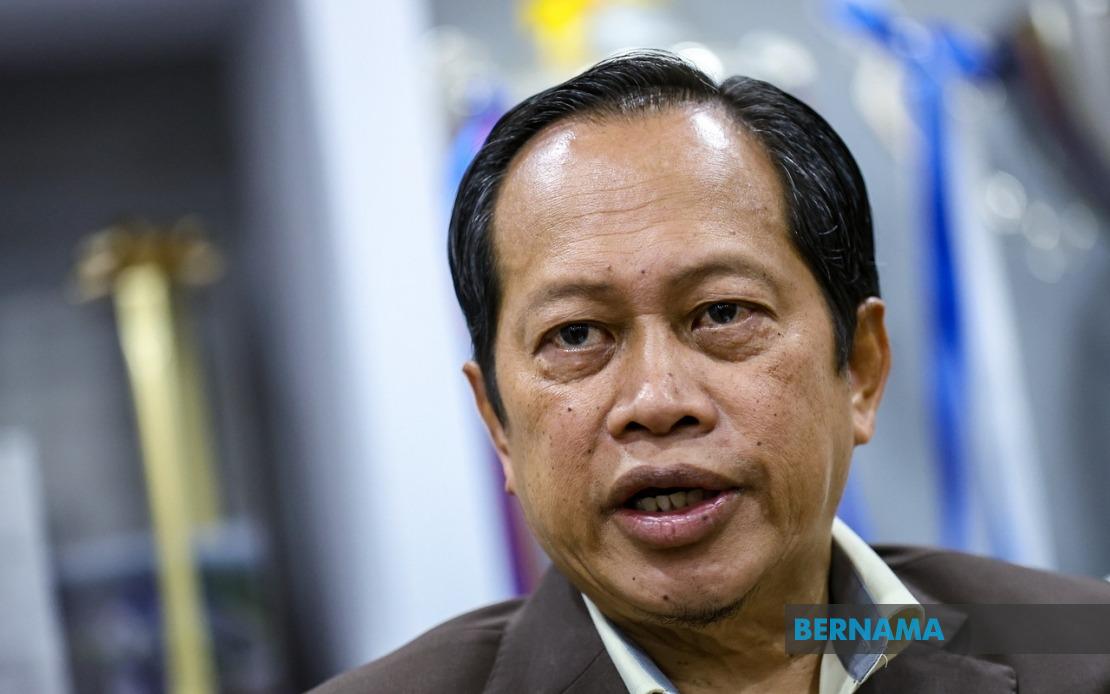
Deputy Works Minister Datuk Seri Dr Ahmad Maslan, who serves as Johor Barisan Nasional's deputy chairman, has publicly confirmed he will not stand as a candidate in the forthcoming state election, putting to rest weeks of speculation about his electoral intentions. The announcement came during a working visit to the Johor Public Works Department headquarters in Iskandar Puteri, where he addressed reporters on his political plans for the critical state-level contest.
Maslan's decision addresses sustained rumours that had linked him to multiple state constituencies within the Pontian parliamentary division. The two seats most frequently mentioned in connection with his potential candidacy were Benut and Pulai Sebatang, both located within his broader parliamentary constituency. By explicitly denying any intention to contest either seat, Maslan has brought clarity to a question that had generated considerable discussion among political observers and party members across the southern state.
The Pontian Member of Parliament framed his withdrawal as a strategic move aimed at broadening opportunity within his coalition. He emphasised that he had already informed BN and UMNO leadership of his decision, suggesting the matter had been deliberated at senior levels within the party hierarchy. His reasoning centred on the principle that talented party members should not be confined to a single candidate pool, and that fresh faces deserved genuine prospects of election to state office.
Despite stepping back from direct electoral competition, Maslan underscored his continued commitment to BN's performance in Johor. He pledged to maintain an active support role throughout the campaign period, leveraging his position and influence to strengthen the coalition's bid for victory across the state. This dual approach—withdrawing as a candidate while remaining operationally engaged—reflects a pattern common among senior politicians who wish to signal generational transition without abandoning their organisational responsibilities.
The timing of Maslan's announcement carries significance for Johor BN's broader candidate selection strategy. With nomination day scheduled for June 27 and polling day set for July 11, parties have compressed timeframes for finalising their nominations and launching campaigns. Maslan's early confirmation allows the party to pursue alternative candidates for the Benut and Pulai Sebatang seats without the distraction of uncertainty about the deputy chairman's intentions. This clarity facilitates smoother internal party processes and reduces potential conflict between leadership figures vying for the same constituencies.
Election Commission officials have structured the 16th Johor state election around a compressed calendar that compresses the typical election cycle. The June 27 nomination date comes just twelve days after Maslan's announcement, leaving minimal space for candidate substitutions or last-minute changes. Early voting has been scheduled for July 7, providing opportunity for defence and security force personnel, as well as other eligible voters, to cast ballots before the main polling date. This compressed schedule reflects the Election Commission's efficiency model and demands that parties finalise their preparations with minimal delay.
Ahmad Maslan's political trajectory over recent years has positioned him as a bridge figure within UMNO's evolving leadership structure. His appointment as Deputy Works Minister illustrates the party's confidence in his administrative capacity and ministerial competence. The deputy chairman role within Johor's BN structure further underscores his strategic importance to the coalition's operations in the state. His decision to prioritise support roles over direct candidacy may reflect strategic calculations about where his influence can generate maximum returns for the coalition.
The Johor state election represents a critical test for BN's capacity to maintain dominance in a crucial electoral battleground. The southern state has long served as a financial and strategic anchor for the coalition's peninsular operations. Recent electoral results in other states have demonstrated increased competition from opposition alliances, making Johor's outcome particularly consequential for national political trajectory. Senior figures like Maslan who choose to operate in background support capacities rather than contest seats may be making strategic judgments about where their organisational efforts can prove most effective.
For Malaysian political observers, Maslan's decision illustrates broader patterns within UMNO regarding succession planning and generational transition. Rather than competitive consolidation of multiple candidates within single constituencies, the party appears to be emphasising broader opportunity distribution across its membership. This approach potentially strengthens party cohesion by reducing internal competition for prestigious seats and preventing the emergence of internal factional divisions around individual candidates.
The deputy chairman's focus on campaign support rather than personal candidacy also reflects the demands of his ministerial portfolio. As Deputy Works Minister, Maslan carries substantive administrative responsibilities for public works oversight and budgetary management. Balancing ministerial duties with an intensive electoral campaign could have created operational challenges. By concentrating on campaign coordination and party mobilisation rather than personal electioneering, he may be attempting to maintain focus on his ministerial responsibilities while still contributing meaningfully to BN's electoral effort.
Johor's political landscape has shifted considerably over the past decade, with rising voter sophistication and changing demographic patterns altering electoral dynamics. Urban constituencies have become more competitive, while rural areas remain traditional BN strongholds. Maslan's withdrawal from direct competition may reflect sophisticated analysis of where different candidates can perform most effectively. Placing experienced figures in strategic support roles rather than fielding them in every contested seat represents a more nuanced electoral strategy than blanket candidate deployment.
Looking forward, Maslan's organisational contributions during the campaign period will likely prove as consequential as any individual electoral outcome. His ability to mobilise UMNO machinery, coordinate with coalition partners, and manage internal party dynamics may ultimately determine whether BN achieves the comprehensive victory it requires to consolidate its position in Johor. His public commitment to active campaign involvement, despite declining to contest himself, signals that senior party figures recognise the state election's critical importance to their broader political objectives.