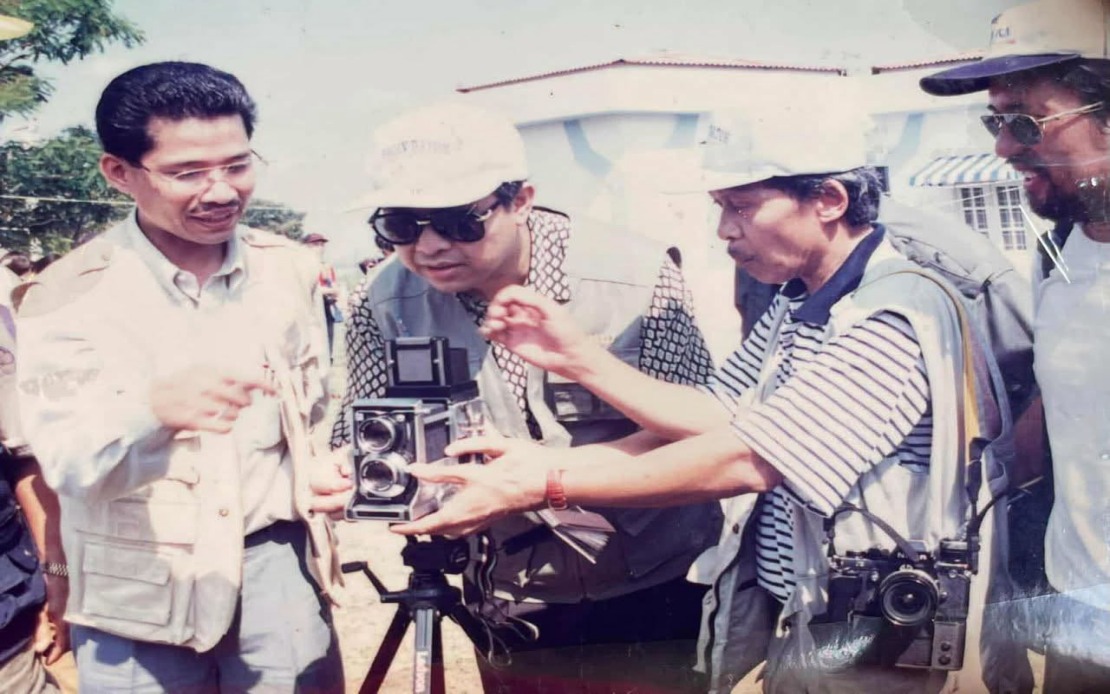
Deputy Prime Minister Datuk Seri Dr Ahmad Zahid Hamidi has extended recognition to photographers across all disciplines on World Photography Day 2026, underscoring the profound cultural and historical significance of their craft in contemporary society. Speaking through a social media post, Ahmad Zahid highlighted how photography transcends professional boundaries, touching nearly every aspect of modern life and human experience, from intimate family gatherings to pivotal news events that shape global consciousness.
The tribute encompassed the full spectrum of photographic practice, acknowledging not only career photographers working in commercial and journalistic fields but also the countless individuals who document everyday life through personal devices and cameras. Ahmad Zahid recognised that event photographers, those capturing corporate functions and celebrations, occupy an equally important space in the photographic ecosystem, preserving occasions that matter deeply to communities and organisations. He further extended this acknowledgement to family members and friends who assume the informal role of documenting gatherings, understanding that the democratisation of photography through accessible technology has enabled virtually everyone to become a visual chronicler of their own world.
Central to Ahmad Zahid's message was an exploration of photography's multifaceted value in human society. He articulated how photographs function at several levels simultaneously—as personal mementos that individuals treasure and display in their homes, as aesthetic objects worthy of framing and admiration, and crucially, as documentary evidence that gradually accumulates into the historical record. This layered understanding recognises that what appears to be a simple snapshot in the moment of capture may eventually become a crucial primary source for historians, researchers, and future generations seeking to understand how societies lived, worked, and experienced pivotal moments in their past.
The Deputy Prime Minister drew attention to the often-invisible labour embedded within photography, emphasising the discipline and patience required behind every successful image. He noted that photographers must cultivate the ability to observe their surroundings with unusual attentiveness, to anticipate significant moments before they fully unfold, and to possess the technical knowledge and reflexive judgment necessary to determine the precise instant when pressing the shutter will yield a meaningful result. This process, he suggested, sometimes requires only seconds of actual execution, yet the consequences of that fraction-of-a-moment decision can echo across decades, preserving narratives and emotions that might otherwise fade from collective memory entirely.
The acknowledgement arrives at a time when photography maintains profound relevance despite—or perhaps because of—its ubiquity in digital culture. While smartphone cameras have democratised the creation of images, enabling billions of people to participate in visual documentation, the appreciation for skilled photography and intentional image-making remains high. Professional photographers continue to command respect for their ability to extract meaning, beauty, and truth from complex scenes, while simultaneously, the volume of casual photography created daily underscores how essential visual documentation has become to how humans process and retain experience.
Ahmad Zahid's message also implicitly acknowledged the role of photography in Malaysia's own development and national memory. Over the decades, photographers working for media organisations, government agencies, and independent practitioners have created vast archives documenting the nation's transformation from colonial territory through independence and into contemporary modernity. These images serve not merely as nostalgic reference points but as essential resources for understanding Malaysia's social, economic, and political evolution, providing visual evidence of how communities, cities, and institutions have changed across generations.
The recognition of World Photography Day itself reflects global acknowledgement of photography's cultural weight. Observed on August 19 annually, the day commemorates the birth of the daguerreotype, one of the earliest practical photographic processes, honouring the medium's profound impact on human civilisation. Ahmad Zahid's participation in this observance aligns Malaysia with international recognition of photography's enduring importance, positioning the nation as a society that values visual culture and the artists who create it.
Beyond ceremonial acknowledgement, Ahmad Zahid's statement carries implicit policy significance. Recognition from senior government figures can influence how photography is valued within educational institutions, how cultural budgets are allocated, and how media and artistic freedom are protected. When political leadership explicitly celebrates photographers and their work, it sends signals about institutional commitment to documenting society and preserving diverse perspectives for historical purposes, principles fundamental to transparent governance and cultural health.
The invocation of future memory—the concept that today's photographs become tomorrow's recollections—encapsulates perhaps the deepest philosophical dimension of photographic practice. Unlike written records that require literacy and interpretation, photographs offer a direct visual bridge between past and present, enabling people separated by time to see landscapes as they existed, to observe individuals in moments of significance, and to grasp viscerally how different life was in previous eras. This capacity grants photographers an almost sacred responsibility, for their technical decisions about framing, exposure, and composition ultimately shape how future generations will perceive and understand the present moment.

