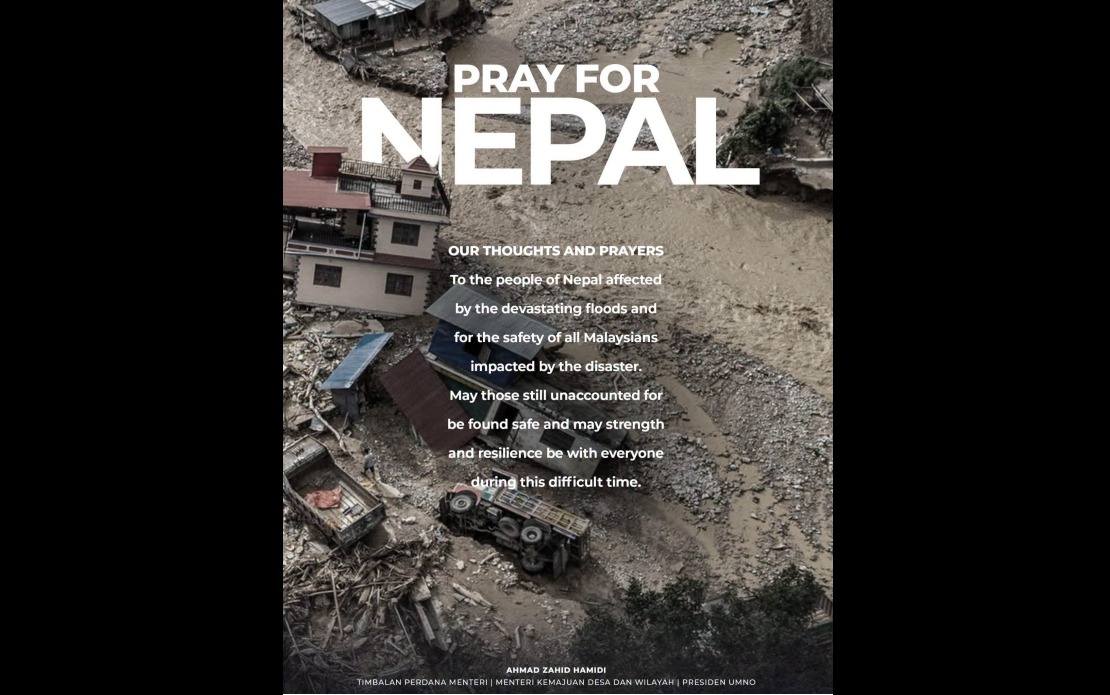
Malaysia's Deputy Prime Minister Datuk Seri Dr Ahmad Zahid Hamidi has publicly expressed serious concern regarding the safety and welfare of Malaysian citizens affected by the catastrophic flooding that has ravaged Nepal in recent days, while extending heartfelt condolences to families who have suffered losses in the disaster. Through a Facebook statement released on August 27, Ahmad Zahid conveyed his hopes that those Malaysians whose whereabouts remain unknown will be discovered unharmed and can be quickly reunited with their families back home.
The Deputy Prime Minister's remarks underscore the broader Malaysian government response to natural disasters affecting regional neighbours and its citizens abroad. Ahmad Zahid emphasised the nation's solidarity with the Nepalese people during this period of acute crisis, demonstrating Malaysia's commitment to supporting neighbouring countries faced with humanitarian emergencies. His statement reflected the emotional weight of the situation, particularly given the scale of the disaster unfolding across Nepal's mountainous terrain, where rescue operations have been hampered by difficult weather conditions and damaged infrastructure.
According to figures released by Nepal's tourism board as of 5:30 pm local time on Thursday—equivalent to 7:45 pm Malaysian time—the confirmed death toll from the devastating flash floods had reached 359 persons. This figure represents one of the most significant disaster tolls in Nepal's recent history, with entire communities submerged and families displaced from their homes. The scale of destruction has overwhelmed local emergency services, prompting international calls for humanitarian assistance and coordinated search and rescue efforts across the affected regions.
In his statement, Ahmad Zahid acknowledged the profound suffering caused by the flash floods, which have not only claimed numerous lives but have also displaced families from their homes and triggered widespread destruction of infrastructure, livelihoods, and essential services. The Deputy Prime Minister expressed that his thoughts and prayers were directed toward the Nepalese population, particularly those who had lost family members in the disaster and those desperately waiting for news of missing relatives. This personal expression of empathy reflects the diplomatic sensitivity Malaysia seeks to maintain with its regional partners during times of crisis.
The Malaysian official specifically invoked prayer and hope that search and rescue operations currently underway across Nepal would proceed more smoothly and efficiently, with the ultimate goal of bringing all individuals still in immediate danger to safety. Given the rugged topography of Nepal and the extent of flooding damage, rescue teams have faced significant logistical challenges in reaching remote areas where stranded residents may still be waiting for assistance. Ahmad Zahid's reference to easing these operations suggests an awareness of the operational difficulties confronting rescue authorities.
In conclusion to his remarks, Ahmad Zahid offered spiritual comfort to affected families, expressing the prayer that those impacted by the tragedy would find strength and resilience to endure the challenging period ahead. This sentiment acknowledges not only the immediate crisis but the long-term psychological and material recovery that communities must undertake following such catastrophic natural disasters. For Malaysian families with relatives in Nepal—whether tourists, workers, or long-term residents—the uncertainty surrounding the safety of loved ones represents an acute personal crisis layered atop the broader regional emergency.
The expression of official concern from Malaysia's Deputy Prime Minister carries several dimensions relevant to Malaysian readers. First, it highlights the potential vulnerability of Malaysians travelling or residing abroad, particularly in countries prone to natural disasters. Second, it demonstrates the Malaysian government's monitoring of citizens' welfare in regional countries and its commitment to providing diplomatic and humanitarian support. Third, it underscores the interconnectedness of Southeast Asian nations and the shared vulnerability to environmental hazards that transcend borders.
For Malaysia specifically, this incident serves as a reminder of the importance of maintaining updated travel advisories and ensuring Malaysian missions abroad can rapidly respond to emergencies affecting nationals. The government's swift public acknowledgement of the crisis suggests that information gathering regarding affected Malaysians was already underway through Malaysia's diplomatic missions in Nepal. This preparatory groundwork is essential for coordinating any necessary consular assistance, medical evacuation, or repatriation efforts that might be required.
The humanitarian dimensions of the Nepal floods extend beyond individual nation-states to involve the international community more broadly. Regional organisations such as ASEAN, while Nepal itself is not a member, often coordinate with neighbouring countries to facilitate emergency response. For Malaysia, being part of a region with several countries vulnerable to similar natural disasters—from monsoon flooding to earthquakes—the Nepal situation provides a sobering case study in disaster preparedness and regional cooperation. As climate change intensifies extreme weather patterns across Asia, such catastrophic events may become increasingly frequent, demanding improved international coordination mechanisms.
The tragedy in Nepal also raises important questions about the adequacy of infrastructure and early warning systems in countries prone to flooding. Nepal's mountainous terrain, while geographically stunning, creates conditions where flash floods can develop with terrifying speed and cause disproportionate damage compared to similar events in flatter regions. Building resilience in such environments requires substantial investment in early warning technology, evacuation routes, and emergency services training—challenges that many developing nations in the region continue to grapple with.
For Malaysian citizens planning travel to Nepal or other flood-prone regions, Ahmad Zahid's statement carries an implicit cautionary message about the risks of visiting countries during monsoon seasons or when weather forecasts indicate potential flooding. The Ministry of Foreign Affairs would likely use this incident to refine its travel advisory guidance, potentially recommending heightened caution during specific seasons or in particular districts with documented flooding histories. This information would complement the Malaysian government's broader efforts to ensure citizen safety while maintaining open diplomatic and economic relations with regional partners.

