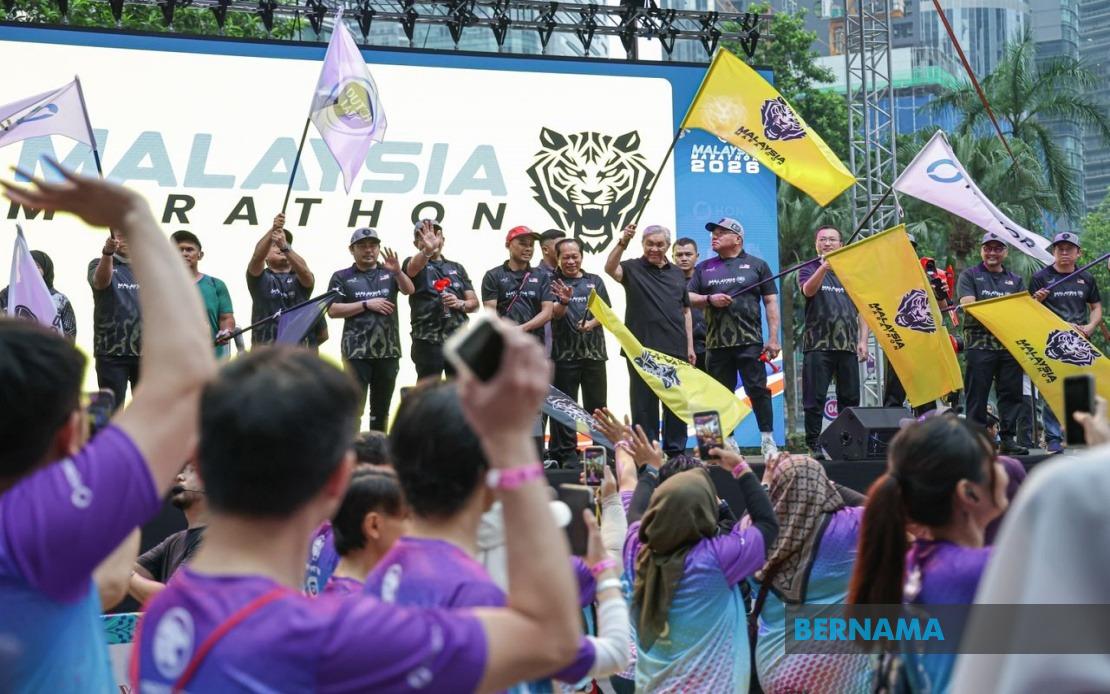
Deputy Prime Minister Datuk Seri Dr Ahmad Zahid Hamidi presided over the launch of the Malaysia Marathon 2026 fun run segment on August 30, initiating proceedings that saw 10,000 participants gather at the Kuala Lumpur City Centre grounds to tackle the 5-kilometre distance. The event marked a centrepiece of Malaysia's 2026 National Day festivities, positioning sports and national pride as complementary themes in the country's calendar of celebrations. The ceremony reflected the government's commitment to promoting fitness and community engagement through large-scale athletic gatherings that appeal to both casual runners and serious competitors.
The flagging-off ceremony itself was steeped in patriotic symbolism. Proceedings commenced with the national anthem 'Negaraku' sung by assembled participants and officials, establishing a ceremonial tone befitting the occasion's connection to National Day commemorations. The Malaysian Armed Forces band subsequently performed, lending cultural gravitas to the opening moments. This blend of military pageantry and mass participation underscored the integration of national identity with contemporary sporting culture—a recurring theme in how Malaysia frames major athletic events to audiences both domestically and internationally.
Alongside Ahmad Zahid, several government figures lent their presence to legitimise and elevate the marathon's standing. Tourism, Arts and Culture Minister Datuk Seri Tiong King Sing and Deputy Works Minister Datuk Seri Ahmad Maslan attended the proceedings, reflecting the multi-sectoral nature of what has become an increasingly prominent fixture in Malaysia's sporting calendar. The participation of such high-ranking officials signals governmental investment in promoting athletics as integral to national life, particularly at moments of civic significance like independence day celebrations.
A particularly striking element of the day's festivities involved a kilometre-long Malaysian flag parade executed by 1,000 students from Kolej Poly-tech MARA (KPTM) Bangi. This component transformed what might otherwise have been a straightforward athletic event into a participatory expression of national symbolism, engaging young citizens in tangible demonstration of patriotism while simultaneously integrating vocational education institutions into the broader celebration. Such integration serves multiple purposes: it provides ceremonial colour and organised pageantry whilst affirming the relevance of technical colleges to national civic life.
The 2026 iteration represents the inaugural Malaysia Marathon as an internationally sanctioned event, having secured recognition from World Athletics, the sport's global governing body. This accreditation elevates the competition beyond a domestic affair, potentially positioning Malaysia as a destination for serious distance runners across the Asia-Pacific region and beyond. The endorsement carries practical implications for standardisation, competitor confidence, and international ranking eligibility, factors that determine whether an event succeeds merely as a large local gathering or develops into a regionally and internationally significant fixture.
The marathon structure itself revealed the event's capacity to accommodate participants across multiple fitness levels and competitive ambitions. The full programme encompassed four distinct race categories: the primary 42-kilometre marathon, an intermediate 21-kilometre half-marathon, a 10-kilometre option, and the fun run component. This tiered approach permits families, recreational joggers, and elite distance runners to participate simultaneously under a unified event banner, maximising participation numbers—the 25,000 combined runners across all categories demonstrates this inclusive model's effectiveness.
The sequencing of race starts throughout the day reflected logistical sophistication. Minister Tiong initiated the 42-kilometre marathon with 2,000 competitors departing from Pavilion Kuala Lumpur, whilst the 21-kilometre and 10-kilometre categories—involving 8,000 and 5,000 runners respectively—commenced earlier in the morning from unspecified locations. This staggered approach prevents course congestion whilst ensuring manageable crowd densities at starting points, demonstrating careful event planning informed by experience managing mass participation athletics.
A significant operational change characterised this inaugural edition: the KLCC grounds served as the unified finish line for all categories, departing from the traditional Dataran Merdeka location. This relocation carries both practical and symbolic dimensions. KLCC's contemporary commercial prominence and iconic architectural identity present a distinctly modern Malaysian image to participants and observers, whilst Dataran Merdeka's historical association with independence and national founding creates a different resonance. The shift toward KLCC suggests organisers prioritise contemporary urban sophistication and commercial vitality in shaping Malaysia's public presentation.
For Malaysian readers, particularly those considering participation in future editions, the 2026 marathon's success establishes templates for similar events. The integration of governmental participation at high levels, international sporting recognition, and deliberate connection to national celebrations indicates that major marathons now function as state-sanctioned expressions of national identity and capability. The event's scale—25,000 participants—positions it among Asia's significant distance running competitions, potentially influencing international perceptions of Malaysia's sports infrastructure and organisational competence.
The broader context suggests Malaysian authorities increasingly view mass participation athletics as vehicles for achieving multiple policy objectives simultaneously. Events like Malaysia Marathon 2026 ostensibly promote public health and fitness whilst generating tourism appeal, providing ceremonial occasions for nationalist expression, and showcasing governmental administrative capacity. For observers of Malaysian sporting development, the marathon's evolution from domestic recreational event to World Athletics-recognised international competition reflects the country's intensifying focus on establishing itself as a regional sports hub—a positioning that has become increasingly central to Malaysia's identity projections alongside traditional tourism and business sectors.

