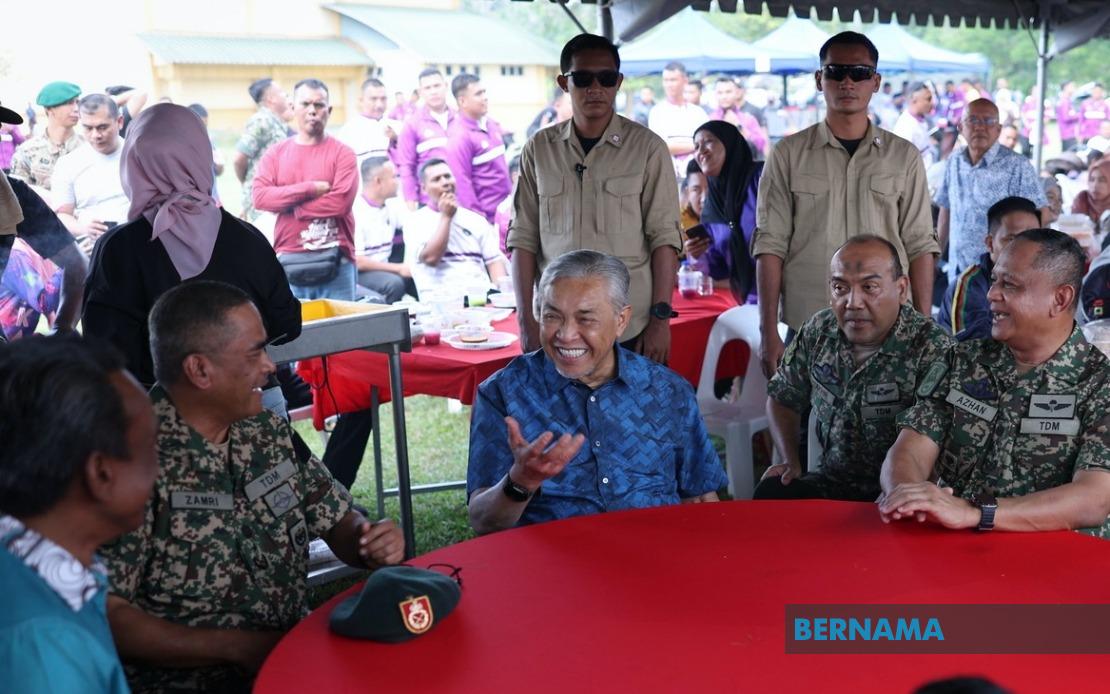
Deputy Prime Minister Datuk Seri Dr Ahmad Zahid Hamidi has declared that individuals will face legal accountability regardless of their standing if they are named in the Royal Commission of Inquiry investigation into Lembaga Tabung Haji. Speaking at the Malaysian Armed Forces Southern Zone Family Day Carnival at Kem Syed Sirajuddin in Gemas, the UMNO president and Barisan Nasional chairman underscored the government's commitment to ensuring no person remains beyond the reach of the law when wrongdoing is established.
The emphasis on universal legal accountability comes as the government prepares to release the RCI findings to the public following Cabinet deliberation. Ahmad Zahid stressed that transparency in communicating the inquiry's conclusions is essential to maintaining public confidence in the investigative process. He outlined the procedural pathway that would follow if the report identifies misconduct, noting that formal mechanisms exist within Malaysia's legal system to address potential breaches ranging from abuse of power to criminal breach of trust.
According to Ahmad Zahid, the appropriate next steps would involve lodging police reports, initiating investigations into commercial crime offences, and pursuing other legal remedies as the circumstances warrant. This structured approach reflects the government's intention to handle the matter through established institutions rather than bypassing due process. The Deputy Prime Minister's comments suggest that any accusations outlined in the RCI report will be treated with the seriousness required by the justice system, regardless of the status or position of those involved.
Prime Minister Datuk Seri Anwar Ibrahim, who also holds the Finance portfolio, had previously expressed confidence that the Cabinet would support making the RCI report accessible to the public. Anwar explained that earlier hesitation in releasing the document stemmed from concerns that premature disclosure could undermine public and international confidence in Tabung Haji's operations. The institution, which manages funds accumulated through the Hajj savings scheme for Malaysian pilgrims, has long been regarded as strategically important to the Muslim community and the nation's financial architecture.
The Prime Minister's recent reassurance, however, indicates that the government now views the timing as appropriate for transparency. Anwar highlighted that Tabung Haji has undergone substantial institutional strengthening and has achieved international recognition for its reforms and governance improvements. This enhanced standing, the government appears to believe, provides sufficient stability for the institution to weather public disclosure of past irregularities without suffering reputational collapse.
The decision to release the RCI report carries particular significance given the timing of the Negeri Sembilan state election, with early voting scheduled for Tuesday and polling day set for August 1. Opposition observers and analysts have speculated whether the inquiry's findings might influence voter sentiment in the state contest. Ahmad Zahid, however, expressed confidence that voters in Negeri Sembilan possess the maturity and discernment necessary to evaluate candidates and political coalitions on their own merits.
The Deputy Prime Minister downplayed the likelihood that the RCI report would substantially impact Barisan Nasional's campaign prospects in the state election. He characterised Negeri Sembilan voters as politically astute, suggesting they would form their voting preferences based on considered judgement rather than being swayed by the contents of an institutional inquiry. This assertion reflects the government's broader confidence in the electorate's ability to separate historical institutional failures from contemporary political choices.
The Tabung Haji RCI itself represents part of a broader effort to address governance concerns that have accumulated over decades. The institution's management, finances, and operational decisions have occasionally attracted criticism from auditors and observers over the years. The inquiry was initiated to provide a comprehensive examination of past decisions and to establish an authoritative record of any structural or administrative failings that may have occurred.
The commitment to transparency and legal accountability outlined by Ahmad Zahid carries implications beyond the immediate context of the Tabung Haji situation. It reflects the government's position on institutional accountability more broadly, suggesting that past grievances within public and quasi-public bodies should be systematically investigated and addressed through proper legal channels. This stance has become increasingly important as Malaysia continues to grapple with questions about governance standards and public trust in institutions.
For Malaysian pilgrims and their families who rely on Tabung Haji for managing their hajj savings, the public release of the RCI report offers an opportunity to understand the historical context of the institution's operations and any systemic issues that may have existed. The government's emphasis on institutional reform and international recognition suggests that the organization is moving toward more robust standards of financial management and accountability. The transparency initiative therefore serves not only to address past concerns but also to signal the government's confidence in the institution's reformed direction.
The broader implications for Southeast Asia's governance standards are also noteworthy. As a major Islamic-majority nation with significant regional economic influence, Malaysia's approach to investigating and addressing institutional failures in religious endowment and pilgrimage-related organizations carries weight with other countries in the region. The decision to pursue transparent inquiry rather than suppress potentially damaging findings aligns with international standards for institutional accountability and may set a precedent for regional peer organizations.
As the Negeri Sembilan election proceeds and the Cabinet moves toward formal approval of public release, the mechanisms for implementing legal action against those named in the RCI report will become clearer. Ahmad Zahid's emphasis on universal legal accountability establishes the framework within which the government intends to operate. Whether subsequent legal proceedings will indeed pursue alleged wrongdoing with equal vigour regardless of the status of those implicated remains to be seen, but the stated commitment to impartiality sets a clear standard against which the government's actions will be measured.

