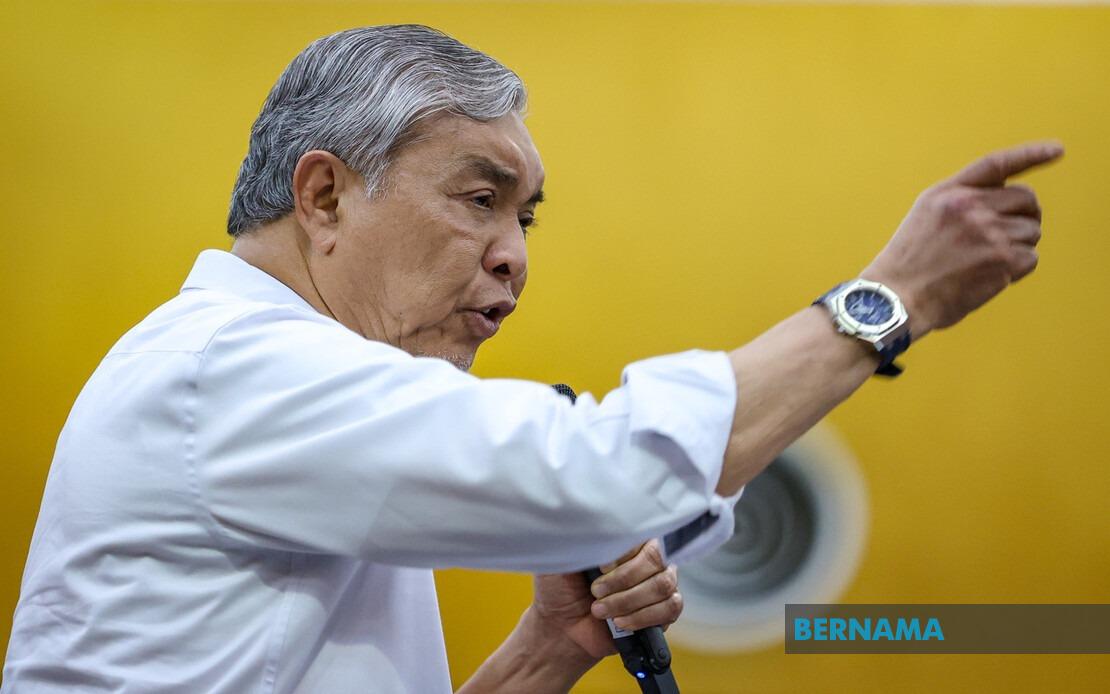
Deputy Prime Minister Datuk Seri Dr Ahmad Zahid Hamidi has unveiled an ambitious plan to deepen political education among Malaysia's campus student leaders, proposing that Student Representative Councils (MPP) at higher learning institutions participate in structured courses focusing on leadership development and contemporary political dynamics. The initiative aims to cultivate a generation of young leaders equipped with deeper understanding of Malaysia's democratic systems and the pressing national challenges confronting the country. Speaking in Johor Bahru on July 9, Ahmad Zahid emphasised that such formal exposure represents a critical investment in preparing student leaders for future roles shaping the nation's direction.
The proposal carries significant financial backing from Putrajaya. Ahmad Zahid indicated the government stands ready to underwrite the costs of these educational programmes across the nation's institutions, contingent upon formal requests from individual campus councils and approval from Higher Education Minister Datuk Seri Dr Zambry Abd Kadir. This commitment signals serious intent behind the initiative rather than mere rhetoric. The funding structure would remove financial barriers that might otherwise prevent universities from participating, though the emphasis on ministerial approval suggests the government intends maintaining oversight of curriculum content and programme design.
Central to Ahmad Zahid's vision is democratising political awareness without mandating partisan engagement. He clarified that young Malaysians—particularly the 18-year-old cohort casting votes for the first time—need not pursue active political involvement to benefit from enhanced political literacy. However, Ahmad Zahid stressed the critical importance of young people developing informed perspectives about political developments, even if they choose to remain outside party structures. This distinction reflects broader anxieties within Malaysia's political establishment about youth disengagement from the electoral process. The deputy prime minister drew upon his own trajectory as evidence, recounting his student activism at Universiti Malaya to illustrate how early political exposure can nurture future leadership capabilities.
The emphasis on political education for student leaders carries particular weight given Malaysia's historical experience with campus activism. Universities have traditionally served as incubators for political movements, from independence-era nationalism to contemporary reform agendas. By channelling student political consciousness toward structured, government-curated educational programmes, the initiative attempts to shape how young leaders conceptualise their roles and responsibilities. This reflects a calculated effort by the ruling coalition to influence the ideological formation of potential future political figures while they remain on campus.
Ahmad Zahid's message to young voters emphasises the profound significance of electoral participation. He underscored that every ballot cast materially influences which leaders assume power and which political parties assume governance responsibility. This framing positions voting not as a routine civic obligation but as a direct mechanism through which young people exercise agency over national direction. For first-time voters particularly, such messaging attempts to counteract the widespread tendency toward electoral apathy among younger demographics. The deputy prime minister's remarks implicitly acknowledge concerns within Malaysia's political leadership that youth voter turnout remains suboptimal, threatening the mandates of established parties.
The timing of Ahmad Zahid's proposal coincides strategically with Johor's state election preparations, scheduled for Saturday following this announcement. The Johor contest encompasses 56 state seats and represents a significant political battleground where youth voting patterns could prove decisive. By publicly championing enhanced political education for student leaders, Ahmad Zahid positions the Barisan Nasional coalition—of which he serves as chairman—as the political force genuinely invested in youth engagement and development. This messaging dimension undoubtedly influences electoral calculations across Johor constituencies where younger voters comprise meaningful proportions of the electorate.
The proposal also reflects broader regional trends regarding youth political participation across Southeast Asia. Countries throughout the region have experimented with various mechanisms to deepen youth involvement in democratic processes, recognising that political disengagement among younger demographics threatens long-term system legitimacy. Malaysia's initiative represents a relatively structured, top-down approach compared to some regional counterparts, emphasising government direction of political education rather than grassroots youth-led agenda-setting. This characteristic approach aligns with Malaysia's established governance patterns, where state capacity and institutional direction typically supersede decentralised organising.
Implementing such programmes across Malaysia's diverse higher education landscape presents logistical complexities. Universities maintain varying degrees of autonomy in student affairs, and standardising political education curricula across institutions would require careful negotiation with campus administrations. Furthermore, questions about curriculum independence versus government influence will inevitably arise among academic communities already sensitive to perceived state overreach in educational domains. Student councils themselves may demonstrate varying enthusiasm depending on campus political cultures and existing relationships with institutional authorities.
The proposal's long-term implications extend beyond immediate electoral considerations. If successfully implemented, structured political education for student leaders could reshape how successive cohorts of young Malaysians conceptualise democratic participation and political responsibility. Alternatively, if student communities perceive such programmes as thinly veiled partisan indoctrination, they might provoke backlash that strengthens anti-establishment sentiment among campus populations. The distinction between genuine civic education and partisan socialisation often proves difficult to maintain in practice, and student leaders—accustomed to critical thinking—may scrutinise content and methodology carefully. Ahmad Zahid's initiative thus represents both genuine investment in youth development and calculated political positioning during an election season, outcomes that will become clearer only as implementation unfolds across Malaysia's institutions.

