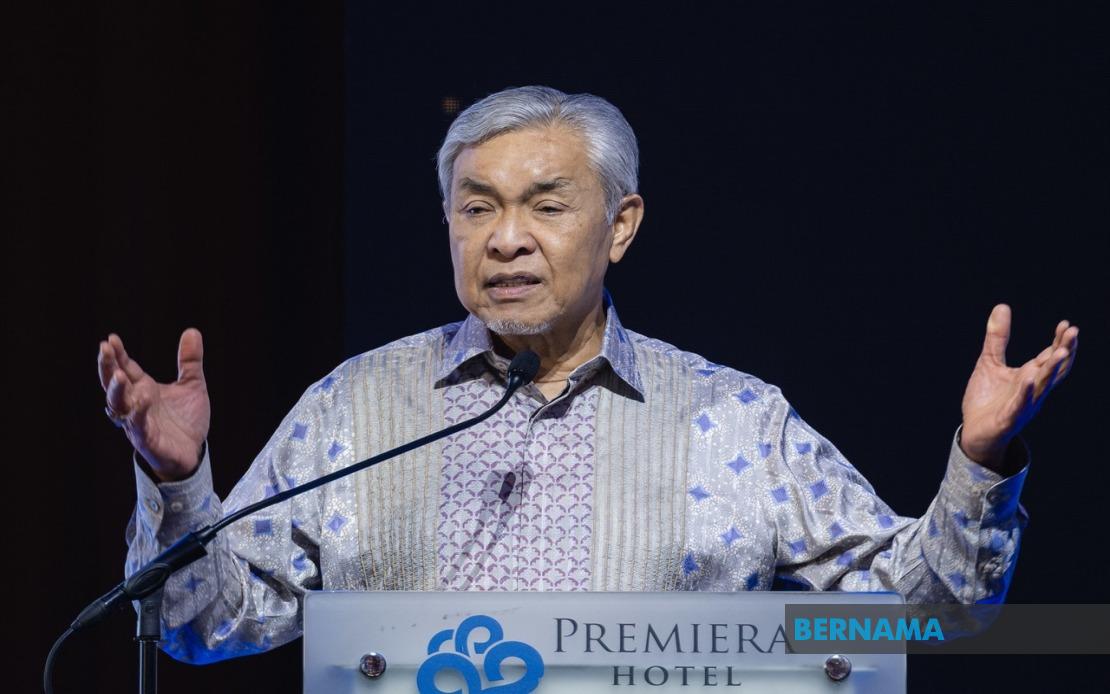
Deputy Prime Minister Datuk Seri Dr Ahmad Zahid Hamidi has signalled that the government will give serious consideration to funding requests for new rural road construction in Sabah and Sarawak during the 2027 Budget cycle, particularly in areas where communities currently lack dependable access to major urban centres. Speaking after presiding over the Ministry of Rural and Regional Development's annual awards ceremony in Kuala Lumpur, Ahmad Zahid, who also holds the rural development portfolio, outlined the administration's commitment to addressing the infrastructure gap that continues to isolate remote settlements across East Malaysia from economic and social opportunities.
The fundamental criterion for road projects to advance through the budgeting process, Ahmad Zahid explained, centres on their capacity to establish or improve connectivity between remote areas and both major towns and established settlements. This connectivity-first approach reflects a shift in how the government evaluates rural infrastructure spending, moving beyond simply constructing roads to ensuring that new projects generate tangible improvements in accessibility and economic linkage for underserved communities. The ministry has explicitly retained responsibility for rural road development, signalling that the infrastructure planning process will remain focused on bridging the geographic divide that has historically constrained development in outlying regions.
However, Ahmad Zahid cautioned that any new road construction projects identified in consultation with stakeholders will ultimately need to navigate the regulatory and procedural requirements established by both the Ministry of Finance and the Public Works Department. This multi-agency approval framework means that promising proposals must clear several institutional hurdles before they can proceed to implementation. The ministry is currently engaged in consultations with relevant parties to develop fuller technical and financial details for these proposals, with the expectation that fleshed-out recommendations will emerge once these discussions conclude.
The announcement reflects broader concerns within the government about infrastructure inequality between peninsular Malaysia and the two East Malaysian states. Sabah and Sarawak, despite their geographic size and natural resources, have historically received proportionally less investment in rural road networks compared to developed areas, creating persistent connectivity challenges that impede agricultural productivity, access to education and healthcare, and overall economic participation for rural inhabitants. By signalling that Budget 2027 will actively consider new road projects, the government acknowledges this disparity and commits to addressing it through the budgeting cycle.
Beyond the specific announcement about new roads, Ahmad Zahid used the ceremony to articulate a broader philosophy of performance-based governance within the Ministry of Rural and Regional Development. He called for the adoption of what he termed a "new discipline"—a management approach that ruthlessly evaluates existing programmes based on their tangible impact on rural populations. Under this framework, successful initiatives should be expanded, slow-moving projects should be accelerated through removal of bottlenecks, and programmes that fail to demonstrate meaningful results should either be substantially improved or discontinued entirely. This language suggests frustration with the status quo and a determination to eliminate ineffective spending.
This performance-oriented perspective reflects international development thinking that emphasises results over activity. Many rural development initiatives, despite good intentions, fail to generate measurable improvements in livelihoods or economic opportunity. By positioning the ministry to scrutinise outcomes rather than simply implement projects as planned, Ahmad Zahid is attempting to reorient the bureaucracy toward evidence-based decision-making. The approach has particular relevance for Malaysia, where government spending on rural development is substantial but often criticised for delivering limited improvements in rural incomes and opportunities.
Ahmad Zahid expanded his vision beyond infrastructure, arguing that rural development must increasingly focus on creating economic ecosystems that generate income and employment rather than simply building physical assets. This conceptual shift reflects recognition that roads without markets, without skills, and without productive capacity deliver limited benefit. The implication is that the 2027 Budget allocation for rural areas should encompass not just road construction but complementary investments in agricultural extension services, skills training, market access, and business support—a more holistic approach to rural transformation than traditional infrastructure-focused programming.
The deputy prime minister also emphasised the necessity of public service reform that extends beyond technological modernisation to encompass deeper organisational and cultural change. He stressed that shifting from paper-based to digital systems, while necessary, represents only the surface layer of reform. Genuine transformation requires shifts in institutional mindset, willingness of officials to take calculated risks in decision-making, and organisational readiness to abandon outdated approaches. This perspective suggests that structural barriers to rural development effectiveness may lie as much in bureaucratic rigidity and risk-averse decision-making as in resource constraints.
For Malaysian readers, particularly those in rural areas of Sabah and Sarawak, Ahmad Zahid's remarks carry both promise and caution. The promise lies in explicit government acknowledgement that remote areas lack adequate road infrastructure and that the 2027 Budget cycle will consider new projects. The caution stems from Ahmad Zahid's emphasis on regulatory procedures and consultation—language that suggests even approved proposals may face implementation delays or modifications. Regional expectations should remain tempered by the understanding that budget consideration does not guarantee funding or swift project commencement.
The announcement also holds implications for Malaysian policymakers grappling with how to distribute development resources across a geographically diverse nation with competing regional interests. If Ahmad Zahid's emphasis on connectivity-driven rural road investment gains traction, it could reorient budget allocation patterns, shifting resources toward infrastructure projects in underserved areas rather than maintaining current spending distributions. This would require difficult political choices about which existing programmes to reduce or eliminate to fund new initiatives.
For Sabah and Sarawak specifically, the government's willingness to consider new rural road projects represents acknowledgement that current connectivity gaps constitute a genuine development constraint. The states' geographic isolation and dispersed settlement patterns mean that road infrastructure gaps translate into real economic disadvantages for rural communities. If the government follows through on Ahmad Zahid's signalled intention, subsequent budgets may reflect meaningfully increased allocations for East Malaysian rural roads, though much depends on how rigorously the "new discipline" concept is applied and whether Finance Ministry officials share the rural development minister's prioritisation of this spending.
Looking ahead, the effectiveness of this policy direction will be measured not by the number of roads approved but by their ultimate impact on rural connectivity, economic opportunity, and living standards. Ahmad Zahid has essentially committed the government to a higher standard of accountability for rural development spending. Whether the ministry can deliver on this promise while maintaining political sensitivity to regional equity concerns will be closely watched by rural constituencies across the peninsula and East Malaysia.

